Headphones Like Skullcandy Crusher: An Analytical Comparison
A data-driven comparison of Crusher-style headphones, focusing on bass emphasis, comfort, battery life, build quality, and value to help listeners choose the right fit.


For headphones like Skullcandy Crusher, prioritize bass emphasis, comfort, and long battery life. This comparison examines two Crusher-style options: one leans into deep bass with sturdy build and party-ready warmth, while the other balances bass with clarity, comfort, and better mid-range detail. Both aim to deliver strong value for bass lovers within a practical price range.
Why consumers look for headphones like skullcandy crusher
When shoppers seek headphones like skullcandy crusher, they’re not simply chasing louder bass; they want a tactile low-end that enhances cinematic effects and EDM without obscuring vocals. They also demand comfort for extended listening, dependable wireless stability, and a price that fits real budgets. The Headphones Info team has found that buyers typically weigh two axes: bass intensity and overall tonal balance, plus practical factors such as durability and battery life. For many, the ideal pick blends a strong signature with long-lasting comfort. The exact phrase headphones like skullcandy crusher signals a desire for a bass-forward listening experience that remains intelligible across the midrange. In this guide, we’ll dissect two Crusher-style models, explain how each tunes bass, and turn those differences into concrete buying guidance.
Core design philosophies behind bass-forward headphones
Bass-forward headphones rely on a combination of dynamic drivers, extended low-frequency response, and tuning that preserves midrange clarity. A common approach is a dedicated bass/low-end driver or tuned passive radiators that enhance low frequencies without overwhelming the mids. Impedance and sensitivity also shape how well a pair performs with portable devices; lower impedance often yields louder output from phones, while higher impedance can reduce hiss and improve control when paired with a dedicated amplifier. Headphones like skullcandy crusher typically emphasize a tactile, punchy bass with a flexible EQ or built-in bass boost. When evaluating Crusher-style headphones, listeners should consider how aggressively the bass is tuned, how it interacts with mids and highs, and whether the bass remains tight at higher volumes. A balanced design preserves vocal intelligibility and instrument detail, which matters for genres beyond bass-heavy tracks.
Comparing Crusher-like models: A vs B
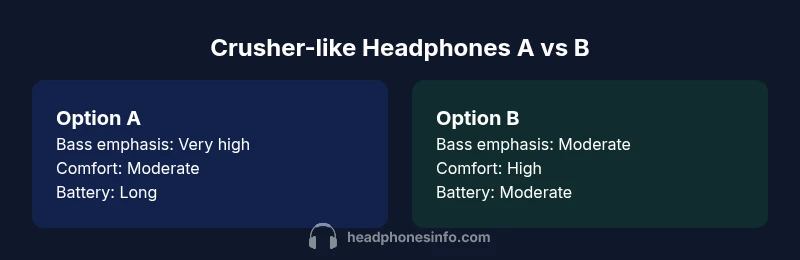
Option A leans into a pronounced bass signature with a warm overall tone, while Option B aims for a more balanced sound with tighter bass and clearer mids. In terms of design, A may use a slightly larger ear cup and a lighter headband to accommodate extended bass sessions, whereas B focuses on ergonomic fit and reduced clamping force for longer wear. In practice, A shines with bass-heavy tracks, movie soundtracks, and party playlists, delivering impact without losing grip on percussion. B, by contrast, tends to offer more versatile performance across genres, with better midrange texture for vocals and guitars, which helps when the mix gets busy. The two options illustrate a common split among Crusher-like headphones: prioritizing raw bass energy versus overall tonal balance and listening comfort. For listeners who value extra bass for certain activities, A is likely the better pick; for listeners who want everyday usability with strong bass that doesn’t overwhelm the rest of the mix, B is appealing.
Comfort and fit considerations for long listening sessions
Lightweight construction and adjustable headbands are essential for hours of wear, especially in bass-forward headphones where ear cups may encircle the ear more deeply. Materials matter: memory foam cushions and breathable fabric help reduce heat buildup and fatigue. The best Crusher-like designs strike a balance between clamping force and seal, ensuring a stable seal without pinching. Some models incorporate swiveling cups or rotated hinges to accommodate different head shapes, while others rely on a memory-foam band to distribute weight evenly. For listeners who wear glasses or have sensitive ears, padding texture and pressure distribution become more critical. In addition to fit, ear-pad diameter influences soundstage impression; larger cups can feel more immersive but may feel bulky in transit. When evaluating headphones like skullcandy crusher, prioritize comfort as a function of duration and use-case. If you plan long daily sessions, consider models with softer padding and gentler clamp.
Battery life and connectivity trade-offs
Wireless duration often serves as a practical differentiator in bass-forward headphones. A longer battery life is advantageous for parties, travel, and daily commutes, but it can be paired with heavier cups or slightly elevated weight. Bluetooth version and codecs also impact latency and audio fidelity; newer codecs commonly deliver lower latency and more stable connections, which matters for gaming and video. On the flip side, wired options can deliver consistent, uninterrupted bass without compression or battery anxiety, which is important for critical listening. When you compare Crusher-like headphones, weigh the trade-off between battery life and weight against your typical listening environments. If you rely on mobile devices, models with 20–40 hours of wireless life generally cover a week of use, while dedicated home audio setups may tolerate shorter wireless life in exchange for richer bass control via an amplifier.
Sound quality and tuning: Bass, mids, highs, EQ
In bass-forward headphones, the bass is often the defining feature, but effective models preserve midrange presence and treble clarity to keep vocals and details intact. A well-tuned Crusher-like model delivers a consistent bass response with minimal boominess, tighter bass for faster tracks, and less masking of mids at higher volumes. User-adjustable EQ or presets can help tailor the sound to individual preferences and genres. Some listeners prefer a pronounced sub-bass that you can feel with cinematic content, while others want a more balanced presentation that remains engaging across rock, pop, and hip-hop. An ideal Crusher-like profile offers bass that adds depth without overwhelming the mix, ensuring instruments and voices remain intelligible, especially in dense tracks.
Durability, materials, and maintenance
Durability is a practical concern that often correlates with price. South-facing hinges, metal yokes, and reinforced cups tend to endure travel and daily wear better than purely plastic frames. Detachable cables and foldable designs can extend lifespan by reducing strain on connectors. Maintenance involves regular cleaning to prevent sweat buildup, inspecting cushions for wear, and storing the headphones in a protective case to avoid cosmetic or mechanical damage. For long-term value, look for responsibly sourced build materials and warranty coverage that aligns with your usage patterns. Headphones like skullcandy crusher frequently feature rugged builds that justify higher price points when paired with comfortable, durable padding and reliable wireless modules.
Price, value, and availability across markets
Prices for Crusher-like headphones span a wide range, reflecting differences in materials, drivers, and battery life. Budget-minded buyers can expect to find solid options in the lower end of the spectrum, while midrange and premium variants push higher, often with enhanced build quality or additional features such as multipoint pairing or faster charging. Availability varies by region, and promotions can affect perceived value. When evaluating price, compare long-term value: battery endurance, replacement parts availability, and warranty terms. Overall, the best value comes from models that maintain bass impact while offering comfortable fit and durable construction within your budget. For listeners, the goal is to maximize perceived value rather than chasing the loudest bass alone, ensuring a sustainable listening experience.
How to choose the right Crusher-like headphones for your use case
The decision hinges on your primary listening scenarios. If you crave deep bass for bass-heavy genres, movies, and gaming cues, headphones like skullcandy crusher A or B can be strong contenders, with A leaning toward maximum low-end impact and B offering a versatile profile. For daily commuting, balance, and multi-genre usage, prioritize a model with comfortable padding, stable wireless connectivity, and a more neutral midrange. Consider fit and seal, battery life, and portability according to your routine. If you are new to bass-forward tuning, start with a model that offers a moderate bass boost and a reliable EQ in software or on-device presets. Compatibility with your devices, warranty terms, and the ability to upgrade firmware are also worth confirming before you buy. The Headphones Info methodology suggests testing at least two candidates in a store or using a 30-day return policy to compare real-world comfort and sound.
How to upgrade from Skullcandy Crusher: steps and expectations
Upgrading from Skullcandy Crusher means identifying what you want to improve: deeper bass, better mids, longer battery life, or lighter weight. Start by evaluating driver type and impedance to ensure compatibility with your devices. Test bass texture and midrange clarity across genres you care about, and check padding comfort for extended wear. If possible, audition A/B variants side-by-side and use a standardized playlist to compare response with and without EQ. Look for sustained comfort, reliable wireless stability, and a robust case for travel. Finally, read warranty terms and verify service options for cushions and cables. The Headphones Info team recommends focusing on overall sound balance, build quality, and long-term value rather than chasing loud bass alone.
Comparison
| Feature | Crusher-style Headphones A | Crusher-style Headphones B |
|---|---|---|
| Bass emphasis | Very high bass boost with deep sub-bass emphasis | Moderate bass with tighter control and clearer mids |
| Comfort and fit | Larger cups, slightly lighter clamp, plush padding | Ergonomic design with balanced clamp and generous padding |
| Battery life (wireless) | 40-60 hours | 20-40 hours |
| Impedance | 16-32 ohms | 28-40 ohms |
| Connectivity | Bluetooth 5.x, multipoint, aptX/LDAC where available | Bluetooth 5.x, basic codecs, reliable range |
| Price range | $70-$180 | $100-$250 |
| Best for | Bass lovers, party scenes, casual listening | All-around listening, gaming, and versatile use |
Upsides
- Strong bass impact for bass-forward genres
- Good value in midrange price bands
- Two option paths suit different priorities
- Relatively straightforward compatibility with mobile devices
Disadvantages
- Bass-forward tuning can mask mids in some tracks
- Battery life varies by codec and usage
- Heavier designs may be less comfortable for long sessions
- Some models may lack premium build in lower price brackets
Option A is best for bass enthusiasts; Option B excels in versatility and comfort
Choose A if you want maximal bass impact and party-ready sound. Choose B if you prefer balanced sound with reliable comfort, longer wear, and broader genre suitability.
People Also Ask
What defines headphones like Skullcandy Crusher?
Headphones like Skullcandy Crusher emphasize bass with adjustable bass features, while also delivering workable midrange and treble. Look for a tunable bass profile, reasonable comfort, and solid battery life for wireless use.
Crusher-style headphones are bass-forward by design, with tunable bass and solid comfort for everyday listening.
Are Crusher alternatives better for bass than other models?
Some alternatives match or exceed the bass emphasis of Crusher-style headphones, often with improved midrange clarity. Your best choice depends on how you balance bass with vocal detail and instrument texture.
Some options give you more balanced bass with crisper mids, depending on tuning and driver design.
Do these headphones require special drivers or amps?
Most Crusher-like headphones are designed to work with standard devices, but some benefit from higher-impedance designs or a small amplifier for maximum bass and dynamics. Check impedance and recommended listening gear.
Usually no special gear is required, but higher impedance models may sound better with an amp.
Is wireless better than wired for bass-forward headphones?
Wireless offers convenience and mobility, but wired connections can deliver lower latency and potentially more consistent bass response in some setups. Your environment and usage will drive the best choice.
Wireless is convenient; if you want pure bass without compression, wired can be a good fallback.
How important is comfort for long sessions?
Comfort is essential for long listening sessions; padding, headband pressure, and cup size all affect wearability. If you wear glasses or headphones for hours, prioritize soft cushioning and a light but secure fit.
Comfort matters just as much as bass; pick models with soft padding and a comfortable clamp.
Are there Crusher-like models under $100?
Yes, there are budget-friendly Crusher-like headphones that offer decent bass and comfort, though they may use simpler materials or limited wireless codecs. Compare build quality and warranty when shopping in this range.
There are affordable options, but verify build quality and warranty before buying.
What to Remember
- Prioritize bass tuning quality and overall balance
- Test at least two Crusher-style options side-by-side
- Consider comfort and weight for long listening
- Weigh bass emphasis against midrange clarity
- Check warranty and parts accessibility for long-term value