Sony Extra Bass Headphones: Data-Driven Review and Buying Guide
A data-driven guide to sony extra bass headphones: sound tuning, wireless vs wired, comfort, and how to pick the best bass-forward model for 2026.


sony extra bass headphones deliver a bass-forward sound signature optimized for genres like hip-hop and EDM. They balance strong low-end energy with clear mids and usable treble, preserving vocal intelligibility across most tracks. This quick snapshot reflects Headphones Info Analysis, 2026, and highlights how bass emphasis shapes perceived dynamics across common listening scenarios.
Why sony extra bass headphones matter for bass lovers
According to Headphones Info, the sony extra bass headphones are designed to deliver pronounced low-end energy while maintaining clarity across genres. The bass-forward tuning appeals to listeners who want energetic playback for pop, hip-hop, and EDM, but it also requires careful listening to avoid masking important mids and vocals. In 2026, the XB tuning has evolved to accommodate both wireless comfort and more accurate rendering of percussion and synth lines. This overview explains how the design philosophy translates into real-world listening and what trade-offs buyers should anticipate.
From the user perspective, the most noticeable benefit is the sense of impact when kick drums and bass lines land on the track. For genres that rely on sub-bass like certain EDM subgenres, the Extra Bass approach can feel immersive without needing external amps. However, consumers should expect some regional caveats: on cheaper models the bass can feel bloated when the playlist includes complex orchestration or dense vocal tracks. The balance depends on the model and the source.
How sony extra bass tuning is implemented
sony achieves its bass emphasis through a combination of driver tuning, enclosure design, and digital processing. The typical approach uses larger dynamic drivers paired with low-distortion circuitry to push more energy into the bass region while preserving overall transparency. In wireless variants, sony often leverages LDAC or AAC codecs to retain frequency response, and some models offer EQ presets or app-based tweaks that let users dial in bass subtly. The result is a sound profile that feels energetic yet not fatiguing, particularly when listening at moderate volumes.
Manufacturers also account for enclosure geometry and damping to ensure the bass translates well from the driver to the ear. The practical takeaway is that even with a bass-forward signature, mids and highs should remain accessible for vocals and percussion. If you listen at very high volumes or with poorly tuned codecs, the sound can become unbalanced.
Wireless vs wired: Which is better for bass enthusiasts
Wireless headphones offer convenience but can introduce compression and latency that affect bass impact or timing. In practice, models with modern Bluetooth codecs (such as LDAC or aptX Adaptive) tend to preserve bass weight more effectively than older codecs. Wired connections typically deliver the most consistent bass response, with minimal latency and no compression. For critical listening or gaming, a wired mode may be preferable, while commuting or gym sessions benefit from the flexibility of wireless.
The key is to check the codec support, latency modes, and the presence of a balanced EQ in your listening app. Some sony models provide a low-latency Bluetooth option that reduces lip-sync issues in videos and games, making bass trails feel more cohesive with action on screen.
Sound profile: balancing bass, mids, and treble
Even with a bass-forward focus, a well-tuned model should preserve mids for vocals and instruments and offer a clear treble to avoid a muffled overall tone. In practical terms, expect a presence boost in the 60-120 Hz range for the most noticeable punch, with smooth uplift around the upper bass for articulation. A mild uplift in the upper mids helps guitars and synths stay intelligible, while a clean treble keeps cymbals and hi-hats from becoming harsh. The goal is a cohesive triad: bass, mids, and treble that serves the music rather than dominates it.
For listeners who prefer a leaner bass, many sony models allow EQ-based adjustments or offer a bass-neutral preset that restores a flatter balance.
Use-case scenarios: commuting, workouts, and home listening
The practical appeal of sony extra bass headphones emerges in everyday contexts. On a noisy commute, the enhanced low end can create a sense of separation from ambient noise, especially when paired with passive isolation. During a workout, the energetic rhythm can help sustain tempo and motivation. At home, these headphones can provide an engaging listening experience for genres that rely on rhythm and bass, such as funk and contemporary R&B. The key is to optimize fit, seal, and volume. In quieter environments, be mindful that excessive bass can mask details in intricate mixes.
How to choose among Sony Extra Bass models
Selecting among sony’s Extra Bass lineup involves aligning the model’s design with your usage. Consider whether you want over-ear comfort for long sessions, on-ear portability, or in-ear portability with neckband options. Evaluate battery life, weight, and build quality, as well as whether the model supports multipoint pairing and a reliable Bluetooth codec. If you value transparency across genres, look for models that offer a tunable bass profile or an EQ app. Account for room acoustics, source devices, and typical listening levels to pick a configuration that matches your habits.
Care and maintenance to preserve bass performance
Bass response can degrade if drivers are misaligned or if dust accumulates on grilles. Regularly wipe cushions, avoid moisture exposure, and keep firmware up to date to benefit from improvements in bass handling and overall performance. Store headphones in a case to minimize exposure to pressure and avoid prolonged direct sunlight. If the bass begins to sound boomy over time, run a firmware update or perform a factory reset after verifying you’ve backed up your paired devices.
Getting the most from your setup: source quality, DAC, and amp
The source quality has a direct impact on bass fidelity. Lossless or high-bitrate streams from a quality app can preserve deep bass textures, while low-quality streams may smear details. If you connect via a DAC or a mobile lossless player, you can often hear more articulate low end and better dynamic range. In some setups, a small portable amp can improve headroom, especially if you listen at higher volumes. The goal is to minimize digital distortion and preserve natural bass decay while maintaining a clean overall sound.
Quick model comparisons and what to expect
When comparing models within the sony Extra Bass family, look beyond the headline ‘bass boost’ label. Check if the model offers adjustable bass levels, how comfortable the ear pads are for long sessions, battery life, and the presence of a trusted app for tuning. In practice, you’ll find that some models emphasize slam and impact while others emphasize control and musicality. A balanced assessment considers comfort, build quality, codec support, and how the bass integrates with the overall tonal balance.
Overview of common Sony Extra Bass headphones specs
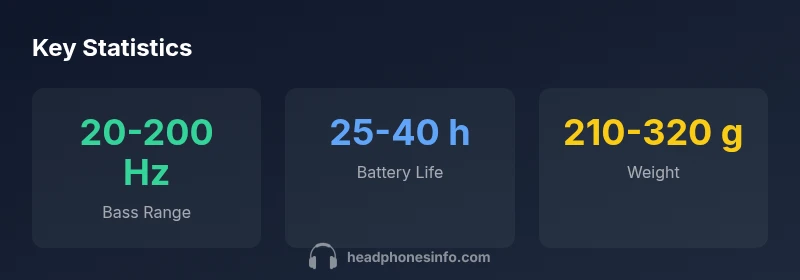
| Feature | Typical Range | Notes |
|---|---|---|
| Bass Response | 20-200 Hz | Emphasized range in XB models |
| Battery Life | 25-40 hours | Model-dependent |
| Weight | 210-320 g | Padding and frame affect weight |
| Connectivity | Bluetooth 5.0+ / wired | Wireless and wired options |
People Also Ask
What defines Sony's Extra Bass headphones?
Extra Bass headphones are tuned to emphasize the low end while preserving midrange clarity. They suit rhythm-heavy genres and casual listening, but you may want to adjust expectations for studio tracks with intricate mixes.
Extra Bass emphasizes bass but keeps mids clear, making it great for hip-hop and EDM.
Are Sony Extra Bass headphones wireless?
Most models in this line are wireless with Bluetooth, but some variants offer wired listening as well. Check codec support for best bass performance.
Yes, most are wireless with Bluetooth. Look for LDAC or similar for best bass feel.
Do they require an amplifier?
Typically no extra amplifier is required for everyday listening. A higher-quality source and good DAC can improve bass texture.
Usually no amp is needed, but a good source helps.
How can I tune bass without masking mids?
Use an EQ to boost or reduce the bass region in small increments, and prefer models with adjustable bass presets. Aim for a balanced overall tone.
Try small bass tweaks with an EQ to keep mids and treble clear.
Which Sony Extra Bass model is best for gaming?
Extra Bass models aren’t specifically designed for gaming. If you game, look for low-latency modes and stable Bluetooth codecs or consider wired connections for best timing.
They’re not gaming-focused; pick low-latency or wired options for best timing.
“Bass-forward tuning can deliver engaging low-end energy when paired with quality source material, but tonality still matters across the full frequency range.”
What to Remember
- Prioritize bass tuning when shopping
- Consider use-case to select wireless vs wired
- Balance bass with mids for versatile sound
- Check comfort and fit for long sessions