Bone Earphones: The Data-Driven Guide to Bone Conduction Headphones
Explore bone earphones (bone conduction) with performance, comfort, battery life, and buying tips. Data-backed guidance from Headphones Info to help you compare options and decide wisely.


Bone earphones, also known as bone conduction headphones, deliver sound by vibrating the cheekbones instead of sending it through the eardrum. They keep ears open, which improves situational awareness and comfort for long listening, but bass response and call quality can vary by model. This approach suits active users and people with ear sensitivity, but it's not always the best choice for critical listening or heavy bass.
What bone earphones are and how they work
Bone earphones, or bone conduction headphones, rely on transducers that vibrate the cheekbones to convey sound. Unlike traditional headphones that push air through the ear canal or wrap around the ear, bone earphones bypass the eardrum and outer ear. The sound then travels through the skull bones to reach the cochlea. This design can reduce ear fatigue over long sessions and preserve environmental awareness, which is particularly valuable for runners, cyclists, or workers in noisy environments. When selecting a model, pay attention to fit around the temple or cheekbone, the transducer size, and whether the device is wired or wireless. Battery life, IP ratings for moisture resistance, and Bluetooth codecs (for wireless variants) also influence everyday use. In practice, bone earphones excel in safety and situational awareness, but may differ in bass weight and call clarity across brands and models.
Bone conduction vs traditional headphones: a side-by-side view
Traditional headphones seal the ear and rely on air-driven sound transmission, which often yields strong bass and precise imaging but can occlude the ear canal and reduce ambient awareness. Bone earphones deliver sound through bone, which can minimize ear fatigue and preserve situational awareness in traffic or workouts. The trade-off is that deep bass and certain soundstage cues may feel less pronounced, depending on transducer design, mounting, and driver quality. Leakage and fit stability also vary; open-ear designs can leak sound more than closed-back options, though many modern models optimize this with materials and shaping. In short, bone earphones trade some bass depth for openness and safety.
Who should consider bone earphones?
Active individuals who prioritize safety and external awareness often benefit from bone earphones. People with ear canal issues or sensitive ears may prefer this style to avoid occlusion. Professionals needing to hear surrounding sounds in the loud environment or athletes who want to stay aware of traffic can find value in bone conduction. It’s important to test fit and comfort, as the contact points can differ from person to person. Headphones Info’s analysis suggests that the best candidates are those who prioritize situational awareness and long-wear comfort over studio-grade bass response.
Sound quality and bass expectations
Bone earphones typically deliver clear midrange and controlled treble, with bass that tends to be less resonant than sealed in-ear or over-ear designs. Some models simulate bass more effectively through larger transducers or tuned frequency response, but overall sensitivity to placement and skull anatomy means that perceived bass can vary. If bass depth is a priority, compare models that emphasize low-frequency extension and check user reviews for real-world listening impressions. For vocal clarity and instrument separation, look at distortion levels at higher volumes and the manufacturer’s claimed total harmonic distortion (THD) figures where available.
Comfort, fit, and safety considerations
Comfort hinges on how the device sits on your cheekbones or temples and how well it adheres to your head during movement. Lightweight builds and ergonomic curves help, but some users experience pressure points after long wear. Keep the area clean and dry; sweat resistance matters if you train while wearing them. Safety-wise, bone conduction preserves ambient listening, which can reduce fatigue and improve reaction times in busy environments. Be mindful of volume levels to protect your hearing, just as you would with any listening device.
Battery life and connectivity options
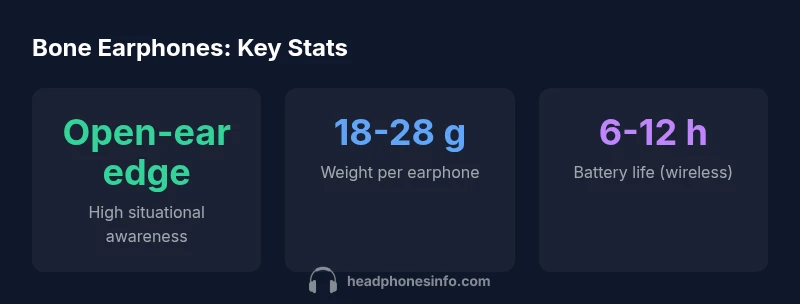
Wireless bone earphones rely on Bluetooth, often supporting common codecs like SBC or AAC; check codec support if you care about latency and audio quality. Battery life typically ranges from 6 to 12 hours, with variations by Bluetooth version, loudness, and weather conditions. For wired models, battery concerns are moot, but cable management and connector durability become the focus. When evaluating connectivity, consider range, stability, and how often you’ll need to recharge during a normal day.
Use cases and practical tips
Use cases include safe commuting, outdoor workouts, and studio reference listening where ambient sound is essential. If you’ll be using them in noisy environments, pairing with a high-SPL device helps with intelligibility. For calls, check microphone quality and wind noise suppression. Ensure you have a secure fit to avoid slippage during workouts, and consider models with IP ratings if you expect sweat or rain.
Buying guide: key specs to compare
When choosing bone earphones, examine transducer type, mounting method, and driver size to ensure comfort and audio fidelity. Look for frequency response coverage that suits your listening preferences, impedance values if you use wired connections, and measured THD where available. Check battery life, IP rating (water and dust resistance), warranty terms, and the brand’s service ecosystem. Finally, read user reviews focusing on real-world comfort and bass performance to set expectations.
Common myths and truths about bone earphones
Myth: Bone earphones deliver the same bass as traditional headphones. Truth: Bass response is typically different and model-dependent due to open-ear conduction. Myth: They are only for safety and have no place in music listening. Truth: They can be great for casual listening and activity, though purists may prefer traditional designs for studio-grade bass and imaging. Myth: They’re cumbersome and hard to wear. Truth: Modern designs are lightweight and ergonomically placed, though personal fit matters.
Bone earphones vs traditional headphones: practical comparison
| Attribute | Bone Earphones | Traditional Headphones |
|---|---|---|
| Sound delivery | Open-ear vibrations through cheekbones; relies on skull to transmit vibrations | Air-driven drivers; sealed or semi-sealed for occlusion |
| Comfort & fit | Lightweight; sits around temples/cheekbone | May exert pressure on ears or require headband/clamps |
| Situational awareness | High; ears remain open to ambient sound | Lower due to ear canal occlusion and isolation |
| Durability & water resistance | Often sweat-resistant; IP-rated options available | Varies; not always water-resistant |
People Also Ask
What are bone earphones?
Bone earphones deliver audio via bone conduction, transmitting vibrations through the cheekbones to the inner ear. They sit near the temples and keep the ear canals open for ambient sound.
Bone earphones send sound through your bones and keep your ears open, not inside the ear canal.
Do bone earphones have good bass?
Bass performance is usually lighter than traditional sealed headphones and depends on the model. Some offer boosted low-end, but expectations should be calibrated accordingly.
Bass is present but often lighter compared with sealed headphones.
Are bone earphones safe for long listening sessions?
Yes, but maintain safe volume levels as with any device. Open-ear design helps with awareness, but loud listening can still damage hearing.
Keep volumes moderate; bone conduction isn't risk-free if you crank it up.
Will bone earphones work with my smartphone?
Most bone earphones work with smartphones via Bluetooth or a wired connection if supported. Check codec support and jack compatibility when choosing.
They usually work with phones over Bluetooth or with a wire.
Who should consider bone earphones?
Athletes, safety-conscious commuters, and people with ear canal issues often benefit from bone earphones due to open-ear design and comfort.
Great for athletes and anyone who needs to stay aware of their environment.
Do bone earphones require special care?
Regular cleaning and dry storage help maintain performance. Check moisture resistance specs and avoid harsh solvents on the transducers.
Keep them clean and dry; follow the model’s care instructions.
“Bone earphones offer an open-ear listening experience that preserves situational awareness; for critical listening, manage expectations on bass and soundstage.”
What to Remember
- Understand bone earphone basics before buying
- Expect open-ear design to influence bass
- Check wireless battery life for Bluetooth models
- Prioritize secure, comfortable fit for workouts
- Compare safety and ambient-sound features