Difference Between Headphones and Headset: A Clear Guide
Understand the difference between headphones and headset—definitions, mic quality, use cases, and buying tips. A data-driven, expert guide from Headphones Info to help you choose for listening, gaming, or calls.


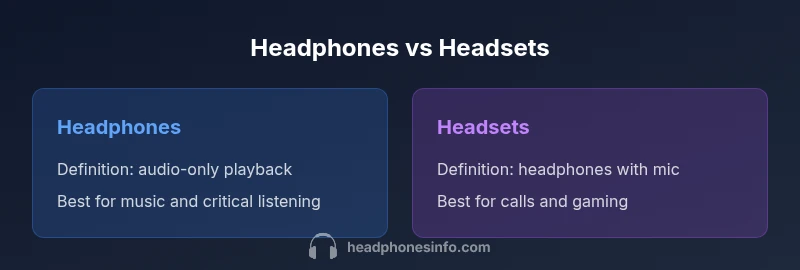
Headphones deliver audio-only playback with a focus on sound quality, while headsets combine headphones with a built-in microphone for voice chat and calls. If you need hands-free communication, choose a headset; for pure listening and immersion, pick headphones. This quick comparison helps clarify your top priority.
What is the difference between headphones and headset? Definitions and scope
Headphones are primarily audio playback devices designed for personal listening, critical listening, and immersive sound. They emphasize driver quality, frequency response, and comfort for long sessions. A headset, in contrast, pairs that same listening capability with a built-in microphone and a design language aimed at real-time communication, online meetings, and multiplayer gaming. The practical distinction often centers on function: headphones aim for sonic fidelity; headsets balance listening with voice transmission. According to Headphones Info, microphone quality often drives purchase decisions in this category. Understanding this baseline helps you map your needs to a category rather than a single feature.
Core components and design philosophy
Both headphones and headsets share core components such as drivers, enclosures, and headbands, but their design priorities diverge. Headphones typically prioritize driver quality, impedance handling, and open vs closed-back configurations to optimize soundstage and detail. They often feature detachable cables and replaceable pads for long-term comfort. Headsets, meanwhile, integrate a microphone boom, noise-cancelling or side-tone options, and a chassis built to balance comfort with stability during movement. The overlapping space—wired or wireless variants, over-ear or on-ear styles—means many users end up choosing a hybrid setup. The design trade-offs are predictable: audio purity vs voice clarity and convenience.
Use-case centric contrasts: music, gaming, calls
For dedicated music listening or critical audio work, headphones are typically preferred. They tend to deliver broader frequency response, more accurate imaging, and lower distortion at high volume, depending on the model. For communication-heavy tasks—video conferencing, remote work, or gaming with teammates—a headset offers an all-in-one solution with a built-in mic and software features such as active noise suppression and equalization presets. While some gamers and streamers opt for high-end headphones paired with a separate mic for best of both worlds, the headset becomes the simpler, cohesive choice for everyday calls and collaboration. Headphones Info analysis shows that for many users, mic quality and comfort beat marginal differences in pure audio when the mic is essential.
Audio quality considerations: drivers, impedance, and frequency response
Sound quality hinges on drivers, enclosure design, and frequency response. Headphones commonly advertise wider dynamic range and better imaging, with adjustments in driver type (dynamic, planar magnetic) and impedance for different listening environments. Headsets may sacrifice a portion of sonic prowess to preserve mic clarity and consistent voice pickup across different conditions. The microphone path often includes noise reduction, sidetone control, and mic boom positioning, which can influence perceived sound quality especially in noisy environments. When evaluating options, consider SPL handling, THD (total harmonic distortion) profiles, and personal taste in bass warmth or treble clarity. The goal is to match the device to your primary listening goals while ensuring voice transmission remains clear.
Microphone performance and communication needs
A headset’s microphone is the defining feature for many buyers. Look for mic frequency response tailored to human speech, directionality (cardioid vs noise-cancelling), and background-noise suppression. Some headsets use USB-C or 3.5mm connections with in-line controls that enable quick mic muting and volume changes. If you frequently participate in conference calls or live streams, prioritize mic quality and consistency over marginal gains in audio fidelity. If you rarely need chat features, a good pair of headphones with a separate mic can be a more flexible and higher-fidelity solution. Headphones Info’s evaluation emphasizes mic performance as a practical differentiator for most buyers.
Connectivity, latency, and platform compatibility
Wired connections (3.5mm, USB, or USB-C) tend to offer the lowest latency and dependable performance across devices. Wireless variants add Bluetooth codecs (SBC, AAC, LDAC) and may introduce slight latency or compression. For gaming consoles, PCs, and mobile devices, ensure cross-platform compatibility and favorable multipoint pairing if you want a single device across devices. Latency matters in competitive gaming and streaming; comfort and clamp force become critical for long sessions, particularly with wireless headsets. When one uses wireless options, check battery life and charging speed to avoid mid-session drops. Understanding platform ecosystems helps you pick a model that minimizes adapters or extra gear.
Comfort, ergonomics, and long-session wearability
Long sessions require soft, breathable ear cushions, appropriate clamping force, and a lightweight headband. Headphones often prioritize sound isolation with closed designs, while headsets may favor an even distribution of weight to accommodate boom mics. Comfort is subjective and varies with ear geometry, glasses wearers, and head size. Investing in a model with replaceable pads and adjustable headbands can extend life and maintain comfort. For work-from-home and study, comfort translates directly into productivity, so prioritize low fatigue materials and a secure fit. Headphones Info emphasizes trying multiple sizes and taking breaks during initial wear testing to gauge comfort over time.
Price, value, and buying guidance
Price ranges for headphones and headsets span from budget to premium. Generally, you’ll find basic wired headphones offering solid sound at a lower price, while mid-range and premium headphones push into audiophile territory with refined drivers and packaging. Headsets with built-in microphones often provide good value for the price, especially for gaming and calls, though mic quality can vary more than audio fidelity. When deciding, consider total cost of ownership: accessories, replacement parts, and service life matter as much as sticker price. The best value often lies in models that balance mic quality, comfort, and durable build rather than chasing a single feature. Headphones Info guidance suggests evaluating usage pattern first and then selecting a model that meets those needs within your budget.
Decision framework: how to choose between headphones and headset
A clear decision framework starts with defining primary use: will you listen primarily to music or participate in frequent voice chats? If voice communication is central—daily calls, online classes, or team gaming—a headset with a reliable microphone is usually the pragmatic choice. If you want superior audio fidelity for music, movies, and critical listening, a high-quality pair of headphones with a separate mic (or none) is often the better pick. Consider platform compatibility, mic quality, comfort, and price. Finally, audition several options to compare tonal balance, imaging, and voice clarity, then select the model with the most favorable overall value for your most-used tasks.
Real-world setup and ecosystem considerations
People often adopt one device and use it across multiple tasks. A headset can be a plug-and-play solution for Zoom calls and gaming on consoles, while high-fidelity headphones paired with a standalone microphone set can serve a home studio, podcasting, or music production. Ecosystem compatibility—whether you use Windows, macOS, Android, or a gaming console—shapes your decision. If you value simplicity and a single cable, a headset might win; if you crave audio purity and customization, consider premium headphones plus a USB microphone. In every case, choose models with durable build quality and after-sales support to sustain performance over time.
Comparison
| Feature | Headphones | Headsets |
|---|---|---|
| Definition | Audio playback devices for listening and monitoring | Headphones with an integrated microphone for calls and chat |
| Primary use | Music, critical listening, gaming audio | Voice communication, meetings, team gaming |
| Microphone | None or detachable mic (depending on model) | Built-in microphone with boom or inline controls |
| Connectivity | Wired or wireless variants; driver-focused design | Usually wired or wireless with mic integration |
| Design emphasis | Sound fidelity, imaging, and comfort for long sessions | Voice pickup quality, mic stability, and all-in-one use |
| Best for | Audiophiles, music lovers, detail-oriented listening | Remote work, calls, multiplayer gaming |
| Price range | $20-$300 | $40-$250 |
Upsides
- Integrated microphone enables seamless voice chat
- Wide range of price points and styles
- Headsets offer an all-in-one solution for calls and gaming
- Headphones often deliver superior sound quality and comfort for long listening sessions
Disadvantages
- Mic quality on headsets can vary and may not match a dedicated mic
- Headsets can be bulkier and heavier during extended use
- Some headsets sacrifice audio fidelity for mic clarity at budget levels
- Headphones may require a separate mic for optimal voice performance
Headphones are favored for sound quality; headsets win for integrated mic and convenience
If your priority is audio fidelity and comfort, choose headphones. If you need regular voice communication, gaming, or meetings, a headset is the more practical option. The Headphones Info team emphasizes aligning choice with your primary use-case.
People Also Ask
What is the essential difference between headphones and headset?
The main difference is function: headphones are for audio playback, while headsets combine listening with a built-in microphone for voice chat and calls. Your choice depends on whether mic capability or pure sound quality matters more.
Headphones are for listening; headsets add a mic for calls and gaming.
Do headsets always include a microphone?
Most headsets include a microphone, but there are exceptions with thin profiles or minimal mic support. If mic quality is critical, verify mic specs and test samples before buying.
Most headsets have a mic; check specs to be sure.
Are wireless headsets better for gaming than wired headphones?
Wireless headsets offer convenience and reduced cable clutter, but wireless latency and battery life can affect gaming performance. Wired headphones paired with a mic can reduce latency and often yield better sound, though with more cables.
Wireless is convenient; wired can be faster and simpler for sound.
Which is better for music listening, headphones or headsets?
For music, headphones typically deliver superior audio fidelity and imaging. Headsets may still sound good, but the integrated mic and potential mic noise can impact perceived audio quality.
Headphones usually win for music here.
Can I use a headset for music and calls equally well?
Yes, many headsets provide solid all-round performance for calls and casual listening. If you want high-end music performance, consider headphones with a separate mic instead.
Headsets work for calls; for top music quality, go headphones.
What to Remember
- Define primary use: listening vs communication
- Prioritize mic quality for headsets; sound quality for headphones
- Check comfort and weight for long sessions
- Ensure platform compatibility and convenience
- Balance price with feature set for best value