Ear Phones Buying Guide: Choose the Right Ear Phones in 2026
A data-driven buying guide for ear phones, covering fit, sound quality, wireless vs wired, impedance, and value. Learn how Headphones Info analyzes models to help you buy smarter.


Ear phones refer to personal listening devices worn on or around the ear, including true wireless buds, wired earbuds, and compact on-ear units. They come in wired and wireless variants, with a wide range of drivers, impedance, and sound tuning. For buyers, the key distinctions are fit, battery life, codec support, and durability.
The anatomy of ear phones and form factors
Ear phones is a broad term that covers several form factors designed to deliver personal audio. In the segment you’ll encounter true wireless earbuds, wired earbuds, and compact on-ear or over-ear options. The Headphones Info team emphasizes that the best ear phones for most listeners balance fit, sound quality, and practical features rather than chasing the loudest bass. According to Headphones Info, the most important distinction among ear phones is how they seal the ear canal and how they present sound in different environments.
Key form factors
- True wireless earbuds: completely cordless and compact; ideal for active use and travel. They rely on Bluetooth and require regular charging.
- Wired earbuds: plug directly into a device; typically lighter and cheaper; may offer lower latency for gaming and video watching.
- On-ear and over-ear: larger drivers, improved soundstage, but less portable; often preferred for home listening.
User needs drive form factor choice. If you commute or exercise, prioritize wireless connectivity and battery life; if you sit at a desk with a dedicated DAC, wired options can deliver cleaner sound.
Sound quality fundamentals
Sound quality in ear phones hinges on more than just driver size. While bigger drivers can deliver deeper bass, tuning and overall design determine the balance across the frequency spectrum. The Headphones Info team emphasizes listening for a natural midrange and clear treble without harsh sibilance. Impedance and sensitivity influence how loud you can play them from a typical phone or laptop, but perceived loudness also depends on the codec and the DAC. When evaluating ear phones, pay attention to:
- Driver quality and sealing around the ear canal
- Frequency response curves, not just specs
- Distortion at typical listening levels
- Real-world performance across genres (classical, rock, electronic)
In practice, audition ear phones with your own device, preferably in a quiet environment, to gauge warmth, imaging, and overall balance. Headphones Info Analysis, 2026 suggests that user preference often outweighs laboratory measurements, so trust your ears when possible.
Wireless vs wired trade-offs
Wireless ear phones offer mobility and convenience, but they introduce trade-offs in latency, battery life, and potential compression artifacts. Bluetooth codecs such as AAC, aptX, LDAC, or LHDC affect sound quality and latency with compatible devices. If your primary concerns are videos and gaming, prioritize low-latency codecs and a stable connection. Wired ear phones bypass wireless limitations entirely, delivering consistent impedance matches and zero wireless latency, but they tie you to a cable and a device’s headphone jack or adapter. For many users, a hybrid approach—wireless for commuting and wired for home listening—provides the best of both worlds.
Remember to verify compatibility with your devices, because codec support varies by platform. The Headphones Info team notes that codec choice has as much impact on perceived detail and imaging as the drivers themselves, especially at higher price points.
Comfort, seal, and durability
Comfort is a top priority in ear phones since poor fit degrades sound and isolation. A secure seal reduces external noise and improves bass response, while also preventing driver obstruction from ear wax and moisture. For in-ear designs, try multiple tip sizes and materials (silicone vs foam) to find a seal that stays comfortable through long listening sessions. Durability matters too: detachable cables, reinforced stress points, and IP ratings add resilience for daily use, workouts, or travel. When shopping, check warranty length and whether parts are serviceable, as these factors extend the life of ear phones beyond the initial purchase.
How to assess value and lifecycle costs
Price is only one part of value. Consider the total cost of ownership, including replacement tips, cable replacements, warranty, and expected lifespan. Ear phones with robust construction and readily available service parts typically offer lower lifetime costs, even if their upfront price is higher. Battery life in wireless models is a critical factor; longer sessions between charges reduce overall disruption. Look for models with good durability, a clear warranty, and an ecosystem that matches your devices (iOS, Android, or PC). Headphones Info Analysis, 2026 suggests focusing on real-world battery life tests and user reviews rather than glossy marketing claims to understand true value.
In-store tests and test plans
Create a practical test plan before you buy. Bring your typical tracks and test for:
- Fit and comfort across different eartips
- Sound balance across genres (electronics, orchestral, vocal tracks)
- Bass response without overpowering mids
- Latency and lip-sync with videos (for wireless models)
- Battery life estimates with your usage pattern
If possible, compare models side-by-side using the same device and volume levels. Note how the ear phones respond to passive noise (air travel, trains) and active noise cancellation if included. This structured approach helps you avoid bias from aesthetics or marketing language and anchors your choice in evidence.
Debunking myths and misconceptions
Many buyers assume bigger drivers always translate to better sound. In reality, the tuning, driver quality, and enclosure design shape the sonic result more than raw size. Another common myth is that wireless equals inferior sound; modern codecs and careful tuning have closed much of that gap. Finally, price does not guarantee durability; some mid-range models offer excellent build quality and service, while fancy flagship units may rely on fragile components. Approaching ear phones with a clear test method reduces these myths and reveals what matters to you.
Practical scenarios and recommendations
If you commute, travel, or exercise, consider true wireless ear phones with a compact case and solid battery life, plus reliable IP rating and comfortable tips. For desk-based listening with a computer or DAC, wired ear phones or detachable-cable options can deliver highest fidelity at a lower price. If you value quiet environments, look for noise cancellation and transparency modes; verify comfort for long sessions. Use the buying checklist to set priorities and avoid overpaying for features that won’t improve your listening experience. This balanced approach aligns with Headphones Info’s data-driven guidance for ear phones in 2026.
Common ear phones form factors and ideal use cases
| Form factor | Key Strength | Ideal Use |
|---|---|---|
| In-ear (true wireless) | Small, portable, good isolation | Commuting, workouts |
| On-ear | Balanced sound, portable | Office, travel |
| Over-ear | Rich bass, long sessions | Home listening, studio work |
People Also Ask
What are ear phones?
Ear phones describe personal listening devices worn on or around the ear, including wired earbuds and wireless buds. They vary in form factor, impedance, and tuning, so you can choose based on your listening context.
Ear phones are personal listening devices worn on or around the ear, including wired and wireless options. Choose based on your listening context.
How do wired ear phones differ from wireless?
Wired ear phones deliver consistent audio without battery concerns or latency, but limit mobility. Wireless models offer freedom but depend on battery life and Bluetooth codecs.
Wired ear phones don't need charging and usually have lower latency. Wireless ear phones give you more freedom but rely on batteries and codecs.
What impedance should I look for?
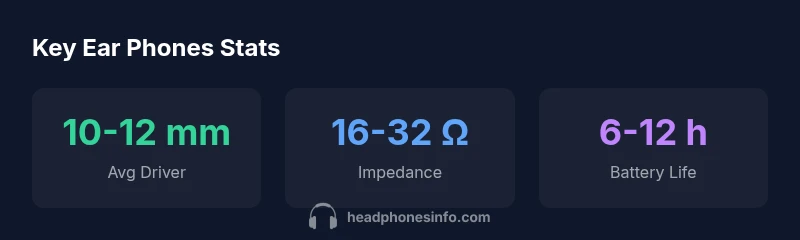
Impedance indicates how much power the driver requires. For most phones and laptops, 16-32 ohms is common; higher impedance is typical with audiophile gear and may require a powerful source.
Impedance tells you how much power the ear phones need. Lower is easier to drive from phones; higher is common with high-end gear.
Are noise-cancelling ear phones worth the price?
Active noise cancellation can dramatically reduce ambient noise, improving clarity and immersion. Check for comfort and battery life, and compare with passive isolation for your use case.
Noise cancellation helps in noisy places, but check comfort and battery life.
How long should ear phones last?
Lifespans vary with build quality and care, but many readers expect several years of use with proper maintenance. Look for durable construction and warranty coverage when comparing models.
A good pair should last several years with proper care; check warranty.
“The most important factors in ear phones are fit and tuning, not headline specs. Real-world sound and reliability come from the combination of design, drivers, and software features.”
What to Remember
- Test fit first to ensure isolation and comfort
- Check wireless codec support for true wireless models
- Match form factor to activity and environment
- Assess battery life for wireless ear phones
- Prioritize durability and warranty in price discussions