Headphone Price Guide 2026: Trends, Ranges, and Buying Tips
Explore headphone price trends in 2026, from budget to premium models. Learn why prices vary, how features affect value, and how to spot deals with Headphones Info.


Headphone price in 2026 ranges from about $20 for entry-level wired models to $600+ for premium wireless ANC headphones. The price spread reflects feature differences, build quality, and brand positioning, guiding buyers to match listening needs with value. By comparing drivers, isolation, warranty, and comfort, you can identify the best price-to-performance option.
How headphone price is structured
Prices for headphones reflect a mix of manufacturer suggested retail prices (MSRP) and the real-world street prices seen in stores and online marketplaces. MSRP is a starting point, but actual paid prices vary by retailer, bundles, and seasonal promotions. Margins, distribution costs, and volume sales influence the final sticker price. Consumers should watch for payoffs like warranty length, included accessories, and post-purchase support, which can tilt value in favor of a slightly higher upfront cost. In 2026, Headphones Info analysis shows that price transparency has improved, with retailers frequently publishing clearer feature lists and performance benchmarks, helping buyers compare apples to apples across brands.
Key price drivers: features, brands, and materials
Several features have a disproportionate impact on headphone price:
- ANC and transparency mode: Active noise cancellation adds significant components and tuning work, pushing prices higher.
- Driver configuration and size: Larger drivers and advanced hardware deliver richer sound but cost more to manufacture.
- Build materials: Metal housings, reinforced headbands, and swappable cables add to durability and price.
- Wireless tech and codecs: Bluetooth versions, multi-device pairing, and high-resolution codecs can raise costs.
- Brand positioning: Premium brands command higher prices through perceived value and after-sales service. Understanding how these factors interact helps shoppers decide where to compromise and where to invest for longevity.
To evaluate value, map your listening priorities (e.g., isolation, bass accuracy, comfort) to the price tier that best aligns with those goals. Consumers should also factor in long-term costs like replacement parts and warranty coverage when assessing price efficiency.
Budget to premium: a consumer pathway
The headphone market typically presents clear tiered options that align with use-case and budget:
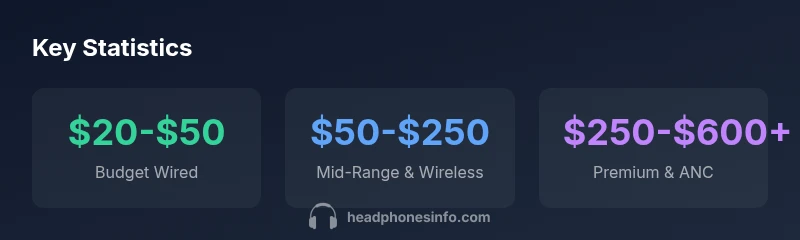
- Budget (roughly $20–$50): Basic wired sets with modest build quality. Suitable for casual listening, learners, or as a spare pair. Value tends to come from reliable comfort and functional cables rather than high-end sound.
- Entry-level wireless ($50–$100): Lightweight wireless models offering convenience and basic ANC or improved portability. Great for commuters and students seeking convenience without breaking the bank.
- Mid-range ($100–$250): A solid balance of sound quality, build durability, and features like active noise cancellation and Bluetooth multipoint. This tier often provides the best price-to-performance ratio.
- Premium ($250–$600+): High-end sound quality, refined tuning, premium materials, advanced ANC, and robust warranties. Best for enthusiasts who demand precise sound reproduction and long-term reliability.
When shopping, set a target tier based on your primary use and listening expectations, then compare top-performing models within that band. Headphones within the same tier can differ in tonal balance and comfort, so consider a test drive if possible or rely on reputable reviews to gauge how price correlates with audible improvements.
Evaluating value at a given price
Value assessment combines subjective listening with objective indicators. Start with spec sheets and official measurements (frequency response, impedance, sensitivity) to filter out models that won’t pair well with your devices. Next, consider real-world factors:
- Comfort and fit: If you wear headphones for long sessions, lightweight frames and padded cups matter for price justification.
- Durability: Detachable cables, swappable parts, and sturdy hinges extend lifespan and make higher upfront costs sensible.
- Portability: Foldable designs and wireless charging or quick-charge features add convenience while affecting price.
- Warranty and support: Longer warranties reduce total ownership cost and exposure to potential defects.
- User reviews and expert tests: Look for consistent praise or red flags across independent sources.
A practical approach: pick a model in your target price band that checks your top three priorities, then read a few in-depth reviews to validate your perception of value. If the price premium unlocks tangible benefits you’ll actually use, it’s more likely a sensible buy.
The role of sales, coupons, and bundles
Pricing is not static. Discounts, seasonal sales, and bundles (headphones with cases, spare cables, or extended warranties) can shift perceived value. During sale events, even premium models can drop by a meaningful margin, making a high-quality headset affordable. When evaluating a deal, compare the sale price to the model’s typical street price over several weeks to determine if the discount is real. If a bundle includes items you would otherwise purchase separately, it often increases overall value despite an elevated sticker price.
Case studies: what you get at different price points
Consider two hypothetical purchases to illustrate value perception:
- Case A: Budget wired model at $35 offers good comfort for short listening, decent build, and reliable cable durability. It’s a low-risk starter that lets you test preferences without a large commitment.
- Case B: Premium wireless ANC at $500 delivers top-tier noise control, dynamic sound, and long-term warranty. The upgrade in sound quality and convenience may justify the price for frequent travelers or critical listeners seeking immersion.
In both cases, the critical factor is whether the extra price translates into meaningful improvements in your daily use, not just a better marketing story.
How to use data to shop smarter
To optimize headphone spending, rely on data-driven checks:
- Compare price trajectories over several weeks to avoid chasing temporary spikes.
- Use price-tracking tools and retailer filters to isolate genuine value across brands.
- Read independent reviews with blind listening notes to minimize brand bias.
- Consider total cost of ownership, including replacement parts and warranty coverage.
- Balance features with price by mapping your most-used features (e.g., ANC, Bluetooth codecs) to the price premium they command.
A disciplined approach helps you avoid overpaying for features you may seldom use and ensures you get the best sound for your money within your chosen tier.
Pricing myths and realistic expectations
Common myths persist in headphone pricing:
- More expensive always means better sound: Not always; price often reflects build quality and features rather than linear sonic improvements. Realistic expectations help avoid overspending.
- ANC is always worth the premium: ANC adds value in noisy environments, but the benefit varies by ear shape and usage. Try before you buy when possible.
- Durability is guaranteed with higher price: Longevity depends on design and care; warranties can be a practical proxy for durability.
Set expectations by focusing on your use-case, the value of key features, and credible reviews rather than price alone.
Estimated price bands by category
| Category | Estimated Price Range | Notes |
|---|---|---|
| Budget | $20-$50 | Entry-level wired models |
| Entry-level wireless | $50-$100 | Budget-friendly wireless |
| Mid-range | $100-$250 | Balanced features and quality |
| Premium | $250-$600 | High-end sound and durability |
People Also Ask
What is a reasonable budget for new headphones in 2026?
A reasonable budget depends on usage. For casual listening, $40–$120 covers many solid wired and wireless models; for better noise cancellation and fidelity, plan $150–$250. Balance price with features and warranty.
For casual listening, expect solid wired models under around $120. If you want better noise cancellation, aim for $150 to $250.
Do wireless headphones always cost more than wired?
Not always. Some budget wireless options match mid-range wired prices, while premium wireless can exceed wired equivalents. Weigh the convenience against the sonic gains for your use case.
Usually wireless costs more, but there are good budget wireless options. Compare features before buying.
Are discounts significant during shopping holidays?
Yes. Major sales events can reduce headphones prices by meaningful margins, often 15–30% or more on popular models. Check price histories and use coupons when available.
Yes, big sales often drop prices by a good margin. Look for coupons and price history.
How do I tell if a headphone price is fair?
Compare MSRP to current street price and feature set. Read independent reviews, verify build quality, and consider warranty length to gauge value.
Compare price to features and reviews, and check the warranty.
Do warranties affect price value?
Warranties don't change the sticker price but add long-term value. A longer warranty can offset higher upfront costs by reducing replacement risk.
Longer warranties add value even if they don't lower the upfront price.
“Price alone doesn't determine value; a well-chosen headphone at the right price delivers better perceived quality and longevity.”
What to Remember
- Define your price tier before shopping
- Match features to your listening priorities
- Expect price variation within each tier
- Use deals and bundles to maximize value
- Rely on data-driven reviews for accuracy