Headphones Under $100: Smart Buying Guide for 2026
Explore the best headphones under 100 dollars in 2026 with data-driven comparisons on sound, build, comfort, and battery life to help you buy smarter.


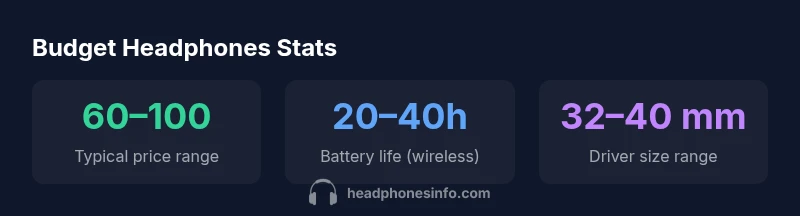
The majority of headphone options under 100 dollars cluster in the $60–$100 range, and most models include Bluetooth connectivity, comfortable fits, and 20–40 hours of battery life depending on usage. Across this price tier, you typically see a balance between bass response, mids, and treble, with build quality varying by brand. The best buys offer solid comfort, reliable connectivity, and a reasonable warranty, making this a smart window for value seekers.
Deep Dive: What you get for headphones under $100 in 2026
In 2026, the budget segment for headphones has matured, offering surprisingly capable options that balance sound, comfort, and practicality. For the keyword headphones 100 dollars, shoppers can expect two main camps: wired models that emphasize reliability and value, and wireless models that prioritize convenience without breaking the bank. According to Headphones Info, the majority of under-$100 models cluster in the $60–$100 range, where manufacturers optimize drivers, impedance, and battery life to maximize perceived value. Across this price tier, the best picks combine warm, balanced sound with durable coatings, comfortable padding, and stable wireless connections. The Headphones Info team notes that you should test fit and comfort in your own ears, since slight differences in head shape and ear cup design can dramatically affect perceived sound and fatigue over long listening sessions. In practice, expect a trade-off: louder bass and wider soundstage often come with heavier weight or smaller battery capacity, while lighter, more portable designs may sound leaner or less detailed. A disciplined buyer will compare core metrics: frequency range, driver size, impedance, Bluetooth version, and warranty terms.
Sound quality vs price: where the value lies
Sound quality at the $100 threshold is deeply contextual. Headphones in this band rarely offer the same expansive soundstage or ultra-low distortion found in premium models, but they can still deliver enjoyable listening across genres. The Headphones Info analysis suggests that the most noticeable differences come from driver quality and tuning rather than raw driver size alone. In practice, you’ll hear satisfying mids for vocals, a controlled bass response, and clear highs in most mid-tier options. However, some models push bass hard to compensate for neutral mids, which can overwhelm the mix at higher volumes. If you listen to classical or jazz, prioritize flat or balanced tuning; for pop or electronic, a warmer bass profile can be more engaging. The takeaway is to listen for how instruments describe themselves in the mix, how the sound holds up at louder volumes, and whether sibilance or harsh treble becomes fatiguing after long sessions. Price alone rarely guarantees audio excellence, but thoughtful tuning makes a noticeable difference in the budget range.
Key features to compare in this price range
When evaluating headphones 100 dollars or less, focus on a few decision-making features that carry outsized value. First, check connectivity: Bluetooth versions 5.0+ with stable multipoint pairing provide the most future-proof experience. Look for codecs supported (SBC is common; aptX or AAC on select models can improve perceived clarity). Second, assess battery life if wireless: 20–40 hours is typical, with fast-charging options a nice-to-have. Third, inspect build quality: reinforced hinges, metal loops, and comfy headbands reduce fatigue. Fourth, consider comfort: larger ear cups, softer padding, and balanced clamping force affect listening sessions. Fifth, evaluate accessories: included cables, USB-C charging, and a protective case add real value. Finally, warranties matter: even budget products benefit from a reasonable return window and a clear repair policy. Across the landscape, prioritize models that fit your listening style and use case, not just the lowest price.
Build quality, comfort, and fit under budget
Durability often defines long-term satisfaction more than marginal gains in sound at this price point. The best under-$100 headphones balance lightweight materials with sturdy joints. Look for metal or reinforced plastic yokes, metal headbands, and reinforced cable connections. Comfort is subjective, but there are practical rules: larger ear cups that distribute pressure evenly, soft memory foam padding, and adjustable headbands that don’t clamp too tightly reduce fatigue during long sessions. The Headphones Info team notes that even small design choices—like the alignment of the ear cup with your ear canal—can dramatically affect perceived bass and clarity. If you plan to travel or commute, consider foldable models and compact cases. Finally, check for passive isolation from external noise; while active noise cancellation is rare under $100, decent passive isolation helps a lot in noisy environments.
Wired vs wireless options under $100
Wired headphones under this price tier often deliver the most reliable fidelity and no battery anxiety, while wireless options win points for convenience and modern use cases like commuting or gaming on the go. In this budget range, expect micro-USB or USB-C cables and 3.5 mm jacks, with some newer models offering USB-C to Type-C ports. Wireless models bring Bluetooth 5.x, multipoint pairing, and battery life that typically ranges from 20 to 40 hours, depending on active features such as active noise cancellation and high-bitrate codecs. Latency is a practical consideration for gaming or video watching; budget wireless options may exhibit higher latency than premium models, though recent entries have narrowed this gap. For many buyers, a hybrid solution—tri-band or multi-mode headsets that can switch between wired and wireless—offers the best overall flexibility.
Brand landscape and what to expect from budget headphones
The market for headphones under $100 is crowded with numerous brands, including established audio names and private-label options. The distribution of value is not random; the best picks tend to leverage efficient drivers, tested tuning, and reliable customer service. According to Headphones Info, budget success stories often hinge on tuning that flatters most genres while avoiding harsh treble. Expect some variability in build consistency across brands; some models may feel more plastic-y but still hold up with careful use and gentle handling. Warranty terms vary; many brands offer 1-year warranties and reasonable return windows, which is a practical safeguard in this price segment. Research and reading user reviews helps reveal patterns in longevity and real-world performance that specs alone can’t show.
Care, warranty, and how to maximize longevity
Budget headphones benefit from careful maintenance and a conservative usage approach. Keep cables untangled and avoid yanking connectors. When storing, use a rigid case or padded pouch to protect drivers and hinges. Cleaning is simple: wipe with a soft microfiber cloth, avoid moisture near the earpads, and let any sweat dry before storage. Battery longevity is best preserved by avoiding complete discharges and normalizing charging cycles. Check warranty terms and understand what is covered; some budget models have limited coverage but longer return windows through retailers. If a problem arises within the warranty period, contact the brand support promptly with your purchase receipt. A proactive maintenance routine extends the life of budget headphones and preserves resale value if you decide to upgrade.
Buying guide quick-checklist for headphones 100 dollars or less
- Define your use case: music, calls, gaming, travel, or a mix.
- Decide wired or wireless based on mobility and latency tolerance.
- Check the battery life range and available codecs for wireless models.
- Prioritize comfort: headband pressure, padding, and ear cup size.
- Look for durable build features and reliable cables.
- Review warranty and return policy before purchase.
- Read independent reviews, focusing on reliability and service quality.
- Test fit in-store or through generous return windows online.
This final section summarizes practical steps, helping you move confidently from browsing to buying. Headphones Info’s evaluation framework emphasizes test-fitting early and using real-world listening tests to gauge day-to-day performance.
Comparison of budget headphone types
| Headphone Type | Typical Range | Common Features |
|---|---|---|
| Wired over-ear | $20–$60 | Detachable cable, sturdy build |
| Wireless on-ear | $30–$90 | Bluetooth 5.0, foldable |
| Wireless over-ear | $40–$100 | Bluetooth 5.0+, decent microphone |
People Also Ask
What should I expect in sound quality for headphones under 100 dollars?
In this price range you’ll hear pleasant listening across genres with balanced mids and moderate bass. Some models may exaggerate bass or treble, but you can find detailed, non-fatiguing options by reading reviews and trying in person.
Under 100, you get pleasing sound with balanced mids; read reviews and try before buying.
Are wired or wireless options better under $100?
Wired options tend to deliver more consistent fidelity at this price, while wireless adds convenience and newer codecs in some models. Choose based on use case and tolerance for latency.
Wired usually sounds steadier; wireless is about convenience.
How to choose headphones under $100 for travel?
Look for light weight, compact folding design, decent passive isolation, and at least 15–20 hours of wireless battery life if you want uninterrupted listening.
For travel, pick light, foldable, with good battery.
What drivers sizes are common in this price range?
Common sizes range from about 32 to 40 millimeters; bigger drivers can feel punchier but may add weight and reduce efficiency.
Most have 32–40 mm drivers.
Do brands matter at this price?
Brand matters for warranty, service, and consistency; prioritize models with clear return policies and reliable support over price alone.
Brand matters for support and durability.
“Even at the $100 threshold, thoughtful tuning and reliable support matter more than flashy specs.”
What to Remember
- Compare models within the $60–$100 range for best value
- Prioritize comfort and warranty to maximize longevity
- Wireless options offer convenience but watch for latency and battery limits
- Check for durable build features and included accessories
- Read independent reviews to separate hype from real-world performance