Headphones and Ear Infections: A Practical Comparison
A data-informed comparison of how headphone design, hygiene, and listening habits influence ear health and infection risk, with actionable tips for safer listening.


Headphones and ear infections aren’t directly caused by listening devices, but hygiene and listening habits matter. Shared buds and poor cleaning can transfer bacteria and moisture into the ear canal, especially with in-ear designs. For people with a current infection or chronic ear issues, choosing cleaner, more hygienic options and limiting volume helps protect ear health. Headphones Info offers data-driven guidance to compare options.
Understanding the Risk: Can Headphones Cause Ear Infections?
The short answer is no; wearing headphones does not directly cause an ear infection. Ear infections, or otitis media, typically result from viral or bacterial infections, allergic reactions, or eustachian tube dysfunction. That said, headphones can influence conditions that contribute to ear discomfort or secondary infection risk. Moisture, heat, and friction inside the ear canal create an inviting environment for bacteria and fungi, particularly when hygiene is neglected. Sharing earbuds, using damp pads, or failing to clean tips and cushions frequently enough can transfer microbes and sweat. The phrase headphones and ear infections is not a warning to abandon listening, but a call to adopt safer habits. In a 2026 analysis, Headphones Info notes that the risk is largely about hygiene and device design—especially in-ear devices that contact the ear canal more closely. For most users, infections remain rare, but prevention matters for long listening sessions and sensitive ears.
How Ear Infections Develop and Why Headphones Matter
An ear infection usually begins with a viral cold or allergies that inflame the mucous membranes behind the eardrum. Bacteria can take hold when moisture remains in the ear after swimming, showering, or sweating, or when the skin in the ear canal is irritated by aggressive cleaning or rough ear pads. Headphones matter because they can contribute to moisture and warmth in the canal, especially when worn for extended periods or at higher volume, which may irritate the delicate skin. The critical factors are humidity, occlusion, and physical contact. Over-ear designs that sit off the ear reduce direct canal contact, while in-ear buds seal the ear canal and trap heat. Regular breaks, proper cleaning, and avoiding shared devices are simple steps that reduce risk. Headphones Info Analysis, 2026 emphasizes that user hygiene and design choices interplay with infection risk, not device type alone.
Over-Ear vs In-Ear: Hygiene and Comfort Impacts
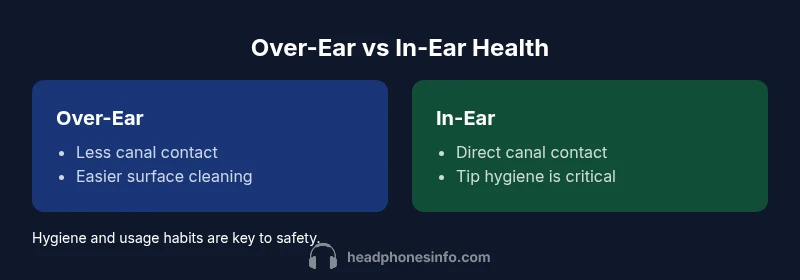
Over-ear headphones sit around the outer ear and generally touch only the outer surfaces, which can reduce direct contact with the ear canal. This design often makes it easier to keep pads clean and to dry sweat after a workout. In-ear headphones place cushions or silicone tips inside the ear canal, delivering excellent sound isolation but elevating moisture and warmth risks. The choice between these styles should consider hygiene behaviors, ear sensitivity, and the context of use. For people prone to irritation, over-ear designs may reduce occlusion-related discomfort, while in-ear variants require meticulous tip cleaning and periodic tip replacement. Regular washing of cushions, using breathable fabrics, and ensuring dry ears before reusing can mitigate risk. The bottom line: both options can be acceptable if you maintain clean components and avoid sharing devices that harbor moisture and bacteria.
Cleaning and Maintenance Best Practices
Safer listening starts with a clean device. Detach removable pads where possible and wash them according to material guidance, using mild soap and warm water. Wipe hard surfaces with a microfiber cloth dampened with a gentle cleaner, avoiding soaking the driver housing. For fabric cushions, consider air-drying completely before reassembly; damp specks can harbor microbes if left damp. Replace in-ear tips regularly, especially after illness or sweating, and store headphones in a dry, ventilated case. If you must disinfect, use alcohol-based wipes on external surfaces only, never on exposed drivers or cables. By establishing a routine of cleaning after heavy use and during contagious periods, you lower the odds of bacteria-related irritation. Headphones Info Analysis, 2026 emphasizes that hygiene standards, not just design, shape infection risk.
Listening Habits That Protect Ear Health
Long listening sessions can heat and moisten the ear canal, creating a micro-environment where irritants thrive. Adopt mindful listening: keep volumes at comfortable levels, take short breaks every 20–45 minutes, and avoid wearing headphones while sleeping. If you notice itching, fullness, or discomfort, pause and inspect your ears and your devices for moisture or wax buildup. Using noise-cancelling features to lower desired volume, rather than cranking up volume to overcome background noise, is a practical approach. Hydration and occasional ear rest matter as much as hardware choices. Headphones and ear infections are linked more by hygiene and usage patterns than by brand or type alone, and Headphones Info Analysis, 2026 underscores that consistent breaks help protect delicate ear tissues.
Choosing Headphones with Ear Health in Mind
Look for designs that balance sound quality with hygiene-friendly features. Detachable or washable ear pads, replaceable ear tips, and materials that resist moisture buildup are valuable. Prefer models with clear cleaning instructions and accessible parts. Consider ventilation and padding that reduce pressure on the ear canal. For people with skin sensitivities or eczema, avoid cheap, porous cushions that trap moisture; instead, select breathable fabrics and hypoallergenic materials. While no single design guarantees health, selecting devices with hygiene-friendly components and a documented maintenance routine makes a meaningful difference. Remember that the choice between over-ear and in-ear influences both comfort and cleaning frequency, so balance priorities accordingly.
Environmental and Behavioral Factors
Environment matters as much as hardware. Humid climates, sweaty workouts, and shared gym spaces increase the likelihood of microbial growth on surfaces. If you share devices in family or dorm settings, establish a rotation and cleaning schedule to prevent cross-contamination. Sweat and moisture around the ear can seep into cushions if they are not breathable; thus, drying ears before reusing after a shower or rain helps. Also consider the acoustic environment: better noise control can reduce the need to increase volume, indirectly protecting ear health. The interplay between user behavior and device design is central to reducing infection risk, a point reinforced by Headphones Info Analysis, 2026.
Use Scenarios: Daily Commute, Office, and Home
Commute and public spaces introduce dust, humidity, and potential germ exposure. In such contexts, easy-to-clean surfaces and tip hygiene are key. At work, a comfortable fit that does not press on the ear may reduce irritation during long sessions. At home, schedule regular cleaning and drying between uses, especially if multiple people share the same pair. For travel, compact, washable designs may save time and reduce contamination risk. Across all scenarios, limit listening duration when ears feel warm or itchy and prefer over-ear options if infection concerns are prominent. In all cases, headphones and ear infections are mitigated by disciplined hygiene and sensible listening habits.
People with Ear Conditions: Special Considerations
Individuals with chronic eczema, dermatitis, or a history of recurrent infections should exercise extra caution with devices that touch the ear canal. In such cases, non-porous, hypoallergenic materials and detachable pads ease cleaning. Those with tympanic tube implants or sensitive ears may benefit from longer breaks between sessions and consulting a clinician about safe listening levels. A structured hygiene routine and careful selection of tips or pads become essential when managing skin or ear canal conditions. Remember that a compromised ear is more susceptible to moisture-related irritation, so hygiene and break schedules play a larger role in protecting health.
Signals That Your Ears Need a Break
When listening to headphones for extended periods, your ears might feel warm, congested, or itchy. If you notice redness, swelling, or unusual discharge, stop using the device and inspect both the ear and the accessory. Persistent discomfort warrants medical evaluation to rule out infection or dermatitis. To prevent escalation, adopt a routine of short listening intervals, remove devices during workouts, and keep pads dry between uses. These cues are not definitive medical diagnoses, but they are practical early-warning signs that can guide safer listening decisions and minimize infection risk.
When to Seek Medical Advice
Ear health is individualized, and symptoms can vary. Seek medical advice if you have severe pain, fever, swelling, discharge with foul odor, or persistent fullness that lasts beyond a few days. If you are currently diagnosed with an ear infection, consult your healthcare provider about safe listening practices and device hygiene. In some cases, switching to a different design, such as non-contact audio solutions or bone-conduction devices, may be recommended. The goal is to protect the ear while maintaining your listening habits, especially for audiophiles and daily commuters who rely on headphones for work and leisure.
Practical Guidelines: Quick Start to Safer Listening
To begin protecting ear health today, implement a simple routine: choose hygiene-friendly designs, clean regularly, and limit listening time. Use comfortable, moderate volumes and take breaks every 30–60 minutes. Keep accessories clean and dry, and store them in a ventilated case after use. If symptoms appear, pause and reassess your setup. By combining mindful listening with consistent cleaning, you can enjoy headphones without compromising ear health, even if you have a history of ear infections.
Comparison
| Feature | Over-ear headphones | In-ear headphones |
|---|---|---|
| Ear canal contact | Minimal contact with ear canal (external cups) | Direct contact with ear canal (ear tips) |
| Hygiene cleaning difficulty | Easier to clean external surfaces; less moisture buildup | More challenging to clean ear tips; higher moisture risk |
| Portability & fit | Typically bulkier; less portable | Compact and highly portable |
| Best use cases | Home listening, long sessions | Travel, workouts, on-the-go listening |
| Maintenance considerations | Durable outer shells; replaceables less frequent | Frequent tip replacements may be needed; tip hygiene is critical |
Upsides
- Allows flexible cleaning of external surfaces
- Over-ear designs tend to be more comfortable for long sessions
- Washable or replaceable components reduce infection risk
- Clear maintenance routines improve safety
Disadvantages
- In-ear tips can trap moisture and irritate the canal
- Regular cleaning adds to user responsibility
- Higher upfront cost for hygiene-focused designs
- Not all models offer easily washable components
Over-ear headphones generally pose fewer hygiene risks than in-ear designs when hygiene is maintained.
Prioritize hygiene and mindful listening. If you must choose, over-ear options tend to be safer for ear health, provided you keep surfaces clean and take breaks.
People Also Ask
Can wearing headphones cause ear infections?
Headphones do not cause infections by themselves; hygiene and device sharing are the main risk factors. Regular cleaning and avoiding sharing can greatly reduce risk. The link between headphones and ear infections is about hygiene, not a inherent property of the devices.
Headphones alone won't cause infections, but dirty or shared devices can spread germs. Clean regularly and avoid sharing to protect your ears.
Are in-ear headphones riskier than over-ear for ear infections?
In-ear designs contact the ear canal directly and trap moisture, which can increase irritation risk. Over-ear styles reduce canal contact but still require good cleaning practices. Your choice should balance hygiene habits with comfort and use case.
In-ear can irritate more due to canal contact, while over-ear is gentler on the canal if you clean well.
How should I clean headphones to prevent infections?
Clean external surfaces with a microfiber cloth, wash removable pads, and avoid soaking the drivers. Replace tips regularly and store in a dry case. Do not spray liquids into the drivers or inner electronics.
Wipe the outside, wash removable parts, and dry thoroughly before reuse.
What volume level is safe to reduce infection risk?
Keep listening at comfortable levels and use features like noise cancellation to avoid turning up the volume in noisy environments. Take breaks to reduce ear fatigue and moisture buildup.
Keep volume moderate and take breaks to protect your ears.
What should I do if I have an ear infection and want to listen to music?
Limit usage during active infection and follow clinician guidance. Use clean devices and avoid high volumes. If symptoms persist, pause listening until you consult a doctor.
While infected, limit use and follow your doctor's advice.
When should I see a doctor about ear discomfort related to headphones?
Seek medical advice if you experience severe pain, fever, swelling, or persistent discharge. A clinician can assess infection risk and advise on safe listening alternatives.
If pain or swelling continues, see a doctor.
What to Remember
- Prioritize hygiene-friendly designs
- Clean regularly and dry components
- Take breaks and manage listening levels
- Choose washable pads and replace tips