Headphones When Watching TV: A Practical Guide for Viewers
A data-driven guide to choosing and using headphones when watching TV. Learn wired vs wireless options, latency considerations, lip-sync tweaks, and practical setup tips for clearer dialogue and comfortable listening.


Goal: Learn how to select and use headphones when watching TV for clear dialogue, minimal latency, and comfortable long sessions. This guide covers wired vs wireless options, setup steps, lip-sync considerations, and common TV compatibility issues. By following these steps, you can optimize audio quality and comfort without sacrificing ease of use. According to Headphones Info, careful pairing improves viewing enjoyment.
Why headphones when watching tv matter
Using headphones while watching TV can dramatically improve dialogue clarity, reduce ambient noise, and prevent sound bleed into other rooms. According to Headphones Info, many viewers notice sharper speech and fuller bass when they switch from built in TV speakers to personal listening. For late night viewing, headphones also enable comfortable listening without disturbing others. Closed back designs help isolate sound, which is especially useful in apartments or noisy environments. This approach matters most when your priority is intelligible dialogue, subtle sound effects, or simply enjoying a quieter listening space. Beyond comfort, headphones can help reproduce audio frequencies more accurately than many built-in TV speakers, making action scenes feel more immersive and voices easier to understand in noisy rooms.
In 2026, Headphones Info Analysis suggests that viewers who pair dedicated headphones with their TVs report higher satisfaction with dialogue clarity and reduced listener fatigue over longer watching sessions. While standards vary by model, the core idea remains: personal listening gear can tailor sound to your room, preferences, and schedule. If you are sharing a living room, this setup also lets others enjoy their own content without muting the main TV.
The takeaway: headphones when watching tv are a practical upgrade for sharper dialogue, better sound balance, and nighttime listening without disturbing others.
How to choose the right headphones for TV listening
Selecting headphones for TV viewing involves balancing latency, compatibility, comfort, and sound signature. Start with wired options if you want guaranteed lip-sync with minimal setup; go wireless if you prioritize freedom of movement and a clean aesthetic. Look for closed-back designs to minimize external noise and leakage, especially in shared spaces. Check impedance and sensitivity as a pair of headphones with 32–80 ohms and 100–110 dB sensitivity generally works well with typical TV outputs. If you plan to use Bluetooth, prioritize model and transmitter combinations that support low-latency codecs like aptX LL or AAC-LD to keep dialogue tightly synced. For movie scenes with booming bass, ensure the headphones can reproduce low frequencies without distortion. Headphones Info recommends confirming your TV supports the required connection type (3.5 mm, USB, optical, or Bluetooth) and checking codec support before purchasing.
Wired vs wireless for TV: pros, cons, and best use cases
Wired headphones offer rock-solid lip-sync and zero buffering delays, which is ideal for dialogue-heavy content and late-night viewing. They work with almost any TV as long as you have a compatible jack or DAC. Wireless headphones provide freedom of movement, a cleaner look, and are great in large living spaces where cords get in the way. The trade-off is potential latency and audio dropouts if the signal is weak or crowded with interference. If you value stability and consistent performance, a wired setup is often best for critical dialogue; if you want convenience and flexibility, a Bluetooth or other wireless system can work well with careful pairing and low-latency hardware. Headphones Info Analysis, 2026, notes that modern wireless bundles with low-latency codecs can closely rival wired performance for many viewers, but not all TVs are equally capable without a dedicated transmitter.
Matching TV audio output to headphones: how to set up
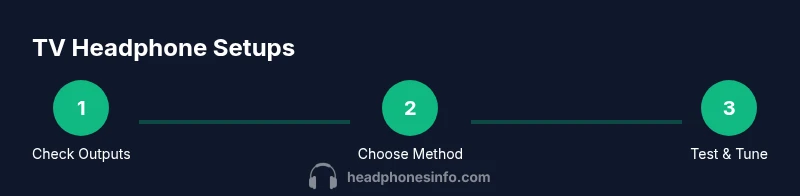
Start by identifying your TV’s audio outputs: 3.5 mm headphone jack, optical (TOSLINK), USB, or HDMI ARC. If you have a 3.5 mm jack, you can often plug wired headphones directly in. For TVs without a dedicated jack, consider a USB DAC or a Bluetooth transmitter that plugs into the optical or USB port. If you opt for Bluetooth, pair the transmitter with your headphones and ensure the TV’s Bluetooth settings are turned off for other devices to prevent interference. For optical connections, you may need a DAC to convert digital audio to analog if your headphones require a 3.5 mm plug. After connection, set the TV’s audio format to PCM and disable any post-processing that can add latency. Regularly test with a scene containing dialogue and adjust as needed for lip-sync accuracy.
Common setups for different TV types
Smart TVs with built-in Bluetooth are convenient but can still suffer occasional lip-sync drift. If your TV supports Bluetooth out, pair directly with Bluetooth headphones and enable a low-latency mode if available. If not, a dedicated Bluetooth transmitter connected to the optical or USB port is a reliable option. For non-smart TVs or models without Bluetooth, use a wired connection or an external DAC and cable to a set of wired headphones. Soundbars and AV receivers often offer submenus to route audio to headphones or to add a front channel for private listening. Always check compatibility between your TV, headphones, and any transmitters to minimize latency and ensure stable performance. Headphones Info suggests testing different codecs and outputs to find the most reliable combination for your room.
Tip: keep a spare 3.5 mm cable and a small USB charger handy for quick swaps and to avoid downtime when cable or battery issues arise.
Troubleshooting lip-sync and latency
If lip-sync seems off, start with the simplest fix: reconnect or re-pair devices and verify the TV’s audio output is set to PCM. A common cause is mismatch between the TV’s internal processing delay and the headphones’ receiver latency. If you use a Bluetooth transmitter, enable any “low latency” mode and ensure you’re using a codec that supports it. Reduce any TV audio processing such as night mode or dynamic range compression, which can subtly shift timing. For wireless setups, move closer to the transmitter and minimize obstacles between devices to reduce dropout risk. Document any improvements you notice to tailor your settings for future viewing. Headphones Info notes that the best results come from a stable, direct connection with minimal processing on the TV.
Maintenance, care, and comfort for TV listening
Choose comfortable, breathable ear cushions and adjust headband tension to keep listening comfortable for long sessions. Regularly inspect cables and connectors for wear, and replace any frayed cables promptly to prevent audio dropouts. If you use rechargeable wireless headphones, establish a charging habit to avoid mid-movie battery failures. Clean your headphones with a soft microfiber cloth and avoid harsh cleaners that can degrade materials. Store the headphones in a cool, dry place away from direct sunlight. Following these steps helps maintain audio quality and extends the life of your gear.
Quick tips for better TV headphone listening
- Prioritize low-latency, compatible hardware for clean lip-sync.
- Test multiple outputs (3.5 mm, optical, USB, Bluetooth) to find the most reliable path for your setup.
- Use closed-back headphones for maximum isolation and dialogue clarity.
- Keep a backup cable and charger on hand for convenience.
- If possible, use a dedicated transmitter for wireless listening to minimize interference and latency.
Final thoughts: optimizing your TV listening experience
Choosing the right headphones when watching tv is about balancing latency, compatibility, and comfort. With careful setup and testing, you can achieve dialogue clarity, immersive sound, and the freedom to watch when others are asleep. This approach aligns with Headphones Info’s guidance on private listening as a practical upgrade for 2026 viewers. The goal is a reliable, enjoyable viewing experience that fits your room and routine.
Tools & Materials
- TV with audio output (3.5 mm, optical, USB, or HDMI ARC)(Check available outputs to match your headphone connection)
- Wired headphones (3.5 mm or USB)(Closed-back recommended for isolation; verify impedance compatibility)
- Bluetooth transmitter (optional)(Required if your TV lacks Bluetooth but you want wireless headphones)
- Bluetooth headphones (optional)(Battery life typically 8–20 hours; consider charging habits)
- Optical audio cable / DAC (optional)(Needed for digital-to-analog conversion when using optical out)
- Low-latency headphones or transmitter with support for aptX LL or similar(Helps minimize lip-sync issues)
Steps
Estimated time: 20-45 minutes
- 1
Assess connection method
Identify your TV’s available audio outputs and decide between wired or wireless listening. This choice affects required adapters and setup time, and it directly influences lip-sync stability.
Tip: Start with the simplest option first, usually a 3.5 mm output for wired headphones. - 2
Gather the necessary gear
Collect the headphones, any required DAC or adapters, and a transmitter if you’re going wireless. This reduces mid-setup trips to the closet and speeds up the process.
Tip: Keep a spare 3.5 mm cable handy in case your current one is faulty. - 3
Connect wired headphones
Plug the headphone plug into the TV or DAC. If your TV has no 3.5 mm jack, use a DAC connected to USB or optical output. Ensure the connection is snug and secure.
Tip: If using DAC, confirm it’s powered and recognized by the TV. - 4
Configure TV audio settings
Set the TV audio output to PCM and disable any post-processing that adds latency, such as dynamic range compression or night mode.
Tip: Changing to PCM avoids multi-channel processing delays that can throw off lip-sync. - 5
Pair wireless headphones (if applicable)
Power on the transmitter and headphones, then follow the transmitter’s pairing procedure. Ensure the TV does not redistribute audio to other devices during pairing.
Tip: Keep the transmitter within line of sight to minimize interference. - 6
Test audio and lip-sync
Play a scene with spoken dialogue and watch for timing accuracy between lips and sound. If needed, adjust transmitter codec or TV lip-sync delay if available.
Tip: Use a scene with clear dialogue to gauge accuracy. - 7
Optimize for comfort and longevity
Adjust headband and ear cushions for comfort, and plan charging or battery swaps for long viewing sessions.
Tip: Schedule regular checks to prevent mid-view interruptions.
People Also Ask
Can I use any Bluetooth headphones with my TV?
Many TVs support Bluetooth audio, but not all pair easily or with low latency. If your TV lacks Bluetooth or the built-in option is not reliable for lip-sync, use a dedicated Bluetooth transmitter that matches a low-latency codec. Always check compatibility between the TV, headphones, and transmitter.
Some TVs have built-in Bluetooth, but if lip-sync is an issue, a dedicated transmitter with a low-latency codec is a safer bet.
Will wireless headphones cause lip-sync issues?
Wireless can introduce latency, but modern low-latency codecs minimize delays. If you notice a mismatch, switch to a wired setup or enable a dedicated low-latency mode on your transmitter.
Latency can happen with wireless headphones, but using a low-latency transmitter usually fixes it.
Is wired always better for dialogue clarity?
Wired connections generally offer the most stable lip-sync and consistent dialogue clarity, especially in dynamic scenes. Wireless can match wired in many cases but depends on hardware and codec support.
Wired usually gives the most reliable dialogue timing, though good wireless gear can be close.
Do I need any adapters for my TV setup?
Adapters or a DAC may be required if your TV lacks a 3.5 mm jack or the chosen wireless transmitter uses a different input. Check your TV outputs first, then select compatible accessories.
Adapters are often needed if your TV doesn’t have the right output, so check before buying.
How can I reduce background noise while watching TV?
Closed-back headphones or earmuff style cups provide better isolation, making dialogue easier to hear. If available, use ANC features sparingly to avoid extra processing delays.
Closed-back headphones help isolate noise so dialogue stands out more.
What maintenance helps longevity of headphones for TV use?
Clean cushions, store in a dry place, and keep cables untangled. Regularly inspect connectors for wear to prevent signal dropouts.
Keep your headphones clean and stored properly to extend their life and prevent issues.
Can I route TV sound to headphones via a soundbar?
Yes, many soundbars offer headphone or line-out options to drive headphones directly. If not, use a transmitter connected to the soundbar's optical or HDMI-ARC output.
You can often route sound through a soundbar, or use a transmitter if needed.
Watch Video
What to Remember
- Choose wired setups for the most reliable lip-sync.
- Prefer low-latency wireless when freedom matters.
- Configure TV outputs to PCM to minimize processing delays.
- Test with dialogue-heavy scenes to fine-tune your setup.