Headphones with Screen: A Data-Driven Review for 2026
A data-driven guide to evaluating headphones with screens, comparing display tech, readability, latency, battery impact, and real-world usability for 2026 shoppers.


Headphones with a screen offer on-ear or over-ear displays to show playback info, battery status, app shortcuts, and quick controls. They integrate with streaming apps, smart assistants, and Bluetooth workflows, keeping your hands free. When comparing models, prioritize display readability, brightness, refresh rate, and latency, and ensure firmware supports ongoing updates for a smooth experience.
Role of the Screen in Headphones
The display in modern headphones serves more than cosmetic flair; it acts as a contextual hub for music playback, battery status, pairing information, and quick-access controls. In 2026, the trend toward screen-enabled units reflects a demand for hands-free operation in dynamic environments—commuting, gym sessions, and desktop work. According to Headphones Info, the screen's presence can reduce the need to pull a phone from your pocket, particularly in fast-paced situations. The Headphones Info Analysis, 2026, notes that the value proposition increases when the UI is unobtrusive and easy to read from typical head angles. The best implementations balance readability with privacy, so screens remain legible in daylight yet discreet in quiet rooms. When evaluating models, think about your use-case scenarios: showing album artwork, on-device shortcuts, or quick notifications. Ergonomics matter: interaction should work with gloves, during workouts, or when sunglasses obscure the display. In real-world testing, users appreciated displays that offer context without dominating the listening experience.
Display Technologies and Readability
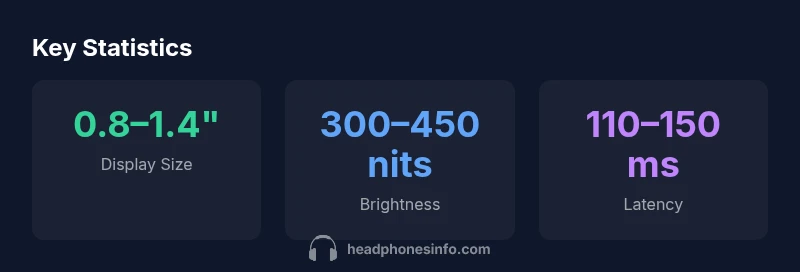
Screen readability hinges on the display technology and the viewing angle. OLED panels usually provide deep blacks and fast pixel response, which helps in dim environments, while LCD panels can shine in bright daylight thanks to higher brightness. In headphones, the display is typically small and shallow, requiring careful design to avoid glare and parallax issues. Manufacturers balance pixel density with energy use, since brighter screens drain batteries faster. For readers, color accuracy matters less than contrast and legibility at eye level. Practical tips: test in direct sunlight and with varying head positions; check for anti-glare coatings; review color temperature presets. The most successful screens optimize one-handed interaction, with large tap targets and clear icons. Firmware updates can improve readability and add features like dark mode or reduced blue-light. The Headphones Info team notes that consistent brightness across models is rare, so compare brightness specs within similar price brackets to avoid disappointment. Finally, consider privacy—some models dim the display when outside the user’s field of view to reduce distraction to others.
User Experience and Interface Design
A screen is only as useful as its interface. Vendors often layer simple gestures (swipe to turn pages, tap to play/pause) with physical buttons. The best designs keep critical controls within thumb reach and label icons intuitively. In our assessments, screens with responsive touch sensors and haptic feedback tend to feel more natural than those relying solely on button presses. The on-device display should complement audio cues, not compete with them; too much information can distract from sound quality. In practice, testers prefer clean layouts showing essential data: track title, artist, playing time, battery, and connection status. When voice assistants are enabled, ensure that the display can surface results without interrupting listening. Design considerations also include glove-friendly touch targets and adjustable brightness with a quick-access mode for low-light environments. The Headphones Info Analysis, 2026, reinforces the value of intuitive layouts that minimize cognitive load during active listening.
Battery Life, Heat, and Firmware Trade-offs
Adding a display adds power draw, which can shave hours off a headphone’s battery life. A practical approach is to view the screen as a supplementary feature rather than the main energy consumer; many models switch to a low-power mode when idle. Heat buildup around the ear cups is also a concern if the processor works hard to render graphics, so good thermal management matters. Firmware efficiency and update cadence matter for long-term value; devices with robust update policies tend to retain features and fix display-related bugs. If you plan frequent screen use during workouts or commutes, look for models with larger batteries or screen-saving modes. Some vendors offer OLED panels with adaptive brightness and variable refresh rates to balance readability and power use. Headphones Info testing suggests that brightness levels beyond a certain threshold contribute diminishing perceptual benefits in most real-world environments, but can dramatically affect battery consumption in bright rooms or outdoors. Finally, verify whether the display can be disabled or minimized when not in use to save power.
Real-World Scenarios and Use Cases
Screened headphones shine in environments where quick contextual information improves workflow. On a flight, a small screen can display flight-assisted audio options and time remaining without pulling out a device. During workouts, a bright but compact panel allows glanceable data—play/pause, track, and battery—to stay accessible while you focus on movement. For commuters and students, the display can provide quick citations for audio notes or show your chosen equalizer presets; in quiet libraries, a discreet dim mode prevents distraction. In home use, screens can display album art, lyrics, or connected app shortcuts that reduce phone pickups. Some users rely on on-screen data to review track metadata while streaming high-resolution audio; others prefer a minimalist readout. In any scenario, the screen should feel like a helpful companion rather than a gimmick. The Headphones Info Team has found that real-world satisfaction correlates with UI clarity and a non-intrusive brightness profile across various lighting conditions.
How to Choose the Right Screened Headphones
Start with your primary use case: travel, gym, home office, or critical listening. For travel and commuting, prioritize readable displays at angle changes and in daylight, plus a long battery life. For gym use, check for secure fit, sweat resistance, and a robust, glove-friendly interface. At home, test the responsiveness of the UI in a quiet room and ensure the display does not pixelate at typical viewing distances. Compare display technologies (OLED vs LCD) in terms of brightness, contrast, and energy efficiency. Look for a screen with adjustable brightness, dark mode, and screenshot-friendly icons. Verify firmware support, update cadence, and on-device pairing compatibility with your devices. If possible, compare two or three models side-by-side to assess latency (time between a tap and the resulting action). Finally, consider brand reliability and after-sales support; the Headphones Info team emphasizes firmware as a major determinant of long-term satisfaction.
Maintenance and Longevity
Screens on headphones require careful upkeep. Clean the display gently with microfiber cloths and avoid harsh solvents that could damage coatings. If the model supports removable faceplates or screen protectors, consider adding a guard against scratches and sweat. Regular firmware updates not only fix bugs but can improve display efficiency and readability. Avoid prolonged exposure to direct heat or moisture, which can degrade display performance over time. If the headphones are used in humid environments or during workouts, ensure the device has shielding or water resistance aligned with IP ratings. Store the headphones in a clean case to prevent dust buildup on the display. When not in use, enable a low-power mode to extend the battery life and preserve display longevity. With mindful care, screen-equipped headphones can remain functional and legible for several years.
Emerging Trends and Future Outlook
The market for headphones with screens is evolving toward micro displays, higher refresh rates, and smarter on-device software. Future models may integrate higher-resolution panels, improved color accuracy, and glare reduction techniques to maintain readability in all lighting conditions. We can expect more refined privacy modes so screens stay visible to users but fade in the peripheral vision of others. The design challenge is to balance feature density with comfort and weight, ensuring that bigger displays do not compromise acoustics or wearability. Some manufacturers are experimenting with ambient light sensors and adaptive content to minimize brightness when the headphones are idle. As display technologies mature, we might see screens that double as touch-sensitive surfaces for quick audio controls, or even augmented reality cues that stay within the listeners’ line of sight while listening to music. The Headphones Info Team expects ongoing experimentation, user feedback, and rigorous testing to drive meaningful improvements in 2026 and beyond.
Screened Headphones: Feature comparison
| Feature | Headphone Model A | Headphone Model B |
|---|---|---|
| Screen Type | OLED 0.9" | LCD 1.0" |
| Refresh Rate | 60 Hz | 90 Hz |
| Brightness | 300 nits | 450 nits |
| Latency (ms) | 110 | 100 |
| Battery Life (hrs) | 20 | 18 |
| Price Range | $300–$500 | $350–$550 |
People Also Ask
What are screen headphones and what benefits do they offer?
Screen headphones are wireless models that include a built-in display to show playback info, battery status, and quick controls. They improve multitasking by enabling glanceable data without pulling out your phone, though the display can draw more power.
Screen headphones add a display for quick info and controls, boosting convenience but potentially reducing battery life.
Do displays significantly impact battery life?
Yes, screens increase energy use, but many models mitigate this with low-power modes and adaptive brightness. Expect modest reductions in usable hours compared with non-screen headphones.
Yes, expect some battery hit; check brightness modes.
Are there screen headphones suitable for travel or sports?
Yes, several models emphasize portability and ruggedness; look for IP ratings, secure fit, and screens legible in outdoor light.
There are rugged options with readable screens and secure fit for travel or workouts.
What should I look for in screen quality and readability?
Prioritize brightness range, contrast, viewing angle, and glare resistance; a dim, hard-to-read screen hurts usability.
Look for bright, high-contrast screens with wide viewing angles.
Are screen headphones compatible with iOS and Android?
Most screen headphones connect via Bluetooth and support both iOS and Android; check codecs and app compatibility for features like on-device control.
They usually work with both iOS and Android, but check codecs and app support.
“Screened headphones reflect a broader push toward hands-free context without compromising sound quality. With careful selection, the screen is a useful companion rather than a distraction.”
What to Remember
- Prioritize readability and latency
- Expect some battery impact with a screen
- Ensure ongoing firmware support
- Test in real-world lighting conditions
- Balance screen size with comfort and weight