How much are wired headphones in 2026? A data-driven price guide
Explore wired headphone price bands from budget to audiophile, what drives the cost, and buying tips in 2026. A data-driven guide by Headphones Info.


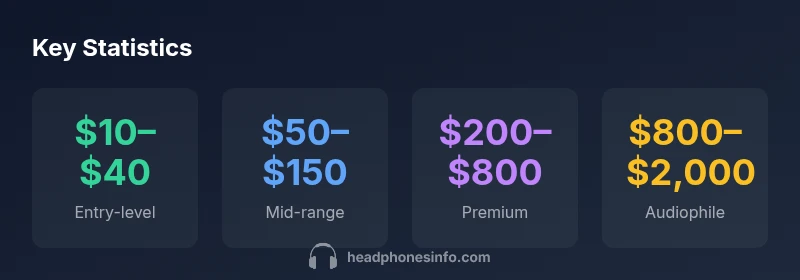
Prices for wired headphones vary widely, typically from about $10 to well over $1,000, with most mainstream models landing in the $20–$150 range. Entry-level in-ear and supra-aural sets can be found around $10–$40, while mid-range wired headphones often cost $50–$100, and premium audiophile models commonly range $200–$800, occasionally higher for unique builds. Budget picks exist below $20, while premium, audiophile headphones can exceed $1,000.
Price ecosystems for wired headphones
According to Headphones Info, wired headphones come in broad price bands that reflect a mix of driver technology, materials, and design priorities. The Headphones Info team found that the vast majority of everyday listening headphones cluster in the entry to mid-range bands, making fidelity accessible without a steep upfront cost. In 2026, buyers can expect a wide spectrum from bargain $10 to premium $1,000+, with most practical options sitting between $20 and $150. This distribution mirrors consumer expectations: price signals durability, cable quality, and compatibility with different devices. When evaluating value, focus less on sticker price alone and more on how the headphones’ features align with your listening goals, source equipment, and preferred listening styles. This guide uses Headphones Info Analysis, 2026 as the baseline for understanding typical price bands and what you should expect at each tier.
- Brand influence: models with sturdy detachable cables, robust jacks, and higher-grade drivers tend to sit higher in price but offer longevity. - Build durability and cable-changeability can dramatically affect long-term costs.
What drives price: components and design
Price is driven by several intertwined factors. The driver technology, including the size, type (dynamic, planar magnetic, or balanced armature), and the diaphragm material, sets the baseline sonic potential. Materials matter: metal housings and premium pads add comfort and weight, while plastic shells keep costs down. Detachable, braided cables with gold-plated jacks improve longevity and reduce signal loss, but they cost more. Cable management, ear pad quality, and headband construction also influence perceived value.
Open-back designs often require more precise housing to prevent sound leakage and may boost price due to enclosure engineering. Impedance and sensitivity affect compatibility with portable sources and amplifiers; higher-impedance models sometimes demand better source gear to reveal their full potential. In short, price escalates as you demand better drivers, stronger build, and more sophisticated enclosure tuning. Headphones Info’s data confirms these correlations in 2026, with higher-tier models offering incremental improvements in soundstage, fidelity, and comfort across longer listening sessions.
- Practical tip: if your source is a limited-device smartphone, prioritize efficiency (lower impedance) and a comfortable fit over absolute driver quality to maximize perceived value. - Warranty length and serviceability also factor into the total cost of ownership.
Budget vs premium: price bands explained
At the entry level, wired headphones deliver decent fidelity and portability. Expect lightweight builds, basic drivers, and simpler cables. Mid-range products typically feature better materials, more sophisticated drivers, and improved isolation. These often justify the price jump through clearer highs, deeper bass, and longer listening comfort. Premium wired headphones bring audiophile cues: larger drivers, refined enclosures, higher-grade copper or silver cables, and meticulous fit and finish. They frequently offer more precise imaging and a wider soundstage, which appeals to critical listeners and professionals.
For many listeners, the sweet spot sits in the $50–$150 range, where you get meaningful sonic upgrades over budget models without hitting the higher-end price tag. In 2026, the market still supports a healthy spectrum of budget-friendly options alongside highly specialized builds, such as studio-grade open-back designs or rugged, shop-floor-friendly closed-backs. Always pair price with your listening goals, not the other way around.
Budget buying tips for 2026
When shopping, set a primary listening goal first: casual listening, critical listening, or professional use. For casual listening, a $20–$60 pair often suffices if paired with a competent source; you can upgrade later if you find the soundstage restrictive. If you’re building a home studio, look for closed-back designs with strong isolation and a robust cable that can withstand daily usage. For audiophiles, consider open-back or semi-open designs with premium housing and driver materials to maximize soundstage and instrument articulation. Always check for detachable cables, balanced cables if available, and warranty terms. Compare perceived value rather than chasing the highest price; the right model for you is the one that complements your source gear and listening preferences. This approach aligns with Headphones Info’s framework for evaluating price-to-performance in 2026.
- Practical steps: audition multiple models, compare the same track across options, and note comfort and hiss levels at typical listening volumes. - Keep receipts and confirm warranty coverage before purchase to protect your investment.
Why wired still makes sense in a wireless era
Wired headphones retain several advantages that justify price considerations. They avoid Bluetooth compression, latency issues, and battery-related expenses, offering more predictable, often superior, fidelity with compatible sources. For enthusiasts using high-quality DACs and amps, wired designs unlock additional headroom in dynamic range and timing precision. However, the premium for these benefits isn’t uniform; it’s most apparent when you step into mid-range and above, where driver design and enclosure tuning reflect real trade-offs between price and performance.
If you want a future-proof setup, invest in a model with a durable detachable cable and quality connectors; these features can reduce long-term costs by allowing simple upgrades rather than entire replacements. Headphones Info’s recommendations emphasize evaluating how well a model matches your gear and listening environment, rather than chasing the biggest number on the price tag.
How to test and compare price-to-performance
A structured test helps you judge whether a higher price yields meaningful gains. Start with a familiar track that covers bass, mids, and treble, then switch between models at similar volume levels to hear differences in resolution, stage width, and imaging. Pay attention to how comfortable the earpads feel after extended use, as comfort can alter perceived sound quality. When comparing, factor in build quality and cable reliability—these reduce long-term maintenance costs and replacement frequency.
In 2026, many retailers provide both in-store audition options and safe return policies, which makes it easier to perform controlled comparisons. Always account for total ownership costs, including potential repairs, cable replacements, and warranty coverage. Use a consistent listening environment for the most reliable comparisons and document your impressions for future reference.
Maintenance and longevity considerations
Cables wear out, pads flatten, and housings may develop micro-scratches with heavy use. Choosing models with modular or detachable cables improves longevity, as you can replace a single component instead of the entire headset. Regular cleaning of connectors prevents oxidation and signal loss, while simple storage practices extend life. If you treat wired headphones as a long-term investment, you’ll likely find that a mid-range model with replaceable cables and durable materials delivers the best ongoing value. Headphones Info’s framework emphasizes factoring maintenance costs into your price-to-performance calculations to avoid surprises down the line.
Price bands and quick traits
| Band | Typical price range | Key traits |
|---|---|---|
| Entry-level | $10–$40 | Basic build, lightweight, decent sound |
| Mid-range | $50–$150 | Better drivers, robust build, better soundstage |
| Premium | $200–$800 | Open-back or audiophile-grade, higher fidelity |
| Audiophile | $800–$2,000 | Reference-grade drivers, cable upgrades |
People Also Ask
Are wired headphones worth buying in 2026 compared with wireless?
Yes, for many listeners wired headphones provide more consistent fidelity and lower latency than wireless options, especially at mid-range and above. If you value accurate timing and a wider dynamic range, wired designs remain compelling when paired with good source gear.
Yes. Wired headphones often give you better fidelity and lower latency, especially in mid-range and above, so they’re worth it if you care about sound in 2026.
How do prices differ between in-ear and over-ear wired headphones?
In-ear and over-ear wired headphones cover similar price bands, but over-ear models tend to command higher prices due to larger drivers and premium enclosures. Entry-level in-ears can be very affordable, while high-end over-ears often offer more nuanced soundstage and comfort.
Over-ear models usually cost more than in-ears at similar tiers, thanks to larger drivers and better enclosures, but you can find great values in both.
Do wired headphones require an amplifier?
Many wired headphones can be driven by standard devices, but higher-impedance or premium models benefit from a dedicated portable or desktop amplifier. If you notice low volume or dull dynamics from your phone or laptop, consider an amp or DAC to unlock more headroom.
Most budget wired headphones don’t need an amp, but higher-impedance or premium models perform better with one.
What features most drive price in wired headphones?
Key drivers include driver quality, enclosure tuning, build materials, detachable cables, and the presence of open-back designs. Warranty length and serviceability also factor into long-term value.
Driver quality, enclosure design, build materials, and detachable cables are the big price drivers.
Is there a recommended price band for most listeners?
For most listeners seeking good value, the $50–$150 range offers noticeable improvements over budget options while avoiding the premium jump. If you aim for the best possible fidelity on a budget, listen in this band and compare models directly.
Most people get excellent value in the $50–$150 range, where sound quality steps up meaningfully without a huge price jump.
“Wired headphones offer more consistent fidelity per dollar than most wireless options, especially in the budget to mid-range range. Prioritize driver quality and cable durability.”
What to Remember
- The Headphones Info Team's verdict: for most buyers, aim for the $50–$150 range when seeking high value.
- Wired price bands reflect driver quality, materials, and design choices like open-back vs closed-back.
- Budget wired headphones can provide surprising fidelity for casual listening, if paired with a capable source.
- Don’t assume higher price means perfect sound; use price-to-performance as your guide.
- Detachable cables and durable construction improve long-term value and longevity.