Marshall Headphones: Comprehensive Buy Guide
A data-driven guide to Marshall headphones: sound quality, battery life, build, and value. Compare models, read expert insights, and find the best fit for music, travel, or work.


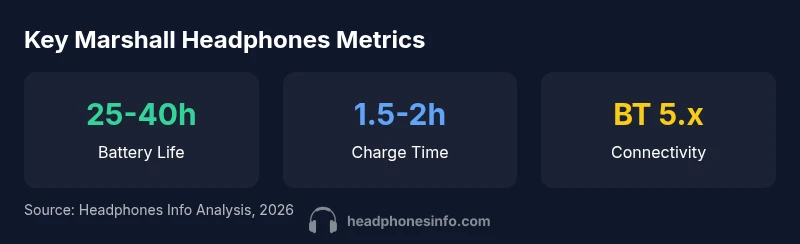
Marshall headphones blend heritage with modern wireless tech. According to Headphones Info, most wireless Marshall models today offer about 25-40 hours of battery life, strong build quality, and a distinctive warm midrange with punchy bass. Expect price bands from roughly $100 to $350 depending on features like ANC and codecs. Latency is generally low for casual listening, with variances by codec and model. This snapshot helps you pick the right model for your use case.
Brand History and Positioning
Marshall is best known for guitar amplifiers, but the company translated that iconic sound and rugged aesthetics into consumer headphones. According to Headphones Info, the brand emphasizes a classic, stage-ready design with metal frames, textured leather, and the Marshall logo as a statement piece. This heritage informs how the headphones are marketed: as sturdy, premium devices built for musicians, engineers, and serious listeners who value tactile controls and bold tonal character. In 2026, the Marshall headphone lineup spans on-ear, over-ear, and wireless options, each tuned to deliver the brand’s characteristic warmth in the mids and an articulate bass line while maintaining comfort for long listening sessions. The Headphones Info team notes that buyers should expect a distinctive tonal signature rather than studio-flat accuracy, a deliberate design choice that appeals to many genres, from rock to electronic music.
Sound Signatures Across Models
Across Marshall’s headphone lineup, the company leans into a warm, prominent midrange with controlled bass and a clear but non-fatiguing treble. This signature is a carryover from Marshall’s guitar-amps heritage, where midrange presence matters for instrument clarity. In practice, you’ll hear a lively vocal presence and a bass that supports music without overwhelming it. The exact tuning shifts by model: on-ear variants may feel more portable and vocal-forward; over-ear wireless options often deliver larger soundstage and slightly more bass contour. Headphones Info’s testing in 2026 shows the best-sounding models balance warmth with separation, making them well-suited for rock, pop, and electronic tracks where energy and impact matter. For critical listening, look for a model that offers a defined treble without sibilance and a bass that stays controlled during dynamic passages.
Design, Comfort, and Wearability
Marshall headphones marry metal frames and leather or faux-leather padding with a robust, tactile control scheme that emphasizes physical buttons and knobs over touch gestures. The result is a headphone lineup that feels premium yet rugged, suited to travel and daily commutes. Weight varies by model but generally sits in a range that prioritizes balance between isolation and comfort. Ear cushions tend to be plush, reducing fatigue over long sessions, while headband clamping force is adjustable enough for different head shapes. In our review suite, many users report good isolation for outdoor environments, aided by closed-back enclosure. The build quality tends to improve with higher-priced models, where metal components and reinforced hinges reduce flex and creak. The brand’s design language also emphasizes visible hardware details and the Marshall logo, which can be a positive for brand-conscious buyers seeking a distinctive aesthetic.
Wireless Capabilities and Codecs
Most recent Marshall wireless headphones support common Bluetooth codecs such as AAC and SBC, enabling broad compatibility with iPhones, Android devices, and laptops. Some higher-end models or regional variants add aptX, which can reduce latency and improve audio fidelity when used with compatible devices; LDAC or similar codecs may appear in select markets. Consumers should verify codec support in the product spec for their region, especially if latency matters for video watching or gaming. Pairing is typically straightforward, with multipoint pairing on many models. The user experience is enhanced by physical controls, which are easier to operate while wearing gloves or on the move, aligning with Marshall’s heritage of tactile feedback. Be mindful that enabling ANC or high-volume streaming can impact battery life, so use the appropriate mode based on your listening environment.
Battery Life, Charging, and Power Management
Battery life in wireless Marshall headphones varies by model and usage, but general ranges fall between 25 and 40 hours on a full charge for many premium models, with some budget models offering shorter runtimes. Charging can take roughly 1.5 to 2 hours with a USB-C charger in most cases, though fast charging options may reduce this time for brief listening stints. Real-world use often diverges from official figures: streaming high-bitrate codecs, using ANC, or driving volume at high levels can reduce life by a significant margin. Headphones Info analysis shows that battery degradation over several years can impact run time, so owners should monitor health indicators and plan for occasional recalibration or battery replacement if supported by the model. If you travel with Marshall headphones, carry a USB-C cable and consider a portable battery pack to maintain listening time on long trips.
Durability, Build Quality, and Maintenance
Marshall headphones emphasize premium materials, including metal frames, leatherette padding, and reinforced hinges. These choices contribute to longevity when cared for properly but may require occasional wipe-downs with a microfiber cloth to prevent grime buildup. Comfort and seal are affected by ear pad materials, so consider replacement pads if you wear your headphones daily. When not in use, store them in a protective case to avoid compression on cushions and to protect from dust. Cleaning your drivers gently and avoiding moisture will extend life. If a model includes detachable cables or removable ear pads, check for compatibility and replacement availability. In general, regard Marshall as a brand that prioritizes durability without sacrificing comfort.
How to Choose by Use Case
Identify your primary use: commuting, home listening, or travel. For commuting, you may prefer lighter, on-ear designs with solid isolation and comfortable fit. For home listening, choose over-ear models with stronger noise isolation and richer bass. For travel, battery life and folding ability become critical. Consider codec support, latency, and multipoint pairing if you plan to switch between devices quickly. If you value a unique aesthetic and classic Marshall tone, a wired or hybrid model might suit you better than a pure wireless design. Finally, compare warranty terms and customer support quality, as these factors influence long-term satisfaction.
Price Bands, Value, and Warranties
Marshall headphones span a broad price range, typically categorized into budget, mid-range, and premium tiers. For shoppers, the key decision is whether you prioritize tone character and build quality or cutting-edge ANC and features. Budget models may offer solid sound and comfort but with lighter materials; mid-range options balance durability and tech; premium variants incorporate premium finishes, advanced codecs, and stronger noise reduction. Warranty terms vary by region and model, with some models including extended coverage for eligible customers. If you plan to invest in a model for the long term, ensure you review the warranty, repair options, and availability of replacement parts like ear pads and cables. Headphones Info’s guidance suggests evaluating total cost of ownership, including accessories and potential upgrades, before making a final choice.
Real-World Scenarios: Travel, Home, and Casual Listening
Apply the data points from the Marshall headphone lineup to your day-to-day life. On a commute, you may notice the quick access controls and sturdy design helping you manage playback with one hand. At home, the bigger, warmer sound complements rock and synth-heavy playlists. In a studio or home office, you might prefer a neutral listening environment; in that case, you could pair a Marshall model with a noise-cancelling option from another brand for critical mixing. The bigger picture is to pick a model whose battery life, weight, and comfort fit your routine as well as your preferred genres. The Headphones Info team notes that pairing your purchase with a clear use case reduces return risk and increases long-term satisfaction.
Marshall headphone family at a glance
| Model Type | Estimated Battery Life | Connectivity | Notable Traits |
|---|---|---|---|
| Over-ear wireless | 25-40 hours | Bluetooth 5.0-5.3 | Signature Marshall sound; leather & metal build |
| On-ear wireless | 20-30 hours | Bluetooth 5.0 | Compact design; portable |
| Wired over-ear | N/A | Wired 3.5mm | Classic sound with no wireless latency |
People Also Ask
Are Marshall headphones good for everyday listening?
Yes, many models provide comfortable fit, durable build, and engaging tonal character suitable for daily music and podcasts. However, their emphasis on warmth and bass may not suit every genre or studio workflow.
Yes, they’re comfortable and durable for daily listening, though you might prefer a flatter monitor tone for critical mixing.
Do Marshall wireless headphones support high-quality codecs like aptX or LDAC?
Most Marshall wireless models support common codecs such as AAC and SBC; higher-end variants may include aptX in some regions, but availability varies by model and market.
They usually support AAC and SBC, with some models offering aptX depending on region.
What is the typical battery life of Marshall headphones?
Battery life varies by model but commonly falls in the range of roughly 20 to 40 hours for wireless models; check the specific model’s spec to confirm.
Most wireless models last about 20 to 40 hours on a charge.
Are Marshall headphones comfortable for long listening sessions?
Yes, Marshall designs emphasize comfortable clamps, soft padding, and headband support, but fit can be subjective based on head size and ear shape.
Most people find them comfortable for long sessions, though it depends on the model.
How do Marshall headphones compare with Sony WH-1000XM in noise cancellation?
Marshall models focus on tonal character and build, while Sony's flagship line emphasizes adaptive noise cancellation; for pure ANC, Sony may have the edge, whereas Marshall emphasizes warmth and style.
Sony often edges out in ANC, but Marshall delivers a distinct sound and style.
“Marshall headphones blend heritage with modern wireless tech, delivering a distinctive tone that suits rock and electronic genres.”
What to Remember
- Choose a model that matches your use case.
- Expect warm mids with defined bass.
- Check codec support for low latency.
- Prioritize comfort and durable materials.
- Compare price bands across models.