Open Back vs Closed Headphones: A Clear Side-by-Side Guide
Explore open back headphones vs closed: soundstage, isolation, comfort, and use-cases. A data-informed, analytical comparison to help you choose the right design for your setup.


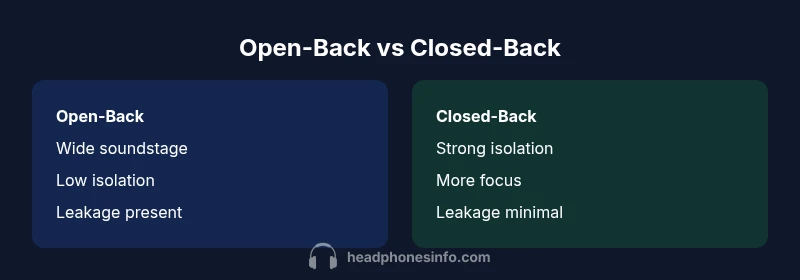
For most listeners, open back headphones offer a wider soundstage and natural imaging but sacrifice isolation, while closed-back designs prioritize noise isolation and portability at the cost of soundstage. This comparison focuses on how these two architectures affect listening environments, comfort, and value, helping you decide whether open back headphones vs closed are right for your setup.
What open-back vs closed-back headphones are
Open-back and closed-back headphones describe two distinct acoustic architectures that shape how sound moves from the driver to your ears and into the surrounding space. Open-back headphones feature perforated or vented enclosures that allow air and sound to pass through the back of the driver, creating a more natural, airy soundstage. Closed-back headphones seal the earcups, reducing sound leakage and minimizing external noise intrusion. In practice, the difference goes beyond bass response or loudness: it affects imaging, sound localization, and how you perceive your environment while listening. In this article, we compare open back headphones vs closed to help you assess how each design aligns with your listening goals, room setup, and lifestyle. According to Headphones Info, the choice often hinges on where you plan to listen most and how important isolation and portability are to you. The phrase open back headphones vs closed is a helpful shorthand for understanding the fundamental trade-offs between openness and sealing, and it frames the decision you’ll make as a listener, audiophile, or professional.
The open-back approach is commonly found in reference-quality or studio-monitoring headphones, where the goal is to preserve fidelity and spatial cues. Closed-back designs shine in environments where external noise needs to be suppressed and sound isolation is crucial, such as commuting, flights, or shared workspaces. Each design can perform exceptionally well in the right context, so the decision often comes down to the environment and listening priorities rather than absolute superiority.
Acoustic trade-offs: soundstage, isolation and leakage
The central acoustic distinction between open-back and closed-back headphones is how sound interacts with the environment. Open-back headphones typically offer a wide, expansive soundstage with broad imaging. Because the back of the driver is vented, sound waves escape into the room, which some listeners feel contributes to a more natural decay and perceived openness. This geometry also means more external noise from the listening space can interact with the driver, reducing isolation. Conversely, closed-back headphones seal the earcups around the ears, creating a more intimate soundstage and stronger perceived bass due to a controlled acoustic chamber. The seal also minimizes leakage, so others nearby hear less of what you hear and your own listening environment is less disturbed. Headphones Info analyses show that for critical listening in controlled spaces, open-back designs can reveal subtle timbral details and spatial cues that closed-backs may attenuate. In noisier environments, closed-backs tend to be the better choice because of isolation and reduced headphone bleed. When evaluating the open back headphones vs closed trade-off, think in terms of soundstage versus privacy, and transparency versus containment.
A practical way to think about it is to imagine standing in a concert hall (open-back) versus sitting in a quiet studio booth (closed-back). The former offers a sense of air and airiness; the latter offers a tighter, more controlled listening experience. For producers, the wider stereo image of open-back models can help with mixing where spatial accuracy matters, while editors or commuters may prefer closed-back models for focus and personal listening without disturbing others.
Use-case scenarios: studio, home, travel
Choosing between open back headphones vs closed becomes easier when you map scenarios to needs. In a quiet home studio or near-field listening room, open-back headphones excel for critical listening, mastering, and long sessions with reduced ear fatigue. The wider soundstage can reveal instrument positioning and reverb tails that you might miss with sealed designs. However, if you work around others, need to travel, or have to work in noisy environments, closed-back headphones offer superior isolation, reduced external distractions, and less sound leakage. They’re typically preferred for commuting, flights, and office use, where privacy and minimizing disturbance are priorities. In multi-user spaces, closed-back can prevent your music from leaking into shared areas, while in dedicated listening rooms, open-back designs can provide a more natural, uncolored presentation. Headphones Info emphasizes that the practical decision points hinge on your environment, your listening style, and the degree to which you value openness of sound versus privacy and portability. Remember, even within the same family, there are variations—large, over-ear open-backs with light clamping vs compact, closed-back models with stronger seals—so test both to gauge how they fit your head shape and comfort preferences over long sessions.
Comfort, fit, and build quality
Comfort and fit weigh heavily in the open back headphones vs closed decision. Open-back headphones are often designed for stationary use, with lighter frames and breathable materials that can feel less oppressive over lengthy sessions. They may not seal as tightly around the ears, which can reduce heat buildup for some users but may lead to less consistent bass response if the seal shifts during movement. Closed-back models frequently emphasize a firmer seal to improve isolation, which can lead to more clamp pressure or warmer ears over extended listening. Material choices like plush earpads and suspended headbands influence comfort in both designs. Build quality varies widely by brand and model; some open-back headphones use more open mesh cabs and metal arches that feel airy but require careful handling, while closed-back units may employ sturdier housings designed for portability. When evaluating comfort, consider not only padding and clamp force but also weight distribution, earcup shape, and clamping pressure. Headphones Info notes that comfort can change with wear over a full day, so prioritizing a model with adjustable headband tension and breathable materials is especially important for longer sessions.
Compatibility with gear and listening environment
The best open back headphones vs closed choice also depends on your gear and listening space. Open-back designs benefit from clean power and a sense of headroom when paired with quality DAC/amps in a controlled listening room; they don’t require excessive drive in most cases but can reveal channel imbalances if paired with low-quality sources. Closed-back headphones are more forgiving with portable devices and less sensitive to environmental noise, making them versatile for on-the-go listening. However, do not assume all closed-back headphones are equally powerful or quiet—impedance, sensitivity, and driver quality still matter. If you plan to use them with a laptop, a dedicated audio interface, or a smartphone, consider how much leakage you’re willing to tolerate and whether your listening room allows for open-back ventilation. Brand and product lines vary, but the general rule is: align the design with your environment, your workflow, and how much you need isolation versus openness. In any case, always audition both types with your preferred genres to see which one captures the tonal balance and imaging you expect from your setup.
Price ranges and value considerations
Price is a practical driver in the open back headphones vs closed discussion, though it isn’t a guarantee of better sound. Open-back models span a wide range, from accessible entries to premium reference-headphones, with many enthusiasts prioritizing fidelity, build quality, and comfort for long sessions. Closed-back headphones also cover a broad spectrum, often offering more affordable options alongside high-end models with exceptional isolation and portability features. When evaluating price, consider long-term value: durability, serviceability, and the quality of the driver and padding influence total cost of ownership. If you frequently move between rooms, offices, or travel, a robust closed-back option might be the smarter financial choice, even if an open-back model sounds more expansive in a quiet room. If your priority is home listening with occasional studio work, premium open-back headphones can deliver detailed imaging and natural timbre that justifies a higher upfront investment. Headphones Info suggests comparing total ownership costs across several years, including replacement pads, cables, and potential upgrades, to determine the best value for your use-case.
Common myths and misconceptions
There are several persistent myths about open back headphones vs closed that are worth debunking. One common belief is that open-back always sounds better; while many listeners prefer the naturalness of an open design, comfort, environment, and leakage can negate that advantage in practice. Another misconception is that closed-back always isolates perfectly; in reality, even sealed cups can leak noise depending on fit and head size. Some buyers assume that open-back heads are fragile or unsuitable for travel; while some models are less portable due to their vents or grills, many travel-friendly options exist with rugged construction. Finally, a frequent misconception is that sound quality is solely determined by openness; driver quality, tuning, and impedance interact with enclosure design to shape the final sound. Headphones Info emphasizes testing both styles with your typical music and room to understand how each design performs for your specific needs.
How to audition and test at home
If you want to assess open back headphones vs closed in a practical way, set up a small, controlled listening space at home. Use the same source and amplification for both designs and listen to representative tracks across genres to gauge tonal balance, imaging, and stage width. Pay attention to leakage in the open-back pair by quietly turning up the volume and noting whether sounds escape into the room or to others nearby. Check isolation with the closed-back model by simulating ambient noise (e.g., a fan or street noise) and note how well voices and percussion stay defined. Comfort is equally important: wear each pair for at least 30 minutes and track heat, pressure, and clamp. Finally, compare how natural the instruments sound in the open-back design against the tighter, more controlled sound of the closed-back design. Elastic, breathable pads and a comfortable headband can greatly influence your long-term perception of both options.
Maintenance and care for different designs
Maintenance needs differ between open-back and closed-back headphones. Open-back cups can accumulate dust on the back grills, so gentle brushing and occasional cleaning of the vented areas helps maintain airflow and sound quality. Closed-back headphones often rely on sealed enclosures where pads and seals wear over time; replace pads when they lose elasticity, and inspect the headband for cracks or stiffness that could affect fit. Storage matters too: keep open-back models away from moisture and humidity, and store closed-back units in a protective case to prevent impact damage. Cable management and connector wear are universal concerns for both designs, so inspect cables for fraying and use strain reliefs to prolong life. Regularly cleaning ear cushions, checking for unwanted creaks, and ensuring a snug headband will extend the life of either architecture.
Practical decision framework: choosing open-back or closed based on you
Ultimately, the decision between open back headphones vs closed should align with your daily routine, environment, and listening priorities. If your priority is an expansive, natural sound in a quiet room, and you don’t mind listening at moderate volumes, open-back is compelling. If you frequently listen in public spaces, require privacy, or need to travel with headphones, closed-back designs offer practical advantages in isolation and portability. Consider pairing expectations with a test plan: audition similar models in both categories, compare the most critical aspects for your use case (soundstage vs isolation), and evaluate the overall comfort over longer sessions. Headphones Info recommends documenting your impressions after a few listening sessions to determine which design truly serves your goals over time.
Comparison
| Feature | Open-back headphones | Closed-back headphones |
|---|---|---|
| Soundstage & imaging | Wider, more natural space | Tighter, more focused localization |
| Isolation | Low to none; external noise passes through | High; minimal external intrusion |
| Leakage | Pronounced leakage to surroundings | Minimal leakage; discreet listening |
| Comfort & wearability | Often lighter with breathable pads | Can have firmer seal and stronger clamp |
| Portability & durability | Better for stationary use; some fragility in grills | Typically more rugged for travel; bulk varies by model |
| Best use-case | Studio mixing, critical listening in controlled spaces | Travel, office work, noisy environments |
| Price range | Broad spectrum; many premium options | Wide range including affordable and premium models |
Upsides
- Wider soundstage and natural imaging (open-back)
- Less ear fatigue in long stationary sessions
- Refreshingly open, non-claustrophobic user experience
- Easier to identify room reflections and acoustic cues in ideal setups
Disadvantages
- Poor noise isolation and noticeable leakage
- Not travel-friendly due to ambient sound escape
- Can reveal room acoustics and source imperfections
- May be less durable in some open designs and require careful handling
Open-back for studio accuracy; closed-back for portability and isolation
If your priority is natural soundstage and studio work in a quiet space, open-back wins. If you need to travel or work in public spaces, closed-back offers practical isolation and convenience.
People Also Ask
What is the main difference between open-back and closed-back headphones?
Open-back headphones allow air and sound to pass through the back, creating a wider soundstage but offering less isolation. Closed-back headphones seal the earcups, providing better noise isolation and less leakage, at the cost of a more intimate soundstage.
Open-backs let sound breathe and soundstage expands, while closed-backs block noise and keep sound contained.
Are open-back headphones good for travel?
Open-back headphones are generally less ideal for travel due to leakage and reduced ambient noise isolation. Closed-back options are usually preferable for commuting and flights where privacy and noise suppression matter.
If you travel a lot, closed-backs are the safer bet for keeping sound in and noise out.
Do open-back headphones leak sound?
Yes, open-back designs vent sound to the surroundings, which can disturb others in shared spaces. Leakage varies by model and fit.
Expect some leakage with open-back models, especially at higher volumes.
Which design is better for mixing and critical listening?
Open-back headphones often provide a more natural stereo image and accurate space cues, which can aid mixing in a controlled room. Closed-back designs can be accurate too but may color the sound more due to isolation.
For mixing in a quiet room, open-back options can help you hear depth and space more clearly.
Can you use open-back headphones outdoors safely?
Outdoor use is possible but noisy environments and leakage can be problematic. Closed-back is usually more practical for outdoor listening.
Open-backs are best kept indoors or in quiet outdoor spaces.
How should I audition open-back vs closed at home?
Test both designs with the same source, in the same room, and listen for soundstage, imaging, isolation, and comfort over extended periods. Note leakage in open-backs and isolation in closed-backs.
audition both in a consistent setup and over longer listening sessions.
What to Remember
- Compare soundstage vs isolation for your use-case
- Test both designs in your primary listening environment
- Factor leakage, comfort, and pad design into comfort over long sessions
- Weigh total ownership costs and durability for long-term value
- Use case should drive your final choice