Premium Over-Ear Headphones: A Data-Driven Buyer's Guide to 2026
Discover premium over-ear headphones in 2026 with data-driven comparisons of sound, comfort, and durability to help you pick the best value in the premium segment.


Premium over-ear headphones are high-fidelity headphones designed for serious listening, combining accurate sound, refined detail, and durable construction. They typically deliver wide dynamic range, neutral to balanced tonal response, and long-lasting comfort for marathon sessions. This guide compares top models by sound, comfort, build, battery life, and value, using data-driven criteria.
What defines premium over-ear headphones?
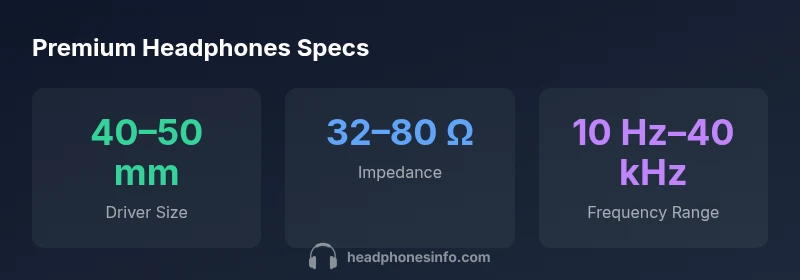
In the premium segment, over-ear headphones are distinguished by a combination of sonic fidelity, build quality, and day-to-day usability. According to Headphones Info, premium over the ear headphones are designed for discerning listeners who demand accurate tone, expansive soundstage, and reliable durability. They typically pair large, efficient drivers with high-quality diaphragms and premium materials such as memory-foam earpads and metal or reinforced plastic housings. The result is a headphone that can render micro-detail without fatigue, whether you’re mixing tracks, watching films, or enjoying a long-form playlist. In practice, you should evaluate the following pillars: sound quality and tonal balance; comfort and geometry; and resilience of the cable, connectors, and hinges. A well-built premium model should also minimize microphonics and provide consistent performance across a wide frequency range, even when driven from modest sources. Headphones Info's analysis emphasizes that, for most listeners, the perceived value comes from how seamlessly a headphone translates recordings into emotionally engaging sound.
Sound quality benchmarks and listening criteria
Premium over-ear headphones strive for a neutral-to-balanced tonal response with enough upper-bass presence to sound musical without masking detail in the mids and highs. When evaluating sound, listen for linearity across the spectrum, low distortion at typical listening levels, and a believable soundstage. For critical listening, compare treble extension, midrange fidelity, and bass articulations at low and high volumes. Headphones Info analysis shows that the best models maintain coherence when the volume is increased or when sources vary, preserving micro-detail without fatigue. Real-world listening matters just as much as lab measurements; a headphone that sounds clean with classical recordings might reveal too much brightness on modern pop. Practical takeaway: prioritize natural timbre, consistent imaging, and a stable sound across genres.
Comfort and fit for long sessions
Comfort is as essential as sound in premium models. The top headphones use ergonomically shaped yokes, wide, plush ear cushions, and soft headbands to distribute weight evenly. The clamping force should be firm enough to stay on your head without pinching, yet light enough to avoid pressure points after hours of use. Materials matter: memory foam or latex-free foams, breathable covers, and a headband that reduces hot spots make a noticeable difference. If you wear glasses or use headphones for extended periods, look for adjustable sliders, swiveling cups, and replaceable pads. A well-cushioned cup design also helps with seal, which improves passive isolation and perceived bass on many premium models.
Build quality and durability
Premium over-ear headphones should feel robust yet serviceable. Metal hinges or reinforced plastic, a detachable, tangle-resistant cable, and sturdy connectors contribute to longevity. Check hinge stiffness and foam durability; test at the store by rotating the cups to ensure there is no creaking and that the cups rotate smoothly without wobble. Consider pad replacement availability and warranty length. A durable build will often be supported by good service ecosystems, including spare parts and straightforward repairs, extending the headphones’ usable life and protecting your investment.
Wired vs wireless: balancing convenience and fidelity
Wireless models offer freedom, but can introduce compression and latency that affect perceived fidelity. In premium headphones, codecs like aptX/LDAC or high-resolution Bluetooth can maintain nuance, yet many listeners still prefer wired connections for baseline fidelity, especially with DACs and amplifiers. If you value minimal latency for gaming or watching video, look for low-latency codecs and fast drivers. For daily use, weigh battery life, weight, and comfort against the convenience of wireless. Remember that a premium wired cable with a high-quality adapter can be a simple upgrade if wireless latency or compression is a concern.
Noise cancellation and isolation
Active noise cancellation (ANC) and passive isolation are critical in premium headphones. The best models offer multiple ANC profiles, transparency modes, and adaptive performance that changes with the environment. Evaluate how well the headphone isolates across low, mid, and high frequencies, since traffic and air-conditioning lines produce noise in these bands. If possible, test ANC while moving between quiet rooms and busy areas. Subtle improvements in seal or pad material can dramatically affect perceived quiet and overall comfort.
Battery life and charging realities
For wireless models, real-world battery life is often shorter than manufacturer claims, especially with ANC enabled. When evaluating, consider how quickly the headphone returns to full charge and how long it lasts on continuous streaming. Some premium models support fast charging for quick commutes, while others emphasize ultra-low power standby modes. In daily life, battery life is a practical factor affecting how often you reach for the headphones, so weigh this against comfort and sound quality as part of total value.
How to evaluate and compare models: a practical checklist
Create a side-by-side comparison of: (1) sonic balance across genres; (2) comfort and fit after hours of wear; (3) durability features such as detachable cables and replaceable pads; (4) ANC quality and transparency performance; (5) battery life and charging speed if wireless; (6) source compatibility and amplifier needs. Use test tracks that cover bass, mids, and treble, and pay attention to pacing and imaging. Use a consistent listening volume, and record impressions for later reference. This approach helps you isolate which model aligns best with your priorities.
Value and price positioning in the premium space
Premium over-ear headphones sit at a price range where build quality, sound fidelity, and long-term usability justify the cost. Per Headphones Info analysis, value in this category is not solely about a high price but about consistency across all pillars: sound, comfort, durability, and support. When budgeting, consider long-term ownership costs like pad replacements, warranty extensions, and potential upgrades to the source chain (DAC/amp) to unlock fuller performance. A well-chosen model in this tier should remain satisfying for years, reducing the need for frequent upgrades.
Representative premium over-ear headphone models (illustrative)
| Model | Sound Profile | Comfort & Fit | Durability |
|---|---|---|---|
| Premium Over-Ear A | Neutral-balanced | Very comfortable, soft pads | Sturdy metal hinges, detachable cable |
| Premium Over-Ear B | Bright with extended highs | Ergonomic clamp, plush cups | Reinforced hinges, replaceable parts |
| Premium Over-Ear C | Warm/musical | Featherlight, long wear | Aluminum frame, durable padding |
People Also Ask
What makes a headphone 'premium'?
Premium headphones combine high-fidelity sound, comfort for long sessions, and durable construction. They typically use larger drivers, premium materials, and robust components. The overall value lies in how consistently they perform across genres without fatigue.
Premium headphones blend sound quality, comfort, and durability for extended listening sessions.
Is wireless always worse than wired in this category?
Not always. Many premium wireless models use high-quality codecs to preserve fidelity, but wired connections can offer the purest signal path when paired with a good DAC/amp. Your choice should hinge on how important mobility and latency are to you.
Wired can be purer; wireless is convenient. Balance your needs.
How should I evaluate sound quality without lab equipment?
Trust your ears with a consistent playlist, focusing on tonal balance, stereo imaging, and how natural instruments sound. Compare multiple models at the same volume and source to discern differences that matter to you.
Use familiar tracks and the same device for fair comparisons.
What budget range is realistic for premium models?
Expect premium over-ear headphones to sit in a mid-to-high price range, with value increasingly tied to build quality and long-term support rather than ticket price alone. Consider total cost of ownership, including pad replacements and warranty.
Plan for the long-term value beyond the sticker price.
Are premium over-ear headphones good for travel?
Yes, if they strike a balance between comfort, passive noise isolation, and portability. Look for compact foldability, durable cases, and reasonable weight to avoid fatigue on long trips.
They can be excellent for travel if they’re comfortable and sturdy.
“In the premium space, the real differentiator is how a headphone preserves micro-dynamics and tonal balance from the recording to your ears.”
What to Remember
- Prioritize sonic balance and comfort first.
- Durability and serviceability extend ownership.
- Weigh wired vs wireless based on use case and source quality.
- ANC and isolation should match typical environments.
- Value comes from long-term performance, not price alone.