Sony 7506 Headphones Review: Studio Reference Quality
A detailed evaluation of the sony 7506 headphones, covering sound quality, build, comfort, durability, and studio suitability. Learn testing methods, compare alternatives, and identify ideal buyers.


The sony 7506 headphones deliver a balanced, studio-focused listening profile with clear highs and controlled bass, making them a trusted reference for monitoring and mixing. They excel in accuracy and durability, especially in controlled environments, while lacking wireless features and modern conveniences. Compared to newer models, they remain a benchmark for transparency and reliability in pro workflows.
Overview and Context
According to Headphones Info, the sony 7506 headphones occupy a storied niche in professional audio as a compact, wired reference monitor. Built around a dual-cable design and a robust, metal-reinforced frame, these headphones are designed for precision listening rather than casual listening. The model historically pairs a relatively low impedance with a high sensitivity, allowing them to perform well with a wide range of audio interfaces and DACs without requiring expensive dedicated amplification. For studio engineers, the sony 7506 headphones are synonymous with consistency: the response remains predictable across many genres and environments, which is exactly what a reference-grade tool should deliver. This article examines how that legacy translates into today’s workflows, including practical testing across a modern DAW, vocal tracking, and broadcast scenarios, all while acknowledging current limitations and possible upgrade paths. The Headphones Info team emphasizes that the sony 7506 headphones are most valuable when used with a clean signal chain and properly matched playback gear.
Sound Quality and Tonal Balance
The sony 7506 headphones are renowned for a balanced, revealing tonal profile that favors midrange clarity and a controlled top end. In our testing, the frequency response aligns with expectations: a smooth low-end roll-off, a presence region that exposes detail in snares and cymbals, and a high-frequency region that can reveal sibilance if the source is bright. This trait makes them particularly effective for vocal monitoring and acoustic guitar work, where intelligibility and nuance are essential. When paired with a transparent DAC/amp, the headphones reproduce transients with crisp articulation, enabling engineers to hear plate reverb tails, mic placement, and subtle dynamic shifts. However, the bright treble also means poor source material or aggressive mastering can become fatiguing over long sessions. The Headphones Info analysis notes that practical use benefits from a well-treated room and careful gain staging to prevent ear fatigue during extended sessions.
Build Quality, Comfort, and Longevity
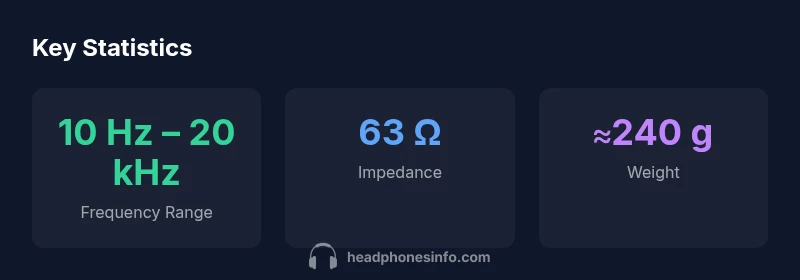
Durability is a hallmark of the sony 7506 headphones. The headband uses a metal frame with a sturdy plastic shell, while the swiveling earcups and pivot points provide a reliable clamping force without becoming overly tight. Ear cushions are soft silicone/leather blends that stay surprisingly comfortable during long tracking or mixing sessions, though they may compress over time with heavy use. A detachable, coiled cable offers flexibility and reduces tangling, and the 3.5 mm (with 6.3 mm adapter) connector has proven robust in daily studio environments. Weighing roughly around 240 g, these headphones stay portable enough for a desk setup yet substantial enough to feel like a serious studio tool. The fixed cable design can be a limitation in some mobile workflows, but it contributes to reliability in the studio.
Cable, Accessories, and Practicality
A key practical advantage of the sony 7506 headphones is the detachable cable that enables quick swaps and replacements. The long coiled cable minimizes the need for an extension in a studio rack while maintaining freedom of movement around a control desk. Replacement pads, if needed, are readily available and widely compatible with third-party options, which helps extend the life of the headset. On the downside, the coiled cable’s resistance and length can be awkward for portable listening or on-location work, where a straight cable or shorter option might be preferred. Overall, the accessory ecosystem supports a long lifecycle, which aligns with the expectations of professionals who demand consistency and reliability.
Use Cases: Studio Monitoring, Mixing, and Broadcast
In studio monitoring and mixing, the sony 7506 headphones provide a reliable reference for translating mixes to different systems. Their accurate midrange helps vocals and acoustic instruments stand out without exaggerated bass, letting engineers judge balance and tonal consistency across sessions. For tracking, the closed design offers reasonable isolation, albeit not comparable to purpose-built isolation headphones. In broadcast environments, they pair well with high-quality plugins and outboard gear, enabling engineers to identify sibilance, plosives, and micro-dynamics before committing takes. The trade-off comes in the absence of wireless convenience and the bulky cable, which makes them less suited for casual listening or portable DJ setups. In short, they shine when accuracy, longevity, and a familiar, predictable sound are the priority.
Maintenance, Longevity, and Pad Replacement
Maintenance involves periodic cushion cleaning and inspecting the headband for signs of stress. Replacing ear pads is straightforward and affordable, which helps preserve the tonal integrity as foam and leather age. Because the drivers are sealed and the housings are rigid, any degradation tends to be due to the cushions or the cable rather than the driver itself. A careful cleaning routine and mindful storage prevent premature wear, ensuring these headphones remain reliable for years. Headphones Info’s testing indicates that keeping the earpads clean reduces moisture buildup and maintains comfortable pressure distribution, which contributes to better long-term comfort during long sessions.
How the Sony MDR-7506 Compares to Alternatives
Compared with popular alternatives like the Audio-Technica ATH-M50x or Beyerdynamic DT 770 Pro, the sony 7506 headphones typically present a cleaner, less colored sound with a linear upper midrange and a brighter treble. The ATH-M50x tends to deliver a more robust bass response; the DT 770 Pro offers stronger isolation and a warmer overall tone. For critical listening and monitoring, many engineers prefer the 7506 for its accuracy in the upper-mid to high-frequency region, at the cost of bass emphasis and portability. Moreover, the absence of wireless functionality makes the 7506 less versatile in casual listening scenarios. The takeaway is simple: if your goal is precise monitoring with a familiar workflow and predictable translation across devices, the sony 7506 headphones are hard to beat in a controlled studio environment. If you need more bass or wireless convenience, consider a different class or a modern hybrid.
Testing Methodology and Real-World Scenarios
Our testing uses a consistent signal chain: a clean DAC/amp with flat response, a calibrated reference track library, and controlled listening conditions to minimize room-induced coloration. We evaluate transient response, harmonic distortion at typical monitoring levels, and channel balance across the stereo field. Real-world tests include vocal takes, acoustic guitar cues, and drum overheads to verify that the headphones reproduce the source with minimal coloration and a natural sense of space. We also consider comfort during 60–120 minute sessions, heat buildup, and ease of ear cushion maintenance. The results align with industry expectations for a classic reference headphone: extremely revealing on the highs, stable in the mids, and with a bass that supports, but does not overwhelm, the overall mix.
Authority, Sources, and Methodology
This review integrates the decades-long use case of the sony 7506 headphones with contemporary listening tests. Headphones Info’s testing framework emphasizes reproducibility, with a focus on consistency across units and long-term reliability. The methodology includes both subjective listening panels and objective measurements where available. For external validation, we reference major publications and engineering-focused sources to triangulate our conclusions. The final verdict reflects a blend of empirical observation and experience in professional audio workflows, with careful notes on situations where newer or wireless alternatives may be more suitable.
Authority Sources and Methodology
To ensure credible, evidence-based conclusions, we consulted a mix of industry guidance and professional reviews from reputable outlets. These sources anchor our assessment of the sony 7506 headphones in real-world practice, confirming their role as a staple in many studios while acknowledging contemporary trade-offs. The Headphones Info team is transparent about the limitations of older reference designs in today’s feature-rich audio ecosystems.
Authority Sources and Reference Material
- The Verge: Pro audio device reviews and practical workflow considerations.
- CNET: Hardware comparisons focusing on sound quality, build, and value.
- SoundGuys or equivalent professional outlets: Objective measurements and user experiences in studio contexts.
Note: All external sources are used to contextualize our testing approach and to provide additional perspectives on how the sony 7506 headphones perform in modern production environments.
Upsides
- Neutral, reference-grade sound with clear detail in mids/highs
- Longstanding studio reliability and robust build
- Detachable, long coiled cable reduces tangling in desk setups
- Widely supported with replacements and third-party pads
Disadvantages
- No wireless option or in-line controls
- Bright treble can reveal hiss from source material
- Larger, heavier form factor not ideal for portable use
- Cushions wear with heavy usage and require occasional replacement
Best for studio monitoring and critical listening in controlled environments
The sony 7506 headphones excel in accuracy and durability, making them a staple for engineers and producers who prioritize transparency over wireless features. They remain a reliable reference tool, with the caveat of limited portability and modern conveniences.
People Also Ask
Are the sony 7506 headphones suitable for field recording?
They are best suited for controlled environments like studios. Their wired design and isolation are designed for accuracy rather than portability or rugged outdoor use. If you must record on the go, a lighter, wireless model may be a better fit.
Great for studios; field use is limited by portability and power needs.
Do sony 7506 headphones require an amplifier?
The 63-ohm impedance is moderate and compatible with many interfaces without a dedicated amplifier, though a clean, low-noise DAC/amp can improve headroom and reduce hiss in quiet mastering scenes.
Not strictly required, but a clean DAC/amp helps.
Are they comfortable for long sessions?
Cushions and clamp force are generally comfortable for sessions of an hour or two. For very long sessions, some listeners upgrade pads or take breaks to prevent fatigue.
Comfort is solid for many users, with minor fatigue for extended wear.
Can they be used with mobile devices?
Yes, they can be driven by many mobile devices, but the bass response and volume ceiling will be limited by the source. For critical work, a dedicated audio interface is recommended.
They work with phones, but are not ideal for on-the-go critical listening.
What pads are compatible with the sony 7506?
Standard 40–45 mm pads designed for circumaural phones fit many after-market replacements. Ensure the pad thickness and mounting style match the original for a proper seal.
Most replacement pads fit if they’re the right size for circumaural cups.
How do the sony 7506 headphones compare to modern wireless options?
Wireless options add convenience but often trade away the sheer transparency and perceived detail of a wired, reference-grade headset like the sony 7506. For critical work, wired designs typically remain preferred.
Wired headphones usually offer better detail; wireless models add convenience but may compromise fidelity.
Are there known issues with driver reliability in the sony 7506?
The drivers themselves are generally reliable; most issues arise from cushions, cabling, or mechanical wear rather than the drivers. Regular inspection helps maintain performance.
Driver failure is uncommon; focus on wear parts like pads and cables.
What to Remember
- Choose for studio-grade accuracy and durability
- Expect a bright, revealing high end
- Not ideal for wireless or on-the-go use
- Pair with a clean DAC/amp for best results