Studio Headphones: The Definitive 2026 Guide to Sound, Comfort, and Value
A data-driven guide to studio headphones, comparing sound quality, build, comfort, and price to help audiophiles and professionals choose wired reference headphones that fit their workflow.


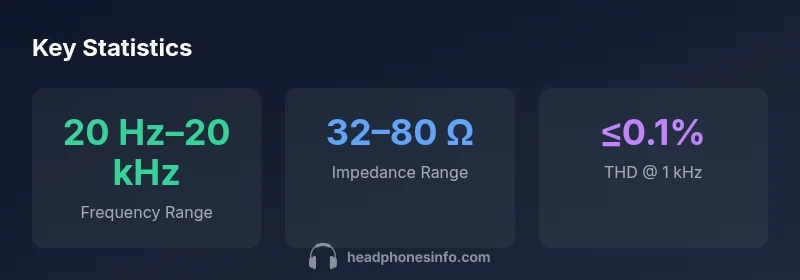
Typically, studio headphones cover 20 Hz to 20 kHz and favor a flat or gently balanced response that prioritizes accuracy over coloration. In professional work, most models are wired with impedance in the 32–80 ohm range and detachable cables for flexibility. This pairing supports precise listening and long sessions; portable work may use lower-impedance cans with mobile interfaces, while high-end studios rely on reference-grade headphones connected to a quality interface.
What are studio headphones and why they matter
Studio headphones are monitoring headphones used in recording, mixing, and mastering environments. Their core goal is accuracy: a reference-like frequency response, minimal distortion, and consistent performance across sessions. In practice, a good pair reveals subtle mix issues—phase cancellations, headphone-induced bass boost, or sibilance—that consumer headphones might obscure. According to Headphones Info, the most reliable studio headphones offer a flat or near-flat response, robust build, and comfort for long sessions. This is essential for translating mixes across speakers and earbuds. Beyond raw specs, the pairing with your room treatment, interface, and DAW workflow matters as much as the headphones themselves. The Headphones Info team emphasizes testing a few options with your typical tracks to validate response, imaging, and fatigue levels before buying.
Most professionals separate gear into two broad camps: open-back designs that excel in sonic realism and closed-back designs that excel in isolation. The choice should reflect your primary task and environment. In addition, comfort—pad material, headband stiffness, and overall weight—contributes to how long you can work without distraction. This section sets the stage for deeper comparisons across the most important specs, plus practical guidance on matching headphones to workflows, monitoring plans, and room acoustics.
Core specs to prioritize when shopping for studio headphones
When evaluating studio headphones, you want to align specifications with your use case. First, frequency response should span the full audible range (roughly 20 Hz to 20 kHz) with a relatively flat curve to avoid exaggerated bass or treble. Impedance and sensitivity indicate how easy the cans are to drive; most reference models sit in the 32–80 ohm range, balancing compatibility with desktop interfaces and portable DACs. Open-back headphones tend to deliver a wider soundstage and more accurate imaging, ideal for mixing in controlled rooms, while closed-back designs isolate sound well, which helps when recording or tracking in shared spaces. Cable architecture matters: detachable cables reduce downtime, and adapters enable quick connections to mixers or audio interfaces.
Another crucial factor is comfort. For long sessions, look for breathable padding, a balanced clamping force, and a frame that distributes weight evenly. Build quality should be sturdy, with metal or reinforced plastics and reliable hinges. Finally, consider the total value proposition: higher price often correlates with tighter tolerances, longer durability, and better driver consistency—but it’s not guaranteed. Test across several models if possible, and listen for a neutral, honest sound that translates across your reference monitors.
Back-to-back comparison: open-back vs closed-back in practice
In real-world studio use, the decision often boils down to environment and goal. Open-back headphones deliver a natural, wide soundstage that mirrors how speakers behave in a treated room. They’re excellent for critical listening during mixing because they reveal stereo cues and transient details more clearly. However, the openness means sound leaks and reduced isolation, which can be a drawback in shared spaces or during vocal tracking. Closed-back headphones isolate the listening space, reduce bleed into microphones, and are less sensitive to room acoustics, making them reliable in imperfect rooms or portable setups. The trade-off is often a more intimate sound with potential bass coloration and a narrower soundstage. For many studios, a practical approach is to own one open-back for mixing accuracy and one closed-back for tracking isolation, or to opt for a hybrid/semi-open design that attempts to balance both worlds. Headphones Info analysis suggests this blended approach works well for versatile workflows.
Studio headphone design categories for workflow planning
| Category | Pros | Cons | Ideal Use |
|---|---|---|---|
| Closed-back | Good isolation; tight tracking | Sound may feel less spacious; potential heat build-up | Tracking in noisy rooms, recording sessions |
| Open-back | Natural soundstage; accurate imaging | Sound leaks; less isolation | Mixing in treated rooms, critical listening |
| Semi-open | Balanced isolation and openness | Variable isolation by design | General editing and reference work |
People Also Ask
What defines studio headphones compared to consumer headphones?
Studio headphones are designed to reproduce audio with minimal coloration and a flat-ish response, enabling accurate mixing and monitoring. Consumer headphones often emphasize bass and excitement, which can mask mix issues.
Studio headphones are built for accuracy, not hype. They help you hear the true balance, not just the punch.
Open-back vs closed-back: which is better for mixing?
Open-back headphones usually offer a more natural soundstage, making it easier to judge imaging during mixing. Closed-back models provide isolation, which helps when you’re in a shared space or tracking vocals.
Open-back is great for mixing in a quiet room, while closed-back helps when you need isolation.
Do I need an amp to drive studio headphones?
Most studio headphones with 32–80 ohm impedance will run well from a typical audio interface. Higher-impedance models may benefit from a dedicated headphone amplifier for optimal loudness and headroom.
Usually not, unless you have high-impedance cans or very loud monitoring needs.
How important is frequency response accuracy in studio work?
Accuracy matters because it directly influences how a mix translates to other listening systems. An overly boosted bass or treble can cause you to misjudge balance and tonality.
Accuracy is essential to ensure your mix sounds right on speakers and earbuds alike.
What should I consider when buying for a home studio?
Consider your room acoustics, budget, and whether you need isolation for recording. Balance your choice with your workflow and the types of projects you typically work on.
Think about your room, budget, and the kinds of projects you do most.
Are wireless studio headphones viable for critical work?
Wireless models exist, but latency and potential compression can affect accuracy. For critical monitoring, wired headphones are generally preferred.
Wired is the standard for accuracy; wireless options exist but come with trade-offs.
“The right studio headphones expose the details you need to make informed mix decisions without introducing coloration.”
What to Remember
- Test open-back and closed-back models to match your workflow
- Aim for a neutral, accurate frequency response for mixing
- Balance impedance with your interface for adequate volume
- Prioritize comfort and durability for long sessions