What Headphones Need an Amp: A Practical Guide
Learn when headphones need an amp, how impedance and efficiency influence amplification, and how to pick portable or desktop amps. A data-driven guide from Headphones Info.


An amplifier (amp) boosts the power sent to headphones, helping some designs reach loudness without distortion. What headphones need an amp hinges on impedance and efficiency: high-impedance headphones or inefficient models typically benefit, while many low-impedance headphones sound fine from a strong source. Portable DAC/amps cover many use cases, but larger, higher-impedance headphones often demand a dedicated amp for maximum headroom.
What headphones need an amp
Understanding what headphones need an amp starts with two core ideas: impedance and efficiency. If you’re asking what headphones need an amp, you’ll quickly learn that not every design requires external power. Some headphones, especially low-impedance models, can be driven to satisfying listening levels by a capable phone, laptop, or portable DAC/amp. However, high-impedance headphones (often above roughly 64 ohms) or wallets-friendly inefficiencies frequently benefit from a dedicated amplifier to provide clean headroom and reduce distortion at louder volumes. According to Headphones Info, amplification decisions hinge on impedance and efficiency, listening habits, and source quality. This section sets the foundation for practical decisions, showing how to interpret your headphone’s electrical load and your preferred listening level.
Impedance and efficiency: the core concepts
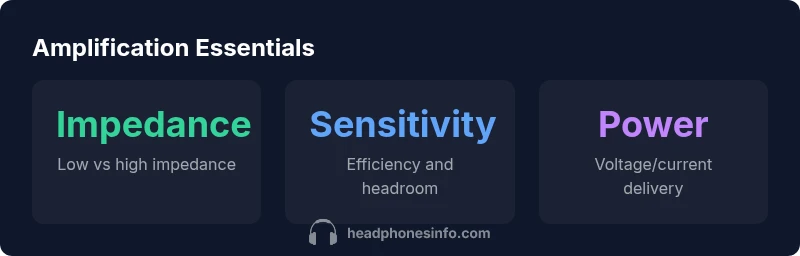
Impedance (measured in ohms) and efficiency (often described via sensitivity) determine how hard a load is for a source to drive. A higher impedance means the driver needs more voltage to reach the same loudness, which most integrated DAC/amps can handle only up to their power limits. Efficiency, or how effectively a driver converts electrical power to sound pressure, influences whether you’ll notice a benefit from amplification at normal listening levels. Headphones Info analysis shows that the interaction between source output impedance and headphone impedance can also color the sound. In short, more impedance and lower efficiency typically push you toward an amp, especially if you’re chasing clean, distortion-free playback at higher volumes.
Headphone categories and amp requirements
Different designs demand different amplification approaches:
- Low-impedance dynamic headphones (roughly 16–32 ohms) often sound great direct from a phone or laptop, but can benefit from an amp if you crave higher headroom or lower noise floor.
- Mid-impedance dynamic headphones (32–80 ohms) frequently see moderate gains with a DAC/amp, depending on sensitivity.
- High-impedance dynamic headphones (80–300 ohms) almost always benefit from an amplifier to reach comfortable loudness without strain.
- Planar magnetic headphones (often well above 300 ohms) typically require an amp capable of delivering substantial voltage to unlock their dynamics.
Headphones Info analysis emphasizes that the amp preference varies by driver type, sensitivity, and intended use. When evaluating what headphones need an amp, remember that not all high-impedance designs demand the same power; some planars demand more current and voltage than others. This nuance matters for accurate matching with your source equipment.
How to test your current setup: practical steps
Start by gathering the headphone’s official impedance and sensitivity from the manufacturer. Then perform a listening test: play a familiar track at a comfortable level (about 75–85 dB SPL if you can measure it) and compare with and without an amplifier. Note any changes in loudness, perceived dynamics, and distortion. If you hear hiss or noticeable noise when the source is quiet, an amplifier in a clean path may help reduce the noise floor. If the bass seems flabby or the highs harsh at the same level, a dedicated amp with better control over the driver could improve the overall balance. This process helps answer the question of what headphones need an amp by revealing real-world headroom and distortion differences. Headphones Info recommends documenting the listening results to guide future purchases.
Choosing an amp: portable vs desktop
Your decision between portable and desktop amplification should reflect usage and source reliability. Portable DAC/amps are convenient for commuting and travel, and they often pair well with many headphones, especially mid-impedance models. Desktop amps generally provide higher voltage and current headroom, which is beneficial for high-impedance or planars and for users who listen loudly or aim for studio-like levels.
Key factors to consider when choosing an amp include:
- Output voltage and current capabilities relative to headphone impedance
- Distortion figures and signal-to-noise ratio in the amplifier section
- Compatibility with your DAC and digital sources (USB, optical, Bluetooth)
- Size, heat, and power requirements for long listening sessions
If you’re certain about your headphone’s impedance and sensitivity, a matching amp can avoid the common pitfall of over- or under-driving the driver. When you’re in doubt, lean on a modular setup: a compact DAC/amp for flexibility, with room to upgrade later as your headphones evolve.
Common misconceptions about headphone amplification
A common myth is that more power always yields better sound. In reality, amplification improves sound only when the headphone requires it to reach the desired loudness without distortion. Some listeners assume that any amp will instantly improve audio quality; this isn’t the case if the headphones are already driving cleanly from the source. Another misconception is that impedance alone determines amp needs; sensitivity and driver design are equally influential. Finally, many assume portable amps outperform desktop units everywhere. While desktop amps often provide superior headroom, a well-matched portable DAC/amp can deliver excellent results in a compact package for many headphones.
Pairing amps with sources and DACs
Pairing an amp with the right DAC is about preserving signal integrity while delivering clean power. If your source already has a high-quality DAC and ample current supply, a small, efficient portable amp might suffice. Conversely, if you’re using older portable devices or headphones with high impedance, a desktop DAC/amp combination can offer better voltage delivery and lower noise. Track compatibility notes on both ends—input types (USB, coaxial), output impedance, and any required adapters—to avoid impedance mismatches that can degrade sound or cause distortion. The goal is to maximize the harmony between the source, DAC, and headphone while staying within a practical budget.
Practical workflow: from measurement to purchase
Create a simple decision flow: first, confirm impedance and sensitivity from manufacturer specs; second, define your listening level and whether you need portability; third, trial a few amp options within your budget range and compare loudness, detail, and bass control; finally, verify the total signal chain remains clean with test tracks. Document your findings, noting which headphone types gain the most from amplification. The Headphones Info team suggests keeping a short buying list with the core requirements (impedance range, voltage headroom, and noise floor) to simplify future upgrades. By following this structured approach, you’ll be able to answer confidently what headphones need an amp and select the right gear for your setup.
(block 7 content placeholder)
Impedance and amp suitability by headphone type
| Headphone Type | Impedance Range | Typical Amp Need |
|---|---|---|
| Low impedance dynamic | 16-32 ohms | Often adequate from source; amp optional for loudness |
| Mid impedance dynamic | 32-80 ohms | Often benefits modestly; depends on sensitivity |
| High impedance dynamic | 80-300 ohms | Typically benefits from dedicated amp for headroom |
| Planar magnetic | >300 ohms | Usually requires amp to realize full potential |
People Also Ask
Do all headphones need an amp?
No. Many low-impedance headphones can be driven by a good source. Amp use becomes more likely for high-impedance or inefficient designs where extra headroom matters. The decision depends on impedance, sensitivity, and listening level.
Not always. If your headphones sound clean and loud enough from your source, you may not need an amp.
Can I use a portable amp with my smartphone?
Yes. A portable DAC/amp can improve loudness and clarity when your headphones demand more power than your phone can provide. Ensure compatibility with your phone’s output and consider a model with a USB-C or Lightning interface.
Yes, a portable DAC/amp often helps with demanding headphones from a phone.
What is considered high impedance for headphones?
Typically 64 ohms and above are considered high for many dynamic headphones, with planars often well above that. Impedance alone isn’t the whole story—sensitivity and driver design matter too.
High impedance usually means more power is needed, but it depends on sensitivity.
How do I know if my source can drive my headphones?
Check the headphone impedance and sensitivity against your source’s output capabilities. If you can’t reach comfortable loudness without distortion, an amp could help. A quick test is to compare listening levels with and without an external amplifier.
Look at the specs and do a practical listening test to see if you need more headroom.
Are IEMs affected by amps?
Most IEMs are low-impedance and sound great from phones or portable sources. Some high-end IEMs with higher impedance can benefit from a gentle boost from a small portable amp, but it’s less common.
Usually not necessary, but some high-impedance IEMs can gain from amplification.
Do amps always improve sound quality?
Not always. Amplification improves headroom and dynamics for headphones that need it, but for efficient designs with adequate source power, improvement can be subtle. The best outcome comes from a properly matched chain.
Amplification helps when the headphone needs more power; otherwise it may not be noticeable.
“Amplification is about delivering clean power where your headphones need it, not simply adding more volume.”
What to Remember
- Amp decisions depend on headphone impedance and sensitivity
- Low-impedance headphones often work without amps
- High-impedance or inefficient designs benefit from an amp
- Choose portable vs desktop based on usage and source capability