What Size Headphone Jack: A 2026 Connector Guide
Explore common headphone jack sizes (3.5mm, 2.5mm, 6.35mm), how to identify yours, and when adapters are needed. A practical, data-driven guide by Headphones Info for 2026.


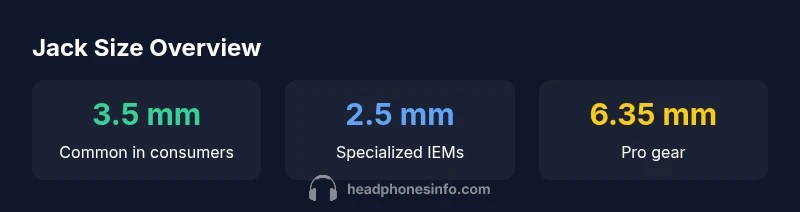
What size headphone jack usually refers to the plug diameters used for headphones and related audio gear. The most widely used size is 3.5 millimeters (1/8 inch) for consumer headphones, with 2.5 mm and 6.35 mm (1/4 inch) still common in professional gear. Adapters let you connect devices with different jack sizes, though quality can vary.
The Landscape of Connector Standards
According to Headphones Info, the landscape of headphone connectors is largely defined by three sizes that scale with device form factor: 3.5 mm for everyday listening, 2.5 mm for specialized in-ear designs, and 6.35 mm for professional gear. The Headphones Info team found that many users underestimate how jack size affects impedance matching, cable resistance, and how well an adapter preserves audio quality. When you ask what size headphone jack your gear uses, you’re really asking how the signal travels from DACs and amplifiers through cables and into the drivers. This matters not just for compatibility, but for achieving consistent volume, stereo separation, and balanced low-frequency performance across devices. For those upgrading or building a mixed setup, knowing these sizes helps you plan adapters, cables, and dongles that minimize losses and loudness mismatch.
The practical takeaway is that most modern consumer devices default to 3.5 mm. If you’re shopping for headphones and want broad compatibility with phones, laptops, and standard audio players, prioritize 3.5 mm or switch to USB-C/Lightning with a high-quality DAC dongle if needed. The landscape also includes smaller or larger connectors on niche products, so keep the 3.5 mm baseline in mind when evaluating compatibility across ecosystems.
Common Jack Sizes and What They Mean
The 3.5 mm jack (also called 1/8 inch) is the workhorse for everyday consumer devices. It’s found on most smartphones, laptops, portable players, and budget to mid-range headphones. In many cases, a three-conductor 3.5 mm plug supports stereo audio and a microphone line in a single sleeve, which is convenient for calls and basic recording tasks. When you’re evaluating what size headphone jack to buy for travel or daily use, 3.5 mm remains the standard because it balances size, durability, and compatibility. A key caveat is that some newer devices use a single USB-C or Lightning port for audio, so you may need an adapter or DAC for full-featured listening.
The 2.5 mm jack is mostly seen in specialized devices. It appears on some in-ear monitors (IEMs) with detachable cables and a few legacy professional gear setups. If your audio chain includes modular cables or balanced IEMs, the 2.5 mm connector provides a more compact form factor but may require more careful handling and higher-quality wiring. Expect more variations in cordage and pinouts, which makes universal compatibility less likely without adapters.
The 6.35 mm (1/4 inch) jack is the standard for professional audio gear like studio headphones, high-end DJ gear, mixers, and amplifiers. It supports robust signal transmission and is designed to handle higher power levels. In practice, most listeners will encounter 6.35 mm jacks when connecting headphones to audio interfaces or amps rather than portable devices. Adapters exist, but you may notice subtle differences in drive strength and channel balance when moving between 3.5 mm and 6.35 mm ecosystems.
When you’re determining what size headphone jack you need, consider the device type, use case (casual listening vs. professional monitoring), and whether you’ll mix in adapters. For many users, a good strategy is to reserve 3.5 mm for portable listening and keep a high-quality adapter or DAC dongle handy for rare cases where 1/4 inch or 2.5 mm connections are required.
The question of what size headphone jack is not just about the plug diameter; it’s about maintaining signal integrity as you route audio through cables, adapters, and converters. Some high-fidelity setups benefit from short cables and metal jack housings that minimize micro-arcs and capacitance. In everyday shopping, look for quality materials, robust strain relief, and well-shielded connectors to ensure your listening experience remains consistent across devices.
Adapters: When and How to Use Them
Adapters fill inevitable gaps between jack sizes, but not all adapters are created equal. If you’re staring at a 3.5 mm headphone jack and a device with a USB-C port, the typical path is a USB-C DAC adapter. The quality of the conversion matters: a well-made DAC can preserve dynamic range and minimize hiss, while a low-cost dongle may introduce noise or channel imbalance. The Headphones Info team recommends choosing adapters with solid shielding, gold-plated contacts, and a reputable connector design to mitigate contact resistance and corrosion over time.
Keep expectations realistic: adapters can slightly alter perceived loudness and tactile feedback due to connector contacts and cable length. If you’re monitoring critical audio, test the setup with familiar tracks to confirm stereo balance and imaging are preserved. When possible, pick a single, well-matched chain (DAC, cable, connector) for consistency across devices rather than juggling multiple third-party adapters.
In practice, you’ll often encounter a 3.5 mm to 6.35 mm adapter for studio work, or a 3.5 mm to USB-C adapter for mobile devices. If your workflow spans both consumer and professional gear, assemble a small, dedicated kit with a short 3.5 mm cable, a high-quality 1/4 inch adapter, and a compact DAC dongle. This approach reduces variable sound paths and helps you compare equipment more reliably.
Practical Tips for Your Setup
The phrase what size headphone jack should you buy for a new setup can be simplified by planning around three cues: device type, usage scenario, and portability. Start by listing your primary devices—smartphone, laptop, audio interface, and any dedicated amplifiers. If your devices are mostly portable, prioritize 3.5 mm or USB-C with a clean DAC path. For studio work, plan for 6.35 mm connections or reliable adapters that don’t degrade the signal.
Consider impedance matching as part of a holistic approach. If your current headphones are high-impedance and your source has a modest output, you may need a thicker cable or a better headphone amplifier to reach comfortable listening levels. Look for low-contact resistance on connectors and a snug fit in the jack to avoid dropouts during dynamic passages. A well-designed 3.5 mm connector with gold plating and robust shielding commonly maintains signal integrity across many devices.
Finally, check compatibility with any active noise cancellation features. Some devices implement mic/pass-through on the 3.5 mm line differently, which can affect mic quality or pass-through audio. When in doubt, consult product manuals or manufacturer support to confirm that your chosen jack size won’t limit functionality. When shopping, search for terms like what size headphone jack is compatible with your device to align expectations with real-world use.
Quick Reference: Identify Your Jack at a Glance
You can identify your jack size quickly by visual inspection and device documentation. A 3.5 mm jack presents a slim, round plug with a diameter of roughly 3.5 millimeters and is common on most consumer devices. A 2.5 mm jack is noticeably smaller and appears primarily on some older or specialty IEMs with detachable cables. The 6.35 mm jack is the largest, with a diameter close to 6.35 millimeters, typical of professional gear and high-end audio interfaces. If you’re unsure, check the device’s user manual, or measure the plug with a caliper and compare against standard dimensions. When you own multiple devices, label cables and adapters to streamline future setups and prevent accidental mismatches.
Overview of common headphone jack sizes
| Jack Size | Common Use | Device Type |
|---|---|---|
| 3.5 mm (1/8 in) | Consumer headphones, portable devices | Phones, laptops, MP3 players |
| 2.5 mm | Specialized IEMs, detachable cables | Some portable gear, niche setups |
| 6.35 mm (1/4 in) | Professional audio gear | Studio headphones, mixers, amps |
People Also Ask
What sizes exist for headphone jacks, and which is most common?
The main sizes are 3.5 mm (1/8 in), 2.5 mm, and 6.35 mm (1/4 in). The 3.5 mm jack is by far the most common in consumer devices, while 6.35 mm is typical in professional gear. The 2.5 mm size is rarer and mainly found on specific in-ear monitors.
There are three main sizes: 3.5 mm, 2.5 mm, and 6.35 mm. The 3.5 mm is the standard for most phones and laptops.
Can I use any adapter to connect different jack sizes without quality loss?
Adapters can preserve signal quality if they are well-built and shielded, but cheap or long adapters may introduce noise or voltage loss. Choose adapters with solid contacts and short connection paths when possible.
Yes, but pick high-quality adapters to minimize any extra noise or loss.
Do all devices support microphone passthrough on 3.5 mm jacks?
Not all devices route microphone signals through the 3.5 mm jack. Some phones separate headphone and mic paths or use USB-C/Lightning for audio input. Check device specs if you need mic compatibility.
Some devices won’t pass a mic signal through the 3.5 mm jack, so verify your device specs.
Is a 3.5 mm to USB-C adapter always necessary for USB-C devices?
Only if the device’s USB-C port doesn’t include native analog audio support. Many newer devices require a DAC/adapter to convert digital to analog audio for traditional headphones.
Often you’ll need a DAC adapter for USB-C devices that don’t have built-in analog audio.
Are 3.5 mm and 6.35 mm connectors interchangeable with the same headphones?
Most headphones won’t interchange 3.5 mm and 6.35 mm jacks without an adapter, and not all adapters preserve impedance. Always check the headphone’s cable compatibility and use a high-quality adapter when switching sizes.
No—3.5 mm and 6.35 mm aren’t directly interchangeable without an adapter, and quality matters.
What should I consider when buying headphones with a detachable cable and multiple jack options?
Look for a system that supports standard 3.5 mm and provides a reliable detachable interface. Verify the cable's impedance and connector durability, and consider a spare 3.5 mm cable for flexibility.
If you have detachable cables, make sure the system covers the common jack sizes you use.
“Connector sizes can seem arcane, but understanding them helps you future-proof your listening setup and avoid costly misfits.”
What to Remember
- Identify your device’s jack size before buying accessories
- Prefer 3.5 mm for everyday devices; use adapters for mixed setups
- Choose high-quality adapters to preserve sound quality
- Consider impulse-free testing with known tracks when using adapters
- Maintain a simple, labeled accessory kit for travel and studio work