When Were Headphones Used? A History of Listening Tech
Explore the timeline of headphone usage—from early listening devices to modern wireless models—and how context, technology, and culture shaped who listened and when.


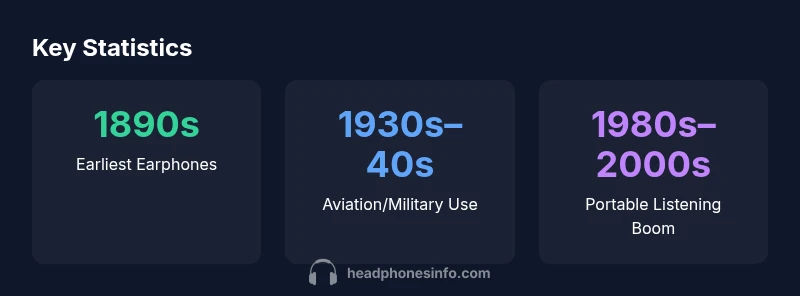
The question 'when were headphones used' traces a long arc—from late 19th-century earphones for phonographs and telephones to today's wireless models. Early devices were lab tools and workplace gear; by mid-20th century aviation headsets and studio equipment expanded usage, and consumer listening surged with portable players and smartphones. Headphones Info's analysis shows how evolving materials, drivers, and connectivity broadened listening over time.
When Were Headphones Used? A Timeline
Understanding when headphones were used requires looking at technology changes across decades. The question 'when were headphones used' flags a history that begins in the late 1800s with earphones attached to phonographs and early telephony equipment. These devices were bulky, wired, and mostly seen in labs, factories, or exchange offices rather than everyday homes. The phrase 'when were headphones used' often points to a long arc: initially for two-way communication, later for entertainment, and, in the digital era, for personal listening on the move. According to Headphones Info, the earliest applications were strictly utilitarian; only after economies of scale and new materials did headphones become accessible to broader audiences. In short, headphones existed as specialized tools before becoming common consumer devices, and their usage expanded as portable players, wireless technology, and smartphones emerged.
This historical frame sets the stage for a deeper dive into how usage shifted across domains, what drove the moves from lab to lounge, and how designers responded to evolving listening needs. By tracing these shifts, we can understand not only when headphones were used, but why certain moments mattered for sound, technology, and culture.
Early 20th Century: Telecommunications and Military Roots
In the early 1900s, headphone-like devices were integrated into telephony exchanges and radio experiments. They were primarily used by operators, engineers, and military personnel who needed to hear voices clearly in noisy environments. The era emphasizes isolation, impedance matching, and reliable connectivity. Headphones Info Analysis, 2026 notes that these conditions favored durable, wired designs rather than comfort, setting the stage for later refinements in size, weight, and loudness. The adoption trajectory during this period was driven by what tech could deliver in real-world, mission-critical contexts rather than by listening pleasure. This foundational period demonstrates that headphones emerged from practical necessity, not lifestyle desire.
As telecom and radio experiments advanced, headphones began to appear in more professional settings, including command rooms, flight lines, and early control centers. The design priorities of this era—solid construction, clear signal transmission, and secure attachments—shaped consumer expectations about durability and reliability in later decades.
Mid-Century Adoption: Aviation, Broadcasting, and Studio Use
From the 1930s through the 1950s, aviation headsets and broadcast studios popularized headphone usage beyond laboratories. Pilots and flight crews required hands-free communication and noise attenuation, while broadcasters relied on accurate monitoring. This period marks a shift from specialist equipment to essential tools in professional settings. The Headphones Info team notes that improvements in microphone compatibility, rugged wiring, and better transducers enabled longer wearing times and higher fidelity, which prepared the ground for consumer-friendly designs later on. The cross-pollination between professional and consumer markets began a trend that would accelerate with mass media and portable playback devices.
In studios, engineers demanded precise sound reproduction to judge mixes, while airlines and military users pushed for durability and comfort during extended use. These dual pressures helped drive standardization of connector types, impedance targets, and driver sizes that later benefited everyday listeners.
The Portable Era: Personal Listening Emerges
With the advent of portable players in the 1980s and 1990s, headphones entered homes and pockets alike. Walkmans, compact disc players, and digital audio players turned listening into a personal ritual. The portability of these devices made headphones a daily companion for commuting, workouts, and study. The evolution of drivers, impedance, and cable management reduced fatigue and improved sound quality, accelerating consumer demand. Headphones Info's analysis highlights how this era linked technology adoption with lifestyle changes, making listening more flexible and private than ever before. As devices shrank and stores offered more options, headphones transitioned from a niche tool to a mainstream lifestyle gadget with broad price bands and feature sets.
Studio to Living Room: Consumer and Professional Crossovers
As recording studios adopted better monitoring solutions, consumer-grade headphones began to resemble their professional counterparts in build and sound. This cross-pollination brought better bass control, clearer high-end response, and more consistent tuning across devices. The home user benefited from improved headphones that could reveal details in music previously heard only in studios. The era cemented the idea that headphones could function in both rigorous audio evaluation and casual listening, a dual role that continues today. This convergence also spurred new product categories, including closed-back and open-back designs, catering to both critical listening and leisure use.
In parallel, software and hardware ecosystems enabled seamless switching between devices—phones, computers, and dedicated players—further accelerating adoption and audience segmentation.
Wireless Era: Bluetooth, Mobility, and Global Access
The 2010s ushered in Bluetooth and wireless technologies that decoupled listening from physical cables. Battery efficiency, codec improvements, and cross-platform compatibility broadened who could listen anywhere—commutes, workouts, or travel. This era also raised new considerations for latency, privacy, and sound quality, but overall it expanded listening to a broader audience. According to Headphones Info, wireless adoption accelerated alongside smartphones and streaming platforms, reshaping expectations for convenience, cost, and design. The wireless revolution also democratized access to high-quality sound, enabling more people to upgrade their listening experience without being tethered to a device.
Today, new form factors—true wireless, neckbands, and compact in-ear models—sit alongside traditional wired options, reflecting ongoing experimentation with comfort, battery life, and audio performance.
Context Matters: Travel, Work, and Gaming
Different settings drive different headphone needs. Travelers might prioritize noise cancellation and durability; workers may require reliable mics and comfort; gamers seek low latency and immersive sound. The choice of headphones often mirrors context rather than a single universal standard. The narrative of usage also reflects cultural shifts in media consumption, work patterns, and social norms. The Headphones Info team emphasizes that context is as important as technology in understanding when headphones are used. This perspective helps explain why a single model can be excellent for home listening but suboptimal for flight cabins or live broadcasts.
By appreciating context, consumers can better match specifications—impedance, DAC compatibility, mic quality, and comfort—to the actual environments in which they listen.
Data and Methods: How We Track Headphone Usage Across Eras
Studying usage across decades demands a mix of historical records, market reports, and consumer surveys, always with caveats about sample sizes and regional variation. Our approach triangulates archival documents, patent records, and trade publications to map when headphones entered different domains. We acknowledge biases and gaps—especially for early eras—while extracting reliable patterns about adoption timing, preferred form factors, and shifting use-cases. Headphones Info Analysis, 2026 provides the context for interpreting these patterns. This methodological transparency helps readers interpret the timelines without assuming uniform adoption everywhere or at all times.
A key challenge is separating usage signals from marketing hype. By cross-referencing multiple sources, we can present a defensible narrative about how and when headphones gained prominence.
Practical Takeaways for Modern Shoppers
Today’s headphone shoppers benefit from knowing the long arc of use. If you consult models with a legacy in studios or aviation, you may get robust build and accurate monitoring; for portable listening, prioritize comfort and wireless capabilities. Understanding historical shifts helps you balance fidelity, convenience, and durability. The keyword 'when were headphones used' can guide you to products suited for professional listening as well as everyday entertainment, depending on context and budget.
Evolution of headphone usage across eras
| Era | Typical Use | Notes |
|---|---|---|
| Late 19th century–early 20th century | Industrial/telecom earphones | Earphones used with phonographs and telephone exchanges |
| 1930s–1940s | Aviation and military communications | First major institutional adoption |
| 1950s–1960s | Home entertainment and broadcasting | Transition toward consumer listening |
| 1980s–present | Personal portable listening | Walkmans, CDs, streaming |
People Also Ask
When did headphones first appear?
Earphones appeared in the late 19th century for phonographs and telephone exchanges. They were primarily used in industrial and laboratory contexts. Over time, improvements in materials and manufacturing enabled broader adoption.
Earphones showed up in the late 1800s for phonographs and telephones.
How did headphones become common for personal listening?
The portable era in the 1980s and 1990s, driven by Walkmans and later digital players, brought headphones into daily life. Small, efficient drivers and better batteries made listening personal and portable.
Portable players in the 80s and 90s made headphones a daily thing.
Were headphones used in the military or aviation before consumer use?
Yes. Aviation headsets and military communications established early, mission-critical uses for headphones before broad consumer markets emerged. These domains pushed for durable design and reliable signal transmission.
Yes, in aviation and the military before consumers.
Are wired and wireless headphones used differently today?
Wired headphones still offer potential advantages in latency and fidelity, especially in professional settings. Wireless models prioritize convenience and portability, with ongoing codec improvements closing the gap in many scenarios.
Wired can have lower latency; wireless is more convenient.
What is the current trend in headphone usage?
The current trend favors wireless, noise-cancelling, and multi-platform compatibility, driven by streaming services and mobile devices. Consumers seek comfort, battery efficiency, and durable builds for daily use.
Wireless, noise-cancelling, and cross-platform compatibility are trending.
Do headphones have a history in studios?
Yes. Studio monitoring influenced consumer designs, leading to better bass management, accurate highs, and consistent tuning across devices. The distinction between professional and consumer headphones has softened over time.
Studios shaped modern headphones; consumer models borrowed those traits.
“Headphones evolve in step with broader tech shifts, moving from function-driven devices to ubiquitous personal listening tools.”
What to Remember
- Headphones evolved from utilitarian gear to consumer must-haves.
- Technology shifts in materials and wireless tech expanded use cases.
- Context, not just tech, drives listening needs.
- Plan for different eras when choosing headphones.