Yoto Headphones in 2026: Sound, Safety, and Value
A data-driven guide to Yoto headphones in 2026, covering sound quality, safety features, battery life, comfort, and how to choose the best model for families.


Yoto headphones balance wireless performance with safety-focused design. According to Headphones Info, the strengths include reliable Bluetooth, comfortable kid-friendly fit, and built-in volume limiting to protect ears. In 2026, most models pair with standard devices, offer parental controls, and integrate with Yoto’s ecosystem. Shoppers should prioritize comfort, battery life, and how well the headphones support age-appropriate features.
Why Yoto headphones matter in 2026
According to Headphones Info, families increasingly seek headphones that blend learning-friendly features with safe listening in classrooms, car rides, and quiet bedrooms. Yoto headphones aim to satisfy this niche by pairing wireless convenience with kid-friendly ergonomics and parental controls. The market context shows a growing focus on configurable volume limits, durable build quality, and easy pairing with other devices in a child-friendly ecosystem. For 2026, buyers should weigh comfort, safety, and ecosystem integration against price, recognizing that many models tier features by age and usage scenario. The Headphones Info team emphasizes that real-world testing—especially for comfort during longer sessions and during active play—often reveals more value than headline specs alone. As with any family-centric purchase, durability and ease of use matter just as much as sound quality.
Brand-wise, Yoto continues to position its headphones as a practical companion to its educational players, with emphasis on reliability and parental control. This positioning makes them a compelling option for families who want a cohesive audio experience across devices and apps. When budgeting for kids’ headphones, consider what you’ll use most often—home listening, travel, or school tasks—and how the model supports those use cases.
The Headphones Info team notes that the best models balance on-ear or over-ear comfort with a compact, kid-friendly form factor. If you anticipate frequent listening on the go, prioritize a lighter weight and a robust hinge design to withstand drops and rough handling. Finally, verify that the model supports straightforward firmware updates and app compatibility with common platforms, ensuring longevity and continued safety updates.
Design and comfort for long listening sessions
Comfort is often the deciding factor for kids and parents alike. A well-fitting headset reduces fatigue during long study sessions or audiobook listening. In 2026, the most comfortable Yoto headphones typically feature soft, breathable ear padding, an adjustable headband, and a compact frame that doesn’t press on the ears. The best designs distribute weight evenly and have a hinge that resists pinching near the temples. Padding materials should remain comfortable after hours of wear and be easy to clean—important for school or travel scenarios. Ergonomic considerations extend to cable management (if applicable) and the ability to wear glasses without increased pressure. In practice, testers from Headphones Info have repeatedly highlighted models with memory foam cushions and smooth, low-friction headbands as standout for children. While the exact fit varies by head size, most models offer multiple slider positions to accommodate different ages and growth.
Safety features and parental controls
Safety features underpin family-friendly headphones. Most Yoto headphones emphasize volume limiting to protect developing ears, with several models capping output at levels that meet common pediatric recommendations. Parental controls can include setting the maximum volume, restricting wireless modes, and enabling child-safe modes that simplify menus and mute auto-play when needed. In addition to built-in safety, durable construction and tangle-resistant cables (where present) reduce the risk of accidents during classroom or travel use. The ecosystem approach—where the headphones work in concert with a companion app or a parent portal—can simplify monitoring and control for caregivers. For parents, the most reassuring aspects are clear indicators of audible alerts when limits are reached and straightforward steps to adjust settings without needing to consult a manual for every change.
Sound quality and tuning for kids and parents
Sound quality remains a key consideration, even for kid-focused headphones. While audiophile-level accuracy is less critical for children, a balanced, non-fatiguing sound with controlled bass helps maintain engagement without excessive loudness. Yoto headphones typically aim for a gentle bass response and clear mids to support spoken content, music, and storytelling. The tuning should avoid harsh highs that can irritate sensitive ears. For parents, a headphone’s sound should translate well across content types—podcasts, music, and educational apps—without requiring constant volume adjustments. In practice, many models offer user-selectable EQ presets in companion apps, allowing quick tailoring to individual preferences. When evaluating, test with a variety of content and consider how changes in listening level affect perceived clarity and comfort over time.
Battery life, charging, and durability
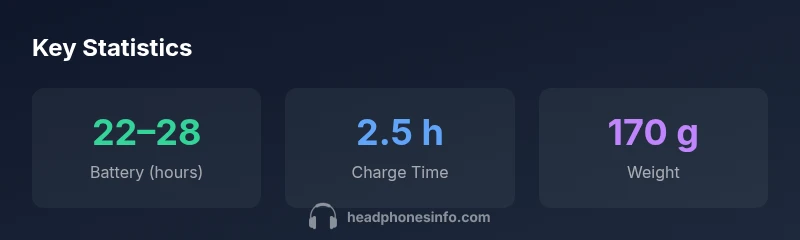
Battery life is a practical determinant of value, particularly for travel and long school days. Real-world use often yields shorter life than claimed, so it’s wise to look for a model with a conservative battery-life estimate and a fast charging option. Durability is equally important; look for reinforced hinges, shatter-resistant housings, and protective carrying cases if available. Charging time matters when you’re on the go: a short top-up can be enough for a school day, while longer charging cycles may be more convenient at home. The best options balance battery duration with quick replenishment, allowing families to avoid interruptions during midday listening. Round out a durability assessment with user reviews that note how the headphones cope with drops and daily wear in classroom and travel scenarios.
Bluetooth connectivity, pairing, and ecosystem integration
Bluetooth reliability is critical for consistent listening experiences. In 2026, Yoto headphones typically support standard Bluetooth profiles with compatibility across iOS, Android, and desktop devices. Multipoint pairing is a feature you’ll find on select models, enabling seamless shifting between a tablet and a phone without re-pairing. Pairing speed, automatic reconnect, and stable audio streaming are practical touchpoints for daily use. Another important aspect is how well the headphones integrate with Yoto’s ecosystem, including any companion apps, kid-friendly interfaces, and parental-control dashboards. A smooth integration improves the user experience, reduces setup time, and supports ongoing learning activities without disruptive interruptions.
How to compare Yoto headphone models
When comparing models, start with safety and comfort as baseline criteria, then evaluate battery life, charging speed, and weight. Don’t overlook adjustability and hinge durability, especially for younger children who may be rough with gear. Test whether the model supports multipoint Bluetooth, has a reliable on-device control scheme, and provides a straightforward pairing process with common devices. Price tier often aligns with features such as enhanced noise isolation, more robust build quality, or expanded parental controls. Finally, consider ecosystem compatibility: if you already use Yoto players or apps, ensure the headphones offer seamless cross-device functionality and future-proof firmware support.
Real-world usage scenarios and tips
In real life, kids use headphones in classrooms, cars, and at home. In classrooms, prioritize a model with a predictable fit, easy-to-access controls, and a moderate maximum volume. On long car trips, battery life and comfort become critical; keep chargers or spare cables handy and consider a model with a protective case. At home, test how easily the headphones pair with multiple devices and whether switching between devices is quick. Establish a simple rule: if the volume exceeds a certain threshold, the device should prompt a parental alert or automatically switch to a safe profile. For families, this practical approach reduces the friction of daily use and helps sustain healthy listening habits over time.
Budget considerations and value for families
Value for families depends on a mix of price, safety features, and build quality. Budget-friendly options may emphasize essential functions with durable construction, while mid-range models offer more tunable sound and enhanced parental controls. When evaluating, consider the potential lifetime value of features you’ll actually use, such as multipoint Bluetooth or EQ presets, versus the higher upfront cost. It’s often worth balancing upfront expense with expected usage: if headphones will be shared across several family members or used for long periods, invest in a model with better comfort and stronger durability. Finally, look for models that maintain software support and firmware updates for several years, ensuring continued safety and compatibility with evolving devices and apps.
Model-type comparison: battery life and weight
| Model Type | Battery Life (hours) | Weight (g) |
|---|---|---|
| On-ear kid | 18-24 | 150 |
| Over-ear kid | 20-28 | 180 |
| In-ear clip | 12-20 | 90 |
People Also Ask
Are Yoto headphones safe for kids?
Yes, most Yoto headphones include a built-in volume limiter to protect hearing, and many models offer parental controls to manage listening levels. Look for compliant limits and straightforward controls to ensure safe daily use.
Yes—most Yoto headphones have volume limiting and parental controls to help keep listening safe for kids.
What is the typical battery life of Yoto headphones?
Battery life varies by model, but many provide approximately 15 to 30 hours per charge. Consider daily use patterns and charging convenience when choosing.
Battery life usually ranges from 15 to 30 hours, depending on model and usage.
Do Yoto headphones support multipoint Bluetooth?
Some models support multipoint pairing, allowing connections to two devices at once. Verify the exact spec for the model you’re considering.
Some models do, but check the exact specs to be sure.
Are Yoto headphones compatible with iOS and Android?
Yes, most use standard Bluetooth profiles compatible with both iOS and Android. Feature availability may vary by app and device.
Yes, they work with both iOS and Android generally.
How should I evaluate value when choosing Yoto headphones?
Consider comfort, safety features, battery life, build quality, and how well the headphones integrate with Yoto devices and apps. Weigh longevity and daily use against price.
Focus on comfort, safety, battery life, build quality, and ecosystem integration when weighing value.
“Comfort and safety features trump flashy specs for most buyers. A headphone should feel natural after hours of use and protect young ears with built-in volume limits.”
What to Remember
- Prioritize comfort for long listening sessions
- Check battery life ranges and charging time
- Verify safety features like volume limiting
- Evaluate ecosystem integration with Yoto devices
- Compare weights for portability