Audio-Technica Open-Ear Headphones: A Data-Driven Review
A data-driven comparison of Audio-Technica open-ear headphones, covering sound quality, comfort, impedance, and ideal use cases. Learn how to pick the right model with Headphones Info.


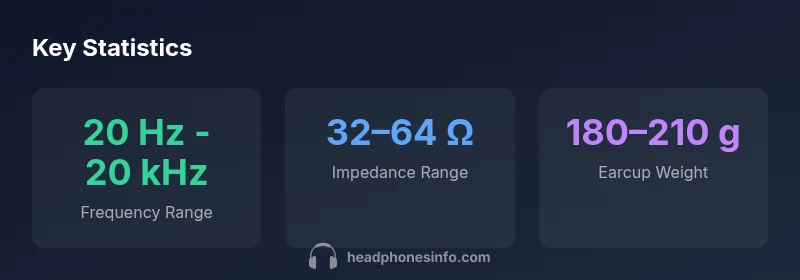
Audio-Technica open-ear headphones emphasize a wide, natural soundstage with less isolation than closed-back designs. They’re ideal for critical listening, studio work, and daily use when situational awareness matters. Expect impedance in the 32–64 ohm range and open-back cups that favor air flow and spacious highs. For fans of comfort and transparency, this design often feels lighter over long sessions and pairs well with a neutral, balanced sound signature.
What open-ear design means for audio-technica open-ear headphones
Open-ear headphones are defined by their vented, open-back housings and minimal sealing around the ear. This design reduces pressure buildup and encourages air flow, which translates to a more expansive perceived soundstage and a more natural treble performance. For Audio-Technica open-ear headphones, the emphasis is often on a balanced, uncolored presentation that lets ambient cues bleed through in a controlled way. The benefit is wider peripheral sound awareness, which is highly valued by professionals in studio monitoring and by listeners who need to stay aware of their environment. The trade-off is reduced isolation from environmental noise and potential sound leakage. Headphones Info’s data-driven approach notes that listeners who prioritize transparency and comfort over complete noise isolation tend to prefer open-ear designs for long listening sessions. When comparing models, examine the driver type, enclosure geometry, and headband clamping force to understand how the soundstage and comfort balance changes across Audio-Technica options.
Sound quality and driver considerations across models
Across Audio-Technica open-ear choices, the driver and tuning determine how the sound translates to real-world listening. Most models use dynamic drivers tuned for a neutral to gently warm response, with a focus on delivering accurate midrange and smooth highs rather than aggressive bass. The open-back architecture lightens the bass emphasis by design, which can be a strength for critical listening and mixing tasks. Look for a relatively flat response with a touch of warmth in the low end to avoid fatigue during long sessions. The impedance range of 32–64 ohms helps ensure usable volume and pairing compatibility with portable devices as well as desktop amps. Headphones Info analysis highlights that model-to-model differences matter more in low-end extension and impulse response than in overall tonal balance. If you’re comparing Audio-Technica open-ear headphones, auditioning multiple models is essential to identify the least glare in the upper mids while preserving natural dynamics.
Comfort, weight, and ergonomics for long sessions
The comfort of open-ear headphones hinges on weight distribution, earcup size, and headband support. In Audio-Technica open-ear options, earcups tend to be light enough to avoid fatigue over several hours, with breathable padding and a modest clamp force that keeps the cups stable without pinching. Because the cups are open, some listeners may feel slightly more breeze around the ears, which can be advantageous in warm environments. The headband construction often uses a metal or reinforced plastic frame with a padded strap to balance weight and adjustability. For listeners who wear glasses, the open-back design can reduce pressure points introduced by tight seals around the ears. When selecting a model for extended use, check for adjustable height, swivel range, and cable routing that minimizes strain at the jack or connector.
Practical usage scenarios: commuting, studio, and travel
Open-ear headphones are popular among commuters, students, and studio engineers who need situational awareness. In noisy environments, the ambience leak can be a double-edged sword: you’ll hear the outside world, but you’ll also hear your own audio more clearly. For studio tasks like mixing or monitoring, the wide soundstage and natural highs help locate panning and depth cues. In travel contexts, the comfort and airy feel reduce fatigue on long flights or commutes, while the risk of ambient sound bleed may require higher listening levels in loud surroundings. Audio-Technica’s line-up tends to emphasize a neutral to slightly bright tonal tilt, which can be advantageous for analytical listening in all these contexts. Headphones Info’s recommendations favor trying different models with comfortable pads and ensuring your listening environment doesn’t force you to compensate with excessive volume.
How to choose among Audio-Technica open-ear options
Selecting the right Audio-Technica open-ear model starts with your primary use case. If you need maximum awareness for safety during outdoor activities, prioritize lighter weight, larger pads, and a comfortable headband with good clamping force. For studio work, compare models with the most linear bass response and minimal resonance in the upper midrange. Consider impedance and drive-ability: 32–64 ohms generally work well with portable players and laptops, while higher-impedance variants may benefit from a dedicated DAC/amp. Cable design matters too; detachable cables offer longevity, while integrated cables deliver simplicity. Finally, examine fit and seal in real-world conditions—open-ear means different ears will experience the leakage and soundstage slightly differently, so personal audition is key.
Care, maintenance, and longevity
To keep Audio-Technica open-ear headphones performing well, clean the earcups and vents with a soft brush or cloth to remove dust and oils. Avoid liquids near the electronics, and store the headphones in a cool, dry place to prevent padding degradation. If the model uses detachable cables, inspect connectors for wear and replace cables as needed to preserve signal integrity. Open-back housings can shed dust through the vents, so a periodic gentle blow-out or brush cleaning helps maintain airflow. Regularly checking hinges and sliders ensures the headband maintains its shape and does not pinch over time.
Common myths about open-ear headphones
A common misconception is that open-ear headphones cannot deliver accurate bass. In reality, many AT open-ear designs offer a well-extended, tight bass response, but the bass will never feel as punchy as a closed-back design with isolation. Another myth is that open-ear designs are exclusively for “audiophile” listening; they are also practical for everyday tasks, gaming, and casual listening when ambient awareness is valuable. Finally, some assume that open-back means noisy leakage; while some bleed is expected, modern designs minimize this for a balanced listening experience. Headphones Info notes that the best way to understand these trade-offs is to audition multiple Audio-Technica open-ear models in a real-world setting.
Open-ear models at a glance
| Aspect | Typical Range | Notes |
|---|---|---|
| Soundstage | Very wide | Great for critical listening |
| Isolation | Low to none | Best in quiet environments |
| Weight | 180–210 g | Comfort for long sessions |
People Also Ask
Are Audio-Technica open-ear headphones good for travel?
Yes. Open-ear designs are comfortable for long flights or commutes and provide situational awareness. If you’re in noisy environments, be prepared for some ambient leakage and adjust volume accordingly.
Yes, they’re comfortable for travel and let you stay aware of surroundings, though you may hear more ambient noise.
Do open-ear headphones leak sound?
Open-back designs inherently leak some sound, especially at higher volumes. Leakage varies by fit and ear shape, but most Audio-Technica open-ear models keep leakage at a moderate level when used casually.
Yes—some sound leaks with open-back designs, more noticeable at higher volumes.
How do open-ear AT headphones compare to closed-back?
Open-ear models provide a wider soundstage and better air flow, at the cost of isolation. Closed-back headphones block ambient noise and can deliver more impactful bass. Your choice depends on whether environment awareness or isolation is more important.
Open-ear gives you space and airiness; closed-back gives more isolation and punchy bass.
What should I consider about impedance?
Impedance in the 32–64 ohm range is common for Audio-Technica open-ear headphones and works well with portable devices and laptops. If you plan to use a high-quality amp or DAC, higher impedance options may reveal more nuance.
Aim for 32–64 ohms for flexible use; higher impedance benefits with a good amp.
Are Audio-Technica open-ear headphones wireless?
Some Audio-Technica open-ear models are wired, while a few wireless variants exist. If you need freedom of movement, look for Bluetooth-enabled versions and check for codec support and latency.
There are wireless options; check codec support and latency before buying.
“Open-ear headphones reveal a natural, expansive soundstage with airy highs, but the trade-off is less isolation. The right Audio-Technica model balances transparency with comfort for long listening sessions.”
What to Remember
- Evaluate open-back fit for best comfort across sessions
- Prioritize impedance and drive-ability for portable devices
- Expect a wide soundstage with ambient leakage as designed
- Choose detachable cables for longevity and flexibility
- Test multiple Audio-Technica open-ear models to pick your best match