Is headphone out the same as line out? A practical guide
Explore whether headphone out and line out are interchangeable, how they differ in signal path, connectors, and setup, and when to use each for optimal sound quality. An objective, data‑driven guide from Headphones Info.


Is headphone out the same as line out? Core concepts
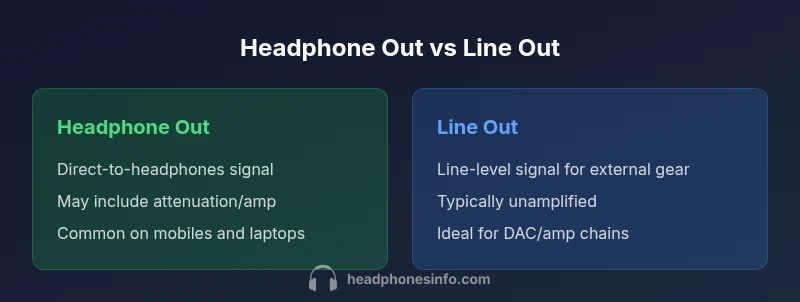
The question is is headphone out the same as line out in many consumer devices, but the practical answer is nuanced. According to Headphones Info, the short answer is no: headphone out and line out serve different roles in the signal chain. Headphone out is designed to drive headphones, with impedance considerations and protective attenuation to avoid damaging your ears or gear. Line out provides a higher, line-level signal intended for external gear such as DACs, audio interfaces, or powered amplifiers. The Headphones Info team found that many users expect plug-and-play parity, yet devices’ internal routing often modifies levels, impedance, and noise characteristics depending on the target output. Understanding these differences helps you prevent misfits (like plugging a line-out signal into a headphone amplifier not designed for line-level) and avoids distortion or loss. Some devices even share pathways, but those are special cases, not the norm. In short, while both are discrete outputs, they are not interchangeable in most real-world setups. When planning a setup, you should map your signal path from source to final destination and choose the output that matches that destination.
How signal paths differ in practice
To understand the difference, follow the signal path from source to speaker or headphone. The DAC generates the analog signal; a headphone-out path may route that signal through a small on‑board amplifier or a built‑in attenuator so that it is safe for headphones. A line-out path, by contrast, typically leaves the DAC output without final amplification, providing a clean line-level signal intended for external gear such as DACs, audio interfaces, or amps. The practical consequence is that a line-out connection can deliver more headroom and lower noise when paired with a proper DAC/amp chain, while headphone out prioritizes headphone compatibility and portability. Headphones Info Analysis, 2026 notes that many devices offer a single physical jack with adaptive routing, which can blur the line between outputs in some models, but this is the exception rather than the rule. If you see a feature called “line out” on a device, expect low or no internal amplification and a signal designed for downstream gear. When you test is headphone out the same as line out in your own gear, you’ll likely notice differences in loudness, tone, and dynamic range.
Compatibility and connectors: what to expect on devices
The connector landscape matters as much as the electrical path. Headphone out commonly uses a 3.5mm TRS connector on phones and laptops, with some devices including a 1/4" TRS or USB-C adapter for compatibility with professional gear. Line out is often found as a 3.5mm or 1/4" TRS jack on desktop sound cards, audio interfaces, or mixers, and is sometimes exposed on dedicated DACs. The impedance and drive requirements differ: headphone-out is designed to deliver current to headphones, while line-out aims to preserve signal integrity for subsequent stages. If your device supports both, pay attention to level controls and output routing options; misrouting can inadvertently send a line-level signal into a headphone input and cause hum or clipping. The practical tip is to check the device’s manual for the exact output path, and verify the connector type before purchasing adapters.
When to use headphone out vs line out
For casual, portable listening with built‑in headphones, the headphone out is convenient and quick. It enables you to listen directly from your phone or laptop without extra gear. If you want the best possible fidelity, especially in a fixed listening room or studio, use line out into a high‑quality DAC/amp chain. This approach reduces the likelihood of noise and distortion that can occur when the internal headphone driver interacts with the audio chain. If you are gaming or producing content, consider your final destination: line out often provides a better baseline when feeding a mixer or audio interface, while headphone out stays handy for late-night sessions when you want to avoid external equipment. The key question is whether is headphone out the same as line out for your setup; the answer is usually no, but there are exceptions.
Audio quality considerations: noise, distortion, and impedance interactions
One of the central factors in is headphone out the same as line out is how impedance and drive capability interact with your headphones. Headphone out must accommodate a broad range of headphone impedances, from low to moderately high, which can lead to perceived changes in volume and tonal balance as load changes. Line out, in contrast, should remain relatively stable across different headphones because it does not need to drive a loudspeaker or headphone in the same way. In practice, you may notice higher noise floor on some headphone outputs when you turn up the volume, whereas line out tends to offer cleaner excursions when connected to a DAC or stage amplifier. Headphones Info Analysis, 2026 reminds readers that cable quality and adapter quality also influence the audible result; even small impedance mismatches can color the signal slightly. The practical takeaway is to match the output type to your destination and keep the chain as simple as possible to maximize fidelity.
Device cases: smartphones, laptops, and dedicated audio interfaces
Smartphones and budget laptops commonly include a headphone-out jack to support direct listening. Some devices, however, switch to digital outputs when using USB-C with an adapter, so the role of a headphone jack may change with firmware. Laptops and desktops with dedicated sound cards often publish both a headphone out and a line out, enabling more flexible routing. Audio interfaces and DAC/AMP combos provide the most consistent performance for critical listening: connect line out to the DAC/amp path and headphone out only for direct listening or to a dedicated headphone amplifier. If you rely on a single device for both work and leisure, consider a simple signal path that preserves fidelity: use line out into a DAC/amp for high‑quality listening, and keep headphone out for convenience when traveling.
Practical setup tips for different goals
- For portable listening, keep the headphone out path simple with a compatible headset and the device’s built‑in attenuation. This reduces the number of components that can color the sound.
- For desktop listening, route a line-out signal into a dedicated DAC/amp. This keeps the signal clean and gives you headroom to drive higher‑impedance headphones.
- When integrating with mixers, recorders, or studio monitors, prefer line out to maintain consistent levels and reduce cross‑talk.
- If you must repurpose a headphone jack for line-out, verify the impedance and level expectations in the device manual, and use a proper line-level adapter to avoid clipping.
- Always test with familiar tracks; compare the perceived differences and avoid mixing the two paths in a single session.
Note the recurring theme: is headphone out the same as line out? In practice, the safe assumption is to treat them as different outputs designed for different destinations, not as interchangeable equivalents.
Quick fixes and common pitfalls
Learning when to pick is headphone out the same as line out is essential for achieving consistent audio. The most common pitfall is trying to feed a line-level signal into a headphone input, which can drive the amp beyond its intended range and cause distortion or noise. Another frequent issue is using adapters that degrade fidelity, especially cheap dongles that add impedance mismatches or cable capacitance. If you notice reduced dynamics or unexpected brightness, verify the routing again and consider testing with a dedicated DAC/amp chain. For many listeners, the simplest pragmatic approach is to maintain a dedicated line-out path for high‑fidelity listening and use headphone out only for direct listening with a compatible headset. Headphones Info’s practical guidance is to keep the paths clean, match the destination with the output, and avoid forcing a single jack to perform dual roles unless the device explicitly supports it.