Motorcycle Helmet Headphones: Wired vs Wireless Comparison
A detailed, data-informed comparison of wired and wireless motorcycle helmet headphones. Learn about fit, safety, battery life, and sound quality to pick the best option for your riding style.


Motorcycle helmet headphones sit at the intersection of safety, comfort, and audio quality. In short, wired models with snug, helmet-friendly mounts offer reliable sound without charging, while wireless units provide freedom but require battery planning. The best choice depends on helmet compatibility, noise management, and how you value voice communication versus music—Headphones Info's analysis helps you weigh fit, safety, and value.
The Core Trade-Offs in Motorcycle Helmet Headphones
Choosing motorcycle helmet headphones means balancing three core axes: safety, comfort, and sound. The audio system must stay securely in place without compromising the helmet’s protective seal or safety features. Comfort matters because riders wear helmets for hours, and poorly designed speakers or cables can cause hot spots or pressure points. Sound quality on a bike is complicated by wind, engine noise, and road texture, so you’ll want drivers with sufficient headroom and good dynamic range. Reliability and rain resistance can make or break a daily-use solution. In this section, we unpack how these factors interact and how to compare wired versus wireless options in practical terms. Throughout this guide, the term motorcycle helmet headphones will appear to emphasize the niche where audio engineering meets protective gear. The Headphones Info team notes that riders frequently prioritize secure mounting, minimal vibration transfer, and clear voice transmission when evaluating options. By understanding these trade-offs, you can map your priorities to a model that fits your helmet and riding style.
Helmet Design and Audio Performance: How Fit Changes Sound
The physical design of a motorcycle helmet strongly shapes how motorcycle helmet headphones deliver audio. Cheek-pad speakers that sit inside the helmet can create a direct, immersive sound without forcing loud volumes, but only if the pads are properly shaped for your head and helmet model. In full-face helmets, speaker placement near the ears works best when the pads offer a stable, vibration-free surface; in open-face or modular helmets, wind and road noise can overwhelm midrange and treble unless drivers are sized to compensate. The result is that the same headphone pair can sound very different from one rider to another, depending on horn-like vents, interior liners, and cheek-pad thickness. When evaluating options, test how well the system stays in place during riding, how securely cables route, and whether the sound remains clear when your head tilts or turns. The Headphones Info team notes that helmet compatibility is not just a passive feature; it directly affects perceived loudness, speech intelligibility, and audio fidelity across speeds.
Wired vs Wireless: Reliability, Convenience, and Safety
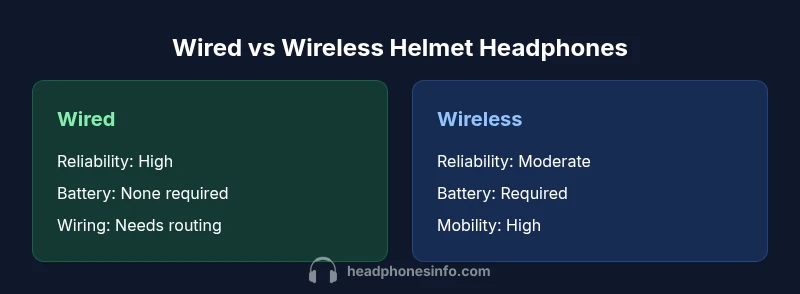
On the road, reliability and safety are paramount. Wired helmet headphones remove charging concerns and potential latency, delivering steady audio as long as the cable remains intact and free from snag-prone routing. They also minimize interference with motorcycle intercom systems and navigation devices. Wireless options trade this reliability for convenience: a compact transmitter and Bluetooth module can simplify pairing with a phone or GPS audio, but riders must remember to charge batteries and account for possible signal drop at high speeds or in tunnels. Latency is sometimes noticeable with music playback or voice prompts, which can be distracting if timing cues matter while riding. The best choice hinges on how you ride: long-distance cruising with predictable routes often favors wired designs, while city commuting or weekend trips where you want to drop a phone in your pocket might lean toward wireless solutions. Headphones Info's analysis emphasizes evaluating how each setup behaves under wind noise, helmet movement, and temperature variations, since those conditions influence whether sound remains intelligible when you ride.
Compatibility: Helmet Styles, Mounts, and Speaker Placement
Compatibility is more than brand labels; it’s about how well the system fits your helmet geometry. Full-face helmets can accommodate interior-mounted drivers, but you’ll want models that provide stable, even pressure and avoid pressure points near the jawline. Open-face helmets may allow better ambient awareness but often need external speakers or cheek-pad variants to achieve even sound distribution. Consider whether the system uses removable cheek-pad inserts, a low-profile headband, or hinging mounting brackets. If you own more than one helmet, choose a modular design that travels well across styles. Also check cable length, connector types, and whether the unit can share accessories with other devices you own. The aim is to minimize the number of fussy components while maximizing reliability and comfort. In practice, riders report that helmet headphones that offer a secure mounting solution while preserving the seal of the helmet deliver the most consistent audio experience.
Noise Management on the Open Road: Wind, Road, and ANC
Wind noise at highway speeds is a constant antagonist to helmet audio. For motorcycle helmet headphones, the goal is to keep wind and engine rumble from masking voice prompts and music while preserving situational awareness. Active noise cancellation (ANC) is not a universal fix for wind, but some models offer adaptive noise control that reduces high-frequency hiss without dampening essential cues like sirens or a telltale engine roar. If you ride in gusty conditions or through tunnels, pay attention to how ANC behaves: some systems reduce background noise too aggressively and create a hollow sound, while others taper gradually for a more natural listening experience. In practical terms, choose headphones with a broad frequency response (bass, midrange, treble) and a tuning that avoids harsh treble at high speeds. The Headphones Info team notes that real-world performance depends on how well the helmet’s vents interact with the rider’s position, so test at least two speeds to hear how sound changes with wind.
Microphone and Intercom Considerations for Clear Communication
Clear voice capture is vital for intercom calls, navigation prompts, and distress signals. Helmet headphones often rely on a mic that sits near the chin or a boom mic integrated into the helmet strap. Check whether the mic uses noise suppression, wind shielding, and automatic gain control, since wind blasts and helmet movement can degrade speech quality. If you depend on hands-free calls, ensure compatibility with your intercom brand or smartphone. Some wireless models include a built-in microphone with a wind shield that reduces plosive consonants. For riders who use voice commands or turn-by-turn prompts, choose a system with low-latency audio so the voice stays in sync with your lips. The Headphones Info Team recommends verifying microphone quality on a test ride, ideally in traffic, to ensure your companions hear you clearly even when the helmet is in motion.
Sound Quality and Personal Preference: Finding Your Sonic Profile
Sound quality is not one-size-fits-all; it reflects personal preference, listening habits, and the kind of riding you do. Some riders prioritize punchy bass to feel like music is present on the road, while others want crisp mids for voice clarity during calls. Look for a headphone driver size that matches the helmet’s internal space; larger drivers can deliver deeper bass but may be too prominent in smaller helmets. Frequency response ranges give you a rough map of what you’ll hear: a flatter response favors accuracy in vocals, while a V-shaped curve boosts bass and treble for a more exciting playback. If you use these headphones primarily for navigation or intercom, favor models with good speech intelligibility and a comfortable ear seal. In all cases, test at typical speeds with your actual helmet to observe how road noise bleeds into the audio and adjust volume carefully to preserve hearing health. The Headphones Info guidelines emphasize listening with intention, not just chasing loudness.
Battery Life, Charging Habits, and Longevity
Battery life matters, especially for long rides or multi-day trips. Wireless helmet headphones require a charging routine, so plan charging stops and carry a backup power source if your model supports USB-C or micro-USB. Some riders prefer quick-charge features that restore a significant portion of runtime during a ride break. Avoid letting the battery sit at zero for extended periods; store them partially charged if you’re not using the system for weeks. Temperature plays a role in battery longevity: extremely hot or cold environments can reduce capacity and speed up degradation. If you mount your unit on a metal rail close to the engine, ensure it’s weather resistant and sealed against moisture. Wired models eliminate charging concerns entirely but require a dependable power source or direct connection to your device for audio and mic. Overall, plan for replacement cycles and check warranty terms to gauge long-term value. The Headphones Info guidance stresses that battery health should factor into your decision along with fit, safety, and sound.
Practical Buying Guide: How to Choose the Right Helmet Headphones
Start by defining your riding context: daily commuting, sport touring, or weekend cruising. Then map that to three core criteria: compatibility with your helmet, battery life vs convenience, and wind/noise resistance. Use a simple scoring system: fit (comfort and stability), sound quality (clarity and bass control), and mic quality (voice transmission). Check mounting options such as integrated cheek-pad speakers versus external earpieces. Evaluate intercom and phone compatibility, app support, and firmware update policies. Consider a trial ride if possible; many retailers offer demo units to assess fit and comfort. Reading user reviews can reveal common issues with specific helmet shapes or models. Finally, compare two to three top options that align with your budget, helmet type, and noise tolerance. The Headphones Info methodology emphasizes real-world testing and clear criteria to help you choose motorcycle helmet headphones that deliver consistent value over time.
Common Pitfalls and How to Avoid Them
Common pitfalls include rushing a purchase without testing wind noise, focusing on bass at the expense of intelligibility, and letting cables snag on riding gear. Avoid models with bulky connectors that irritate the front of the helmet or create pressure points. Weather resistance is critical; a device that isn’t weather-sealed can fail in rain or sweat. Latency in wireless options can disrupt timing with navigation prompts or calls, so verify latency specs and perform a live test. Not all helmets are compatible with every headset, so confirm mounting geometry and space ahead of time. Finally, don’t assume the cheapest option is the best value—cost often correlates with durability and support. The Headphones Info approach is to insist on hands-on testing and wind-noise evaluation before committing to a model.
Real-World Scenarios: Recommendations by Riding Style
Commuter riders benefit from reliability and easy pairing; prioritize long battery life or a wired solution with stable mounting. Touring riders should seek balanced sound, durable weather sealing, and comfortable wear over several hours of riding. Adventure riders require rugged builds, water resistance, and secure mounting that won’t loosen under off-road vibrations. Sport riders look for low latency, precise mic performance, and minimal bulk to avoid interference with gear and posture. Across styles, the Headphones Info Team recommends choosing a single ecosystem that works across your helmet collection, test on actual roads, and consider future upgrade paths to stay current with evolving intercom and Bluetooth standards.
Comparison
| Feature | Wired Helmet Headphones | Wireless Bluetooth Helmet Headphones |
|---|---|---|
| Connection Type | Wired cable, no charging | Bluetooth, requires charging |
| Sound Quality | Stable, consistent audio with minimal latency | Potential latency with some codecs; convenient pairing |
| Battery Life | N/A | Depends on use; varies by model (typical range) |
| Best For | Reliability and fixed setup | Mobility and convenience across devices |
Upsides
- No battery management required for wired options
- Simple setup and fewer failure modes for wired systems
- Wireless options offer hands-free use and easy device switching
- Modern wireless kits can include integrated intercom features
Disadvantages
- Wired options limit mobility and require cable routing
- Wireless options require charging and can suffer from latency or interference
- Compatibility depends on helmet design and mounting space
- Weather sealing is a concern for exposed electronics
Wired headphones excel in reliability; wireless headsets excel in convenience.
If you ride long days with predictable routes, wired helmet headphones are often the safer, simpler choice. If you value freedom to move between devices and quick setup, wireless options win. Your helmet type and riding style ultimately determine which path delivers the best overall value for you.
People Also Ask
What are helmet headphones best used for on a motorcycle?
Helmet headphones are best used for hands-free calls, navigation prompts, and listening to audio without increasing wind noise silence or sacrificing situational awareness. They should not compromise passive safety features or helmet fit. Always test audio performance at typical riding speeds.
Helmet headphones are great for calls and navigation on the road, just make sure they don’t affect safety.
Are helmet headphones safe to wear while riding at high speeds?
Yes, when they are securely mounted and designed for helmet use. They should not require excessive padding or bulky hardware that could affect helmet integrity or interfere with the rider’s balance. Always choose weather-rated, crash-tested options when possible.
They can be safe if mounted securely and designed for helmets.
Can I use any wireless headset with my helmet?
Not all wireless headsets fit every helmet. Check mounting space, vent placement, and cheek-pad compatibility. Some brands offer helmet-specific designs that integrate more cleanly with your gear.
Check helmet compatibility before buying.
Do wired and wireless options sound the same?
Sound quality can be similar, but wind and road noise often require higher headroom for wireless options. Wired setups may deliver more consistent audio by avoiding latency and battery-related effects.
Sound can be similar, but wind noise often changes things for wireless setups.
How can I test helmet headphones before buying?
Look for in-store demos or returnable online options. Test audio quality, mic clarity, fit, and wind resistance during a short ride or simulated wind condition. Pay attention to comfort and heat under the helmet.
Test them in-store or with a return option to be sure they work for you.
What should I consider for battery life on wireless helmet headphones?
Consider the typical ride length and whether the device supports quick-charge. Also check weather sealing, as charging ports can be sensitive to moisture.
Think about how long you ride and battery features.
What to Remember
- Define riding context before shopping
- Test fit under typical wind conditions
- Balance reliability with convenience
- Prioritize helmet compatibility and weather sealing
- Assess mic quality for clear comms