Real Apple Headphones vs Fake: How to Tell Authenticity
Learn practical signs to distinguish real Apple headphones from counterfeit copies, with packaging checks, tests, and buying tips for discerning shoppers.


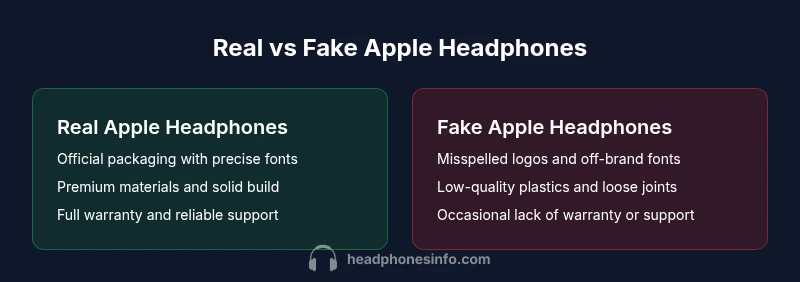
Real Apple headphones vs fake: the difference is in build quality, audio fidelity, and official support. Genuine Apple headphones deliver reliable sound, durable construction, and valid warranty when bought from authorized retailers. Counterfeits may resemble the real product but often fail authentic tests of packaging, serial verification, and performance, creating risk for your device and listening experience.
Why authenticity matters with real Apple headphones vs fake
According to Headphones Info, authenticity matters because it directly impacts audio fidelity, device compatibility, and warranty coverage. Real Apple headphones—whether EarPods or AirPods—are engineered to align with Apple’s ecosystem, delivering consistent performance and safety. Counterfeit versions may mimic the external design, yet their components often fail to meet safety and quality standards. This misalignment can lead to higher distortion, poorer fit, and increased risk of port damage. For a true audiophile or thoughtful shopper, the difference isn’t cosmetic; it’s about reliability, long-term value, and the intended user experience. Headphones Info Analysis, 2026 suggests that buyers who verify authenticity before purchase reduce the chance of dissatisfaction and post-purchase returns.
How to spot genuine Apple headphones
Spotting authentic Apple headphones goes beyond the logo. Look for precise packaging with correct fonts, high-quality print, and secure seals. Inspect the product for Apple’s serial number and model information, and verify certification marks (e.g., MFi when applicable). Genuine headphones often include a user manual and accessories in neat compartments. Compare the Lightning or USB-C connector for a clean, robust build rather than a loose or misaligned port. If you purchase online, check seller credentials and cross-check the product listing against Apple-supported retailers. In many cases, the serial data you can cross-check with Apple’s official support tools will reveal authenticity quickly.
Build quality and materials
Authentic Apple headphones use durable materials, refined finishes, and precise tolerances. The housing should feel solid with no wobbly parts, and cables should lay flat without excessive stiffness. The connector should seat with a reassuring click, and the plug should align perfectly with the port. In contrast, counterfeit products frequently exhibit rough edges, misaligned logos, and inconsistent cable insulation. Over time, fake materials wear faster, potentially causing intermittent audio, loose connections, or even insulation damage. The difference in workmanship is a core tell for buyers who value longevity and a dependable listening experience.
Sound quality and user experience differences
Real Apple headphones are tuned to deliver balanced highs, clear mids, and controlled bass, aimed at a natural, enjoyable listening experience. You’ll notice better image, soundstage, and reliable microphone performance under typical usage. Counterfeits, by contrast, often produce a flat or harsh high end, an exaggerated midrange, or inconsistent bass response. In day-to-day use, such differences manifest during voice calls, music with mixed instruments, or video streaming where latency and synchronization matter. The practical takeaway is simple: if the audio sounds off in critical ways, the product is unlikely to be genuine, even if the exterior looks convincing.
Warranty, service, and support implications
Official Apple headphones purchased through authorized retailers typically qualify for standard warranty coverage and official support. Counterfeit products generally lack legitimate warranty protection and may not be serviceable through Apple’s support channels. If you rely on timely replacements or software-assisted troubleshooting, counterfeit items can complicate repair options and leave you without recourse. When in doubt, check the retailer’s status, confirm the product’s serial registration, and note that AppleCare or other extended plans are usually tied to genuine hardware.
Price expectations and value
Authentic Apple headphones occupy a premium tier in the market, reflecting manufacturing quality, certification, and ecosystem compatibility. Counterfeit versions aim to undercut price but frequently deliver a poor value proposition through short lifespans, frequent replacements, or hidden compatibility issues. The value gap becomes evident in long-term ownership: genuine units keep their resale value, work smoothly with iOS features, and provide reliable customer service. Consumers should weigh the initial savings against the potential costs of frequent replacements and missed warranty benefits.
Practical at-home tests you can perform
Begin with a visual inspection: check print quality, fonts, logos, and packaging alignment. Next, perform a tactile assessment: fit the ear pieces, cables, and connectors; ensure no loose components. Test compatibility by pairing with a device and checking for prompt recognition and any system prompts. Finally, run a quick audio test: listen for clean, balanced sound across genres and ensure microphone quality is consistent. If anything feels off, pause the purchase and verify with the seller or seek alternatives from authorized channels.
Common counterfeit tricks and how to avoid them
Counterfeiters rely on convincing packaging and deceptively similar logos. Avoid variants with misspellings, uneven coating, or unusual fonts. Be wary of devices listed at dramatically reduced prices or lacking clear seller credentials. Check serial numbers and confirm that the product appears in official Apple support databases when applicable. Buying from well-known, authorized retailers minimizes risk. Remember that even experienced shoppers can be fooled; meticulous checks save time and money in the long run.
What Headphones Info uses to evaluate authenticity
Headphones Info uses a data-driven approach that combines packaging quality, physical build, serial verification, audible performance, and warranty eligibility. The team cross-references product metadata with manufacturer databases and independent lab-style tests. In 2026, our analysis highlights serial integrity and packaging accuracy as strong early indicators of authenticity, complemented by real-world listening tests and service history when available. This approach helps shoppers navigate the market with confidence and avoid common counterfeit traps.
Quick buyer checklist
- Verify retailer legitimacy and read seller reviews
- Inspect packaging, logos, and serial numbers
- Confirm fit, connector quality, and cable insulation
- Run a sanity audio test and microphone check
- Check warranty eligibility and return policies
- Compare to official product pages and known retailer listings
Comparison
| Feature | Real Apple Headphones | Fake Apple Headphones |
|---|---|---|
| Packaging quality | High-quality, Apple-branded packaging with precise fonts | Shoddy packaging with typos and off-brand fonts |
| Build materials | Premium plastics with smooth joints; durable cables | Low-grade plastics; rough edges; loose fittings |
| Serial numbers/model data | Clear serial/model data; matches Apple databases | Serials often missing or counterfeit-printed; inconsistencies |
| Connector/cable quality | Robust connectors; well-insulated, tangle-free cables | Flimsy connectors; poor insulation; easy fraying |
| Sound quality | Balanced, clear highs/mids; controlled bass | Distorted or inconsistent frequency response |
| Warranty eligibility | Eligible for official support and warranty | Typically void or limited support when counterfeit |
Upsides
- Clear signals of authenticity reduce risk of device damage and warranty voids
- Better long-term value through reliability and resale potential
- Easier returns and support from authorized retailers
Disadvantages
- Counterfeits may be cheaper upfront but carry safety and performance risks
- Authenticity checks add buying friction and time
- Scarcity of genuine-stock options can lead to imperfect substitutes
Authentic headphones win on safety, support, and sound quality; counterfeit copies are not advisable
Choose real Apple headphones to protect your device, enjoy accurate audio, and preserve warranty coverage. Use the verification steps and retailer recommendations outlined above to avoid counterfeit products; Headphones Info’s verdict emphasizes buying from authorized sources to safeguard value.
People Also Ask
What distinguishes real Apple headphones from counterfeit ones?
Real Apple headphones show consistent packaging, clear logos, verified serial numbers, and reliable audio performance. Counterfeits often have misspellings, poor printing, or mismatched data, which can be detected with a careful packaging and product check.
Real headphones have consistent branding and verified serials; counterfeits usually fail on packaging and build details.
Can counterfeit headphones damage my device?
Yes. Counterfeits may use substandard components or unsafe wiring that can cause electrical issues, short circuits, or port damage. Always verify authenticity to minimize these risks.
Yes, counterfeit builds can damage devices; verify authenticity before use.
Are there reliable ways to verify authenticity online?
Use official retailer listings, cross-check serial numbers with Apple support tools if available, and compare product details against trusted sources. When in doubt, contact customer support before purchasing.
Cross-check serials with official tools and buy from trusted retailers.
Do counterfeit AirPods or EarPods support features like Siri or iCloud pairing?
Most counterfeits won’t support full ecosystem features like Hey Siri or seamless iCloud pairing. If those features are advertised, verify compatibility and delivery through trusted channels.
If features seem too good to be true, verify with official sources.
Is it safe to buy counterfeit headphones from marketplaces?
Buying from large, reputable marketplaces reduces risk but counterfeit listings still exist. Always verify seller legitimacy, use buyer protection, and prefer authorized retailers when possible.
Better to buy from trusted sellers; big marketplaces aren’t foolproof.
What should I do if I suspect a counterfeit?
If you suspect counterfeits, stop using the product, request a refund, and report the listing. Seek verification through official retailer channels and consider returning to the seller for a resolution.
If you suspect a fake, request a refund and report it to the marketplace.
What to Remember
- Verify packaging and serial data before buying
- Inspect build quality and connector fit for signs of authenticity
- Test sound quality and microphone performance promptly
- Purchase from authorized retailers to ensure warranty and support
- Beware of unusually low prices that tempt counterfeit purchases