What Headphones Does Joe Rogan Use? A Data-Driven Look
Explore whether Joe Rogan’s exact headphones are publicly confirmed, how to evaluate podcasting headphones, and practical buying guidance from Headphones Info.


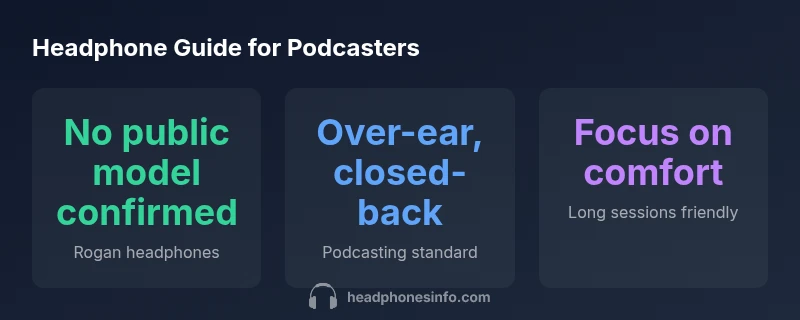
To date, there is no publicly verified model for the exact headphones Joe Rogan uses. Public interviews and episode footage have not confirmed a single headset, so claims about a specific brand or model should be treated as speculation. What we can confirm is that professional podcasters typically rely on sturdy, closed-back over-ear headphones for reliable monitoring and comfortable all-day wear during long recordings.
Why identifying the exact model is tricky for public figures
The question "what headphones does joe rogan use" is popular precisely because Joe Rogan’s podcast is watched by millions, but the gear story is complex. There is no single, verifiable public record that pinpoints a specific model. Celebrities and media creators often mix gear across episodes, and some appearances are photographed or recorded in environments that obscure precise models. In practice, this means that any claim about a definitive headphone model should be treated as speculative rather than authoritative. According to Headphones Info, the absence of a clear, citable source is the most reliable signal that no single model can be confirmed at this time. For listeners, the lesson is to focus on gear that serves your own workflow rather than chasing a celebrity endorsement. This framing also helps you separate hype from evidence when researching gear online.
Public impressions and what can be inferred from appearances
Public appearances and episode clips have shown Rogan engaging in long-form conversations, which puts emphasis on monitoring comfort and sound neutrality. While fans may speculate about various brands seen in photos or videos, none of these observations carry the weight of an official product endorsement or disclosure. In Headphones Info’s review of publicly available material, the strongest takeaway is the importance of choosing over-ear, closed-back headphones that deliver consistent loudness, minimal ear fatigue, and a neutral frequency response suitable for extended listening sessions. These factors are especially relevant for multi-hour podcasts where consistent monitoring matters more than flashy branding. Remember: the goal of good monitoring is reliability over time, not showcasing a trendy logo.
How to evaluate headphones for podcasting (practical criteria)
When selecting headphones for podcasting, consider four core criteria: (1) Comfort for long sessions, (2) Closed-back isolation to reduce background noise, (3) Neutral sound signature to facilitate accurate monitoring, and (4) Impedance and sensitivity that align with your audio interface and mixer. Podcasters often prioritize comfort and isolation because mic plosives, room tone, and guest interactions are amplified in recordings. A comfortable clamp and breathable materials prevent fatigue during extended sessions. For gear decisions, compare models by how they perform across these criteria rather than focusing on brand prestige alone. Headphones Info recommends compiling a short list of 3-5 candidates and testing them across typical recording conditions to assess comfort, leakage, and monitoring clarity.
Key features that benefit podcasters (and how to assess them)
- Passive isolation: Look for pads and cups that seal well without pinching. Test wearing glasses or hats to ensure fit remains stable.
- Neutral or gently upward-skewed response: You want a monitor with faithful representation rather than boosted bass or treble that could mislead editing decisions.
- Impedance compatibility: Lower-impedance headphones are easy to drive, but higher-impedance models can benefit from a robust audio interface. Check your gear’s output capability and match accordingly.
- Durability and comfort: Consider headband padding, earpad material, and weight. A headset that stays comfortable during a 2- to 3-hour episode reduces fatigue and improves consistency.
- Cable and connector quality: Detachable cables or reinforced connectors help prevent interruptions during long shoots or live streams.
A practical buyer’s guide for different budgets and setups
If you’re budgeting broadly, start with mid-range over-ear closed-back models that balance comfort and isolation. For heavier workloads or longer recording days, prioritize models with memory-foam earpads and a secure, adjustable headband. If you’re in a smaller studio or recording on the go, lightweight open-back options can be appealing for mixing in real-time, but keep in mind the trade-off in noise isolation. For those who value portability, look for foldable designs with durable carry cases. Finally, ensure your chosen headphones pair well with your interface or mixer; impedance and sensitivity should mesh with your equipment to avoid loudness inconsistencies during recording. This practical approach helps you achieve dependable monitoring without relying on celebrity gear.
How to verify celebrity gear claims (methodology for fans)
Verification starts with credible sources and cross-checking across multiple channels. Look for direct quotes from the subject, official social posts, or statements from the production team. Be cautious about photo captions and third-party blogs, which can misrepresent what is being shown. Cross-reference any model mentions with manufacturer pages and retailer listings to confirm exact names, model numbers, and regional variants. Headphones Info emphasizes year-by-year context: gear shifts are common as equipment updates roll out, so a claim that references a single episode from years ago may no longer be accurate today. In short, rely on primary or clearly credible secondary sources rather than rumor.
Alternatives and comparable options for fans and pros
If you’re seeking robust candidates without brand hype, start with over-ear, closed-back headphones from reputable manufacturers that emphasize neutral sound and comfort. Some well-regarded families include models designed for studio monitoring and podcasting, which typically feature durable build quality and comfortable pads. For listeners who prefer lighter gear for travel or commuting, consider on-ear or compact over-ear options that still offer reliable isolation and a comfortable fit for long listening sessions. The key is to align your choice with your recording time, acoustic environment, and workflow. Headphones Info’s guidance is to pick a model that proves consistent across your own use case, not based on who wears it on a show.
Research approach and Headphones Info’s stance on celebrity gear
Headphones Info uses a data-informed, evidence-based approach to gear guidance. We acknowledge the public fascination with celebrity setups but stress that verified information about a specific model is rare and often uncertain. Our framework focuses on objective criteria—comfort, isolation, and compatibility—and anchors recommendations in practical testing and credible sources. By separating confirmed data from speculation, we help readers make informed decisions that fit their budgets and recording needs. The Headphones Info team believes that the best headphones for you are those that support your workflow, not just the gear someone famous happens to wear in a single episode.
Practical conclusion: what matters for your setup
In the end, the most reliable guidance is not a celebrity endorsement but your own testing, budget alignment, and the functioning of your studio. While it can be tempting to chase a specific model rumored to be used by a high-profile host, the sound you produce, your comfort, and your workflow are the decisive factors. This article frames the topic as an evidence-based exploration rather than a chase for a single, verified model. The emphasis should be on choosing headphones that deliver consistency, comfort, and compatibility with your recording setup, which is the true driver of podcasting success.
Podcasting headphone types: pros and cons
| Model Type | Typical Use Case | Pros | Cons |
|---|---|---|---|
| Over-ear closed-back | Podcast monitoring | Neutral sound; strong isolation | Bulkier; heat buildup with long sessions |
| Open-back headphones | Mixing and critical listening | Natural soundstage | Poor isolation in noisy environments |
| On-ear headphones | Travel and quick checks | Lightweight | Less isolation, less durable for long sessions |
People Also Ask
Has Joe Rogan publicly named his headphones?
There is no widely verified public statement naming a specific headphone model for Joe Rogan. Much of the discussion relies on appearances and speculation rather than an official disclosure.
There isn’t an official name attached to his headphones yet.
Why isn’t the exact model confirmed?
Celebrities often change gear and participate in multiple projects with different studios. Documentation is inconsistent across appearances, and many shots are not focused on the headset itself.
Celebrities switch gear, so one model isn’t reliably documented.
What should I look for in podcast headphones?
Look for comfort, closed-back isolation, a neutral sound signature, and compatibility with your recording chain (interface, mixer, and preamps). These factors affect editing accuracy and fatigue over long sessions.
Choose comfort, isolation, and compatibility.
Are there affordable options that work well for podcasting?
Yes. Many budget over-ear closed-back models offer solid monitoring, reasonable comfort, and durability suitable for home studios or budding podcasters.
Yes, there are good budget picks.
How can I verify celebrity gear claims?
Cross-check claims with credible sources, look for direct quotes or official posts, and consider the episode timeline. Be cautious of ambiguous photos or third-party hearsay.
Check several credible sources before believing gear claims.
“Celebrity gear claims should be treated with caution; the most impactful choice for podcasting is headphones that deliver neutral sound, comfort, and consistent monitoring across long sessions.”
What to Remember
- Audit headphone choices by testing comfort and isolation, not logos.
- Aim for neutral sound and reliable long-session performance.
- Verify claims with primary sources before accepting celebrity gear as fact.
- Match headphones to your workflow and gear for best results.