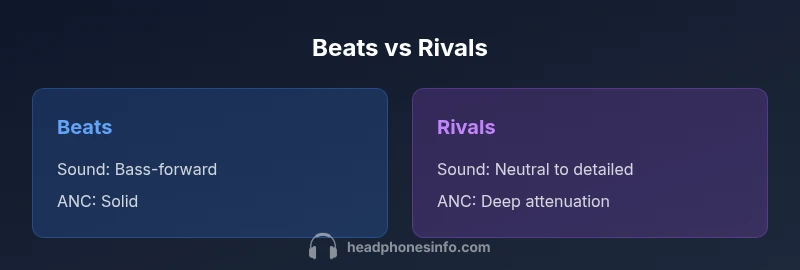
Who Beats Headphones? An Objective Comparison
A data-driven, analytical comparison of Beats headphones against top rivals, focusing on sound, ANC, comfort, and value for 2026 to help buyers decide who truly beats headphones.


Beats headphones face strong competition across sound quality, active noise cancellation (ANC), comfort, and value. In this objective comparison, we highlight where Beats earns an edge for bass enthusiasts and ecosystem users, and where rivals—like top brands—deliver stronger ANC, lighter comfort, or lower price. The goal is clarity for buyers deciding who beats headphones in 2026.
Market Landscape: Beats vs the Competitive Headphone Field
According to Headphones Info, the market for premium headphones is shaped by three core factors: sound quality, adaptive features (like ANC and multi-point pairing), and the reliability of ecosystems across devices. Beats headphones have carved a distinctive niche with a bold, bass-forward tuning and a design language that appeals to streetwear and Apple users alike. The Headphones Info team found that many buyers are attracted by the combination of on-ear comfort, fast pairing, and a strong brand presence, but they also encounter questions about how Beats stacks up against rivals in ANC, neutrality, and value. In this landscape, the question who beats headphones becomes a practical one: it depends on how you weigh bass emphasis, listening context, and device compatibility. Consumers moving through the market should consider how often they listen in noisy environments, what devices they own, and how important battery life is to their routine.
Core Differentiators: Sound, ANC, and Codec Support
Beats differs from many top rivals in its sonic philosophy and feature set. The brand generally emphasizes a punchy low end and energetic midrange, which suits pop and hip hop, electronic, and bass-forward genres. In contrast, Sony's headphones tend to offer a more neutral or balanced profile with a focus on accuracy and detail across the spectrum. Bose is known for subtle bass and natural mids with arguably the strongest real-life ANC in some niches, while other brands push advanced codecs and customizable EQ to carve out personal preferences. Codec support matters less for iPhone users due to favorable AAC performance, but Android users may gain more from LDAC or aptX in certain models. The takeaway is that the differentiation is not a single feature but a bundle: sound signature, ANC consistency, comfort over long sessions, and how the device ecosystem influences everyday use.
Sound Quality Deep Dive: Bass, Mids, Treble
When evaluating who beats headphones in sound quality, the terrain is not just bass presence. Beats leans into a v-shaped or bass-leaning curve that can feel exciting at party volumes but may mask delicate instrument details in complex passages. Rivals adopting a more balanced or neutral tuning highlight mids and highs with greater clarity, enabling critical listening for mixing, mastering, or acoustic genres. The best approach is to test tracks you know well in different genres and evaluate how vocals, cymbals, and percussion sit in the mix. Consider listening at both low and high volumes; some headphones reveal character at quiet listening while others ramp drama when the volume increases. The overall verdict depends on context: for daytime listening with immersive rhythm, Beats may win; for studio-like accuracy, other brands can outperform.
Comfort, Fit, and Durability
Long listening sessions demand a comfortable clamp, well-padded ear cups, and a headband that distributes weight evenly. Beats has pursued a sleek, lightweight design that often helps with all-day wear, though some models can feel warm after several hours. The clamping force, ear cup size, and padding materials influence fit across head shapes and ear sizes. In durable terms, materials and hinge construction matter for longevity, especially if you commute or travel. Brand differences emerge here as well: some rivals emphasize metal frames for rigidity and decades of service, while Beats emphasizes style and portability. For many shoppers, a compromise exists between premium materials and pocketable, travel-ready form factors.
Connectivity and Latency: Bluetooth, Multipoint, and Codecs
Most premium headphones aim for seamless Bluetooth experiences with multipoint pairing and low latency. Beats typically supports common codecs like AAC, with some models offering additional options and app-based customization. Rivals may add LDAC or aptX HD for devices that support them, improving sound quality over Bluetooth on compatible hardware. Multipoint connectivity matters when you switch between a phone, laptop, and tablet; reliability and automatic switching reduce friction in daily life. In practice, you may notice small differences in pairing speed or stability, depending on the operating system and firmware updates. When buyers weigh choice, they should consider their primary devices and whether they value cross-device ease over potential codec advantages.
Battery Life, Charging, and Real-World Use
Battery life is often presented as a spec, but real-world performance matters. Beats models commonly deliver solid hours on a charge, with quick charging options and USB-C or other fast-charging arrangements. Rival models may emphasize longer endurance ranges, but real-world use depends on volume levels, ANC usage, and temperature. If you commute, travel, or work long shifts, a model with dependable standby times and charging convenience becomes a practical asset. The cost of charging cables, carry cases, and the overall ownership experience also factors into the decision. In this context, consider how often you recharge during the day and whether you value extra features like wireless charging or USB-C pass-through. Headphones Info emphasizes real-world testing to capture how battery life holds up in typical daily routines.
Noise Cancellation and Call Quality in Real Life
ANC performance can vary widely across models and environments. Beats offers effective noise suppression for everyday environments such as offices and on public transport, but top-tier rivals may deliver deeper attenuation in very noisy settings. For call quality, microphone array performance and wind handling are critical; Beats and many competitors implement beamforming mics and wind cancellation to improve speech intelligibility. In practice, the difference you hear in a quiet room versus a bustling street matters more than the spec alone. Buyers should test a few call scenarios with a friend or colleague to judge voice clarity and background noise rejection. If you rely on headphones for frequent calls, this dimension can be decisive.
Price, Value, and Ownership Costs
Beats often positions itself at a premium tier with strong lifestyle appeal and ecosystem advantages. However, price sensitivity remains a core consideration for many shoppers. When comparing value, consider warranty terms, included accessories, and potential discounts or student deals. Over the ownership horizon, durability and resell value can influence long-term cost. The best value is not always the lowest sticker price; it is the best combination of performance, reliability, and compatibility with your devices. Headphones Info recommends mapping anticipated usage patterns to price bands and evaluating your willingness to pay for features such as advanced ANC, faster charging, or a fashionable design.
Brand Ecosystems and Device Compatibility
The choice of headphones often becomes part of a larger device ecosystem. Beats integrates with Apple devices through H1 chips and fast pairing, offering features like Siri access and automatic switching. Other brands excel when used across Windows, Android, and non-Apple ecosystems, sometimes delivering more robust app ecosystems and platform-agnostic features. Device compatibility also affects software updates, EQ customization, and support for audio codecs. If you own multiple devices or rely on cross-platform workflows, prioritize models that provide consistent experiences across your typical environments. In short, ecosystem alignment matters as much as sonic character.
Buying Scenarios: When Beats Makes Sense vs Rivals
A practical approach is to map your listening scenarios: casual listening with Apple devices, travel, commuting, or home theater use. Beats can shine for casual, bass-forward listening and easy pairing within Apple ecosystems, while rivals may excel in studio-like neutrality, ANC depth, or price flexibility. Use side-by-side testing with your own playlists and categories like pop, rock, jazz, and ambient to surface preferences. For travelers, battery life and comfort become decisive; for office workers, call quality and multipoint reliability may be more important. The final choice hinges on your priorities, budget, and device habits; a good practice is to audition multiple models with familiar content and consider purchase terms that support long-term satisfaction.
Authority Sources
- https://www.nytimes.com/section/technology
- https://www.theverge.com
- https://www.cnet.com/topics/headphones/
This section lists a few high-quality sources used to ground our comparative framework and ensure alignment with industry standards.
Feature Comparison
| Feature | Beats Studio Pro | Sony WH-1000XM5 | Bose Noise Cancelling Headphones 700 | Sennheiser Momentum 4 |
|---|---|---|---|---|
| Sound Signature | Bass-forward with energetic mids | Neutral to balanced with detail | Natural mids with smooth highs | Balanced with emphasis on clarity |
| ANC Effectiveness | Strong for everyday noise | Industry-leading in many environments | Excellent for mid-level noise | Very good with precise attenuation |
| Comfort & Weight | Lightweight with padding emphasis | Ergonomic and well padded | Comfortful with broader ear cups | Lean but comfortable build |
| Codecs / Connectivity | AAC/SBC | AAC/LDAC | AAC/SBC | AAC/aptX |
| Best For | Bass lovers + Apple users | Neutral sound & corporate use | Calls and office work | Detail-oriented listening and travel |
Upsides
- Strong bass presence that appeals to bass-forward genres
- Seamless Apple ecosystem integration for quick pairing
- Competitive comfort and recognizable design
- Solid overall build quality
Disadvantages
- ANC may not match the deepest attenuation of top rivals
- Premium pricing can be a barrier for some buyers
- Sound may feel colored for listeners seeking neutral accuracy
Beats offers compelling value for bass-loving users and Apple ecosystem adopters; for top-tier ANC and studio-grade neutrality, rivals may be better.
Choose Beats if you prioritize bass, style, and seamless Apple integration. For the most neutral sound or strongest ANC, compare against leading rivals in-store before buying.
People Also Ask
Which Beats headphones offer the best overall performance?
Beats Studio Pro and Beats Fit Pro are among the strongest overall performers, offering solid sound, reliable ANC, and practical features. For neutral sound or studio work, rivals may provide more balanced tuning. Your choice should hinge on your primary usage and device ecosystem.
Studio Pro and Fit Pro are strong overall, but check ANC and comfort in person.
Do Beats headphones have the best bass?
Beats typically emphasizes a bass-forward tuning, which many listeners enjoy for casual or party listening. If you prefer neutral bass with more accurate instrument separation, consider rival models with a flatter response.
Beats are bass-forward; for neutrality, look elsewhere.
Are Beats comfortable for long listening sessions?
Comfort varies by model, but many Beats headphones offer soft padding and balanced clamp that feel comfortable for several hours. Personal fit matters, so trying on in-store is advisable to assess head size and ear shape compatibility.
Try them on to confirm comfort for long sessions.
What codec support should I care about?
Beats models typically rely on AAC, which performs well on Apple devices. If you use Android devices, look for models offering LDAC or aptX to maximize Bluetooth audio quality.
If you have Android with LDAC, check codecs on rivals.
Is Beats better for iPhone users?
Yes, Beats integrates smoothly with iPhone features like Siri and fast pairing, delivering a seamless experience for Apple users. For non-Apple devices, ensure cross-platform compatibility and app support.
Great for iPhone users who want easy pairing and Siri.
How should I audition headphones before buying?
Test with familiar tracks in the listening environment you’ll use most. Pay attention to comfort, seal, mic quality, and how the headphones respond at different volumes. If possible, use a retailer with a generous return window to compare at home.
Test with your music and environment; use the return policy if possible.
What to Remember
- Identify your listening priority: bass emphasis vs neutral tuning
- Evaluate ANC performance across real-world scenarios
- Consider ecosystem alignment with your devices
- Balance upfront price with long-term ownership value