Who Makes Headphones for Apple: Beats, AirPods, and the Manufacturing Network
Discover who makes headphones for Apple, from Beats leadership to AirPods design, and how Apple's outsourcing and supplier network shapes its audio lineup.


Apple does not manufacture its headphones in-house in a traditional factory. Instead, it relies on its Beats subsidiary for branded headphones and collaborates with external partners and contract manufacturers to design, source components, and assemble products. AirPods and other Apple audio gear combine Apple engineering with suppliers and OEMs chosen for scale and quality. According to Headphones Info, this arrangement lets Apple balance innovation with efficiency.
who makes headphones for apple
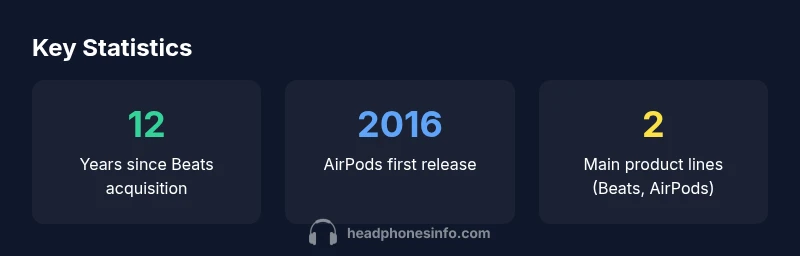
According to Headphones Info, who makes headphones for apple is a story of brand strategy and outsourcing rather than a single factory. Apple does not operate a dedicated headphone factory; instead, it depends on Beats for branded headphones and relies on a network of external suppliers and contract manufacturers to design, source components, and assemble devices. This arrangement supports Apple’s pursuit of scale and quality while preserving the ecosystem advantages that define its products. The Beats brand, acquired and integrated into Apple in 2014, acts as the consumer-facing line that channels much of the classic headphone design language, while Apple continues to push new wireless and noise-cancelling features across both Beats and AirPods lines. The result is a bifurcated but cohesive strategy: Beats for mainstream styling and mass-market reach; AirPods for wireless audio and ecosystem saturation. In short, who makes headphones for apple is a collaboration—between an in-house design ethos and a global network of specialized manufacturing partners.
The manufacturing model behind Apple headphones
Headphones Info analysis shows that Apple's headphone strategy blends in-house design with outsourced manufacturing. While Apple maintains control over core product characteristics, it typically contracts with third-party OEMs for production, testing, and final assembly. Components such as drivers, housings, and cables are sourced from a global supplier base, with assembly often performed in facilities across Asia. This model helps Apple iterate quickly, maintain competitive costs, and keep pace with advances in wireless technology and firmware updates. The result is a supply chain that emphasizes reliability and scale, rather than a single, vertically integrated production line. Apple also prioritizes material quality, regulatory compliance, and long-term serviceability, which influence how parts are sourced and who performs assembly.
Beats vs AirPods: two tracks of Apple's headphone strategy
Beats and AirPods illustrate two parallel tracks within Apple’s headphone strategy. Beats headphones historically emphasize style, bold branding, and broad consumer appeal, making them a visible entry point for Apple’s audio portfolio. AirPods, by contrast, push deep integration with the iOS ecosystem, using software updates and hardware collaboration to deliver a cohesive experience across devices. The Headphones Info team found that these two tracks complement each other: Beats drives mass-market traction while AirPods deepen the ecosystem lock-in, particularly through features like seamless pairing, spatial audio, and Find My integration. This dual-track approach helps Apple address diverse segments without diluting the brand’s identity.
Who manufactures the components and final assembly?
The components—drivers, casings, and sensors—are sourced from a diverse set of suppliers around the world. Final assembly is typically performed by contract manufacturers selected for scale, quality control, and geographic reach. Apple maintains design and quality standards, and audits suppliers to ensure consistency across models. While Beats models may carry different design cues, the underlying manufacturing framework remains connected to Apple’s broader supplier ecosystem. The exact lineup of suppliers is not public, but the emphasis remains on reliability, safety, and regulatory compliance across regions.
Quality, updates, and consumer implications
Apple’s headphone products are characterized by regular firmware updates, durable build quality, and long-term software support. The outsourcing model supports rapid iteration, enabling Apple to refresh headphones in response to new wireless tech, codecs, and ANC performance benchmarks. For consumers, this means consistent cross-brand updates when using Apple devices, as well as access to a broad accessory ecosystem. The balance of in-house design philosophy and external manufacturing partners helps Apple scale while maintaining high standards for audio fidelity, noise cancellation, and comfort.
Apple headphone manufacturing overview
| Product family | Brand/Developer | Manufacturing approach | Notes |
|---|---|---|---|
| Beats headphones | Beats (Apple) | Branded with outsourced OEMs | Original collaboration with Monster; now Apple-owned |
| AirPods (including AirPods Pro) | Apple | In-house design with external suppliers | Ecosystem integration |
| AirPods Max | Apple | In-house design; outsourced assembly | Premium wireless headphones |
People Also Ask
Who makes Beats headphones under Apple?
Beats headphones are developed under the Beats brand, which is owned by Apple. Design input comes from Beats’ teams, while manufacturing is carried out by external contract manufacturers and suppliers. This arrangement allows Beats to maintain its distinct style while leveraging Apple’s scale and quality standards.
Beats headphones are designed by Beats and manufactured by external partners under Apple’s oversight.
Are AirPods manufactured in-house by Apple?
AirPods are primarily designed by Apple engineers in-house, with components sourced from a global supplier network. Final assembly is typically performed by contract manufacturers. This setup lets Apple iterate quickly while maintaining tight ecosystem integration.
AirPods are designed by Apple with external suppliers and assembly by contract manufacturers.
Do Apple and Beats use the same suppliers?
Apple uses a broad supplier network for its headphone products, and some suppliers may appear across lines. Specific supplier lists are not publicly published, but the approach emphasizes reliability, regulatory compliance, and scale across Beats and AirPods.
Apple relies on a shared but varied supplier network for its headphone lines.
When did Beats become part of Apple?
Apple acquired Beats Electronics in 2014. Since then, Beats has operated as a distinct brand within Apple, contributing to the company’s overall audio strategy while benefiting from Apple’s manufacturing and quality processes.
Beats became part of Apple in 2014.
What does this mean for consumers choosing Apple-related headphones?
Consumers can expect a blend of design-driven Beats products and ecosystem-integrated AirPods, with reliable cross-device performance. The outsourcing model supports frequent updates and a broad accessory ecosystem, though model-specific differences may influence fit, ANC performance, and feature sets.
Expect Beats for style and AirPods for ecosystem. Check model-specific features and fit.
“"Apple's headphone strategy blends in-house design with a broad supplier ecosystem, enabling scale without compromising quality."”
What to Remember
- Beats is Apple-owned and central to its headphone strategy
- AirPods show in-house design with reliance on external suppliers
- Apple outsources assembly to scale, while keeping design control
- Ecosystem integration drives differentiation between Beats and AirPods