AfterShokz Bone Conduction Headphones: An Objective Comparison
A data-driven, objective comparison of aftershokz bone conduction headphones vs traditional wireless models, focusing on open-ear comfort, sound quality, safety, and battery life.


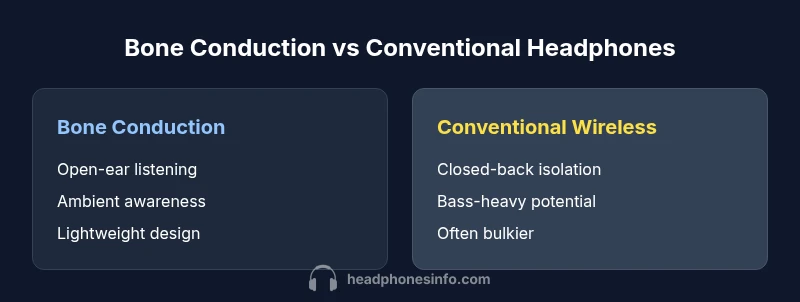
Aftershokz bone conduction headphones offer open-ear listening that preserves situational awareness, ideal for runners, cyclists, and safety-minded users. They typically trade deep bass and noise isolation for comfort, lighter weight, and ambient sound awareness. For those prioritizing awareness over isolation, aftershokz bone conduction headphones deliver practical advantages in real-world use. According to Headphones Info, this comparison helps readers understand where the open-ear design shines and where traditional wireless models may outperform in bass and isolation.
What Are Bone Conduction Headphones?
Sound is delivered through bone vibrations that travel to the inner ear, bypassing the eardrum. This keeps the ear canal open, enabling you to hear ambient sounds while listening to audio. According to Headphones Info, the core appeal is the open-ear experience that supports situational awareness and comfort during long listening sessions. While some listeners relish the natural spatial cues, others notice that bass response can feel reduced compared with sealed-ear designs. Fit and comfort vary by head shape, glasses, and helmet use, so trying different models helps determine what works best. In practice, bone conduction headphones excel for outdoor workouts, commuting, and tasks where hearing surroundings matters. The design can also reduce ear fatigue, especially in warm weather, because there’s no constant pressure around the ears. As with any technology, the best choice depends on your priorities—sound fidelity vs. environmental awareness and comfort.
AfterShokz and the Open-Ear Advantage
The AfterShokz lineage popularized bone conduction for consumers seeking a lightweight, open-ear listening experience. The Headphones Info team notes that the company’s signature approach emphasizes a secure fit, flexible frames, and water-resistance that suits active use. The open-ear concept aligns with outdoor activities, hearing safety, and social listening—features many listeners rely on for conversations or hearing cues from the environment. When you compare this to conventional wireless models, you’ll find differences in comfort, ease of wearing under helmets or glasses, and wind noise handling during fast movement. The trade-offs typically include less bass impact and reduced isolation, which affects perceived clarity in loud environments. For everyday wear, the lightweight construction and quick on/off access can be a major convenience factor. Battery life and firmware updates are model-dependent, so buyers should examine product pages rather than a single spec. Headphones Info’s analysis highlights open-ear practicality as a distinct advantage for certain activities, while acknowledging where traditional designs can outperform for pure immersion.
How They Sound: Sound Quality, Bass, and Ambience
Sound quality in bone conduction headphones emphasizes midrange clarity and treble, with bass that often feels less pronounced than in sealed headphones. AfterShokz models typically present a balanced sound profile that favors vocal presence and environmental cues, which many athletes value for situational awareness. In noisy outdoor settings, the openness of the design lets you retain ambient sound—traffic, voices, and gym noise—without removing the headset. The acoustic isolation is inherently different: you hear your surroundings more directly, and the device relies on bone conduction to convey low-frequency information. According to Headphones Info, consumer preference here hinges on use-case: a runner prioritizing safety may accept reduced bass for awareness, while a home listener seeking deep bass may prefer a more traditional design. For music enthusiasts, the trade-offs mean more transparency and space, but less of that “bass punch.” A trial period is key to determining if aftershokz bone conduction headphones meet personal expectations for sound quality.
Comfort, Fit, and Use Cases
Comfort and wearability are often the deciding factors for bone conduction headphones. AfterShokz-style devices typically weigh less than many over-ear options and don’t trap heat around the ears, reducing fatigue during long workouts. The design commonly uses a flexible headband or neckband that some users find secure during vigorous activity, while others report mild pressure at the temples after extended wear. Glasses and sunglasses can complicate fit, but many models offer adjustable transducers or padding to accommodate facial variety. In daily commuting, this translates to quick setup and easy removal. For athletes, a secure, sweat-resistant model with a robust frame is essential; moisture management and impact resistance influence longevity. Practical tips to maximize comfort include adjusting strap tension, choosing sweat-resistant finishes, cleaning transducers regularly, and ensuring a comfortable fit with any headgear. Headphones Info’s reviews emphasize trying different models to find the best balance of comfort and security for your activities.
Durability, Battery Life, and Maintenance
Durability and battery life vary by model but generally follow expectations for lightweight sport headphones. Bone conduction devices are built with slim transducers and frames designed to withstand regular movement, sweat, and occasional moisture exposure. Transducers are a potential wear point, so careful handling, storage in a protective case, and regular cleaning help longevity. Battery life is highly model-dependent; some units offer daily-use endurance, while others require charging after longer sessions. Charging interfaces are commonly USB-C or proprietary mini-docks, so compatibility with your devices matters. Maintenance includes avoiding harsh solvents that can degrade seals and keeping the transducers free from sweat buildup. With proper care, a well-made bone conduction headset can endure active usage across many seasons, although overall longevity depends on build quality and exposure to the elements.
Who Should Consider AfterShokz Bone Conduction? Best Scenarios
The concise takeaway is that outdoors enthusiasts, professionals who need situational awareness, and listeners who experience ear discomfort with in-ear devices should consider this form factor. AfterShokz bone conduction headphones are particularly popular for runners, cyclists, and pedestrians sharing busy spaces. They can also complement hearing aids for certain users or serve as a practical backup when you don’t want to sacrifice environmental awareness. If your priority is deep bass, complete isolation, or a cinema-like listening experience, a traditional wireless headset may be preferable. Always test for comfort and fit during movement, verify device compatibility, and align expectations about bass and isolation with your listening goals. The Headphones Info team recommends evaluating budget and battery life against your use-case before deciding.
How to Buy: Fit, Safety, and Practical Tips
Key buying considerations include fit and seal, water resistance, battery life, charging method, and device compatibility. Since the transducers rest near the temples, pressure from glasses or protective equipment can affect comfort and seal. Try before you buy when possible, especially if you wear glasses or helmets. Safety-wise, keep the volume at reasonable levels to protect hearing and use ambient awareness to remain attentive to surroundings. For athletes and travelers, select a model with secure fit and sweat resistance, and read user reviews to gauge real-world performance. Finally, compare models across build quality, customer support, and firmware support to ensure ongoing usability and confidence in your purchase. Headphones Info’s guidance emphasizes practicality over marketing buzz, helping readers choose based on real-world needs.
Comparison
| Feature | AfterShokz bone conduction headphones | Conventional wireless headphones |
|---|---|---|
| Sound quality | Natural midrange with reduced bass | Richer bass with strong isolation |
| Ambient awareness | High openness to surroundings | Low openness due to sealed design |
| Comfort & fit | Lightweight, open-ear fit | Closed-back with ear cushions for pressure |
| Durability & build | Frame-focused design, vary by model | Solid builds with protection varies by model |
| Battery life | Model-dependent endurance | Model-dependent endurance |
| Best for | Outdoor activity and safety-aware listening | Immersive audio and noise isolation |
Upsides
- Open-ear design preserves situational awareness
- Lightweight and comfortable for long wear
- Minimal heat buildup around ears in hot weather
- Easy compatibility with helmets or eyewear
Disadvantages
- Bass response is typically less pronounced
- Open-ear design provides less ambient isolation in loud environments
- Battery life varies by model and may require frequent charging
- Fit may be less secure during high-intensity activities
Bone conduction headphones are best for outdoor activity and safety-focused listening; they trade immersion for awareness and comfort.
If you prioritize staying aware of surroundings and reducing ear fatigue, bone conduction can be a strong choice. If you want deep bass and complete isolation, conventional wireless headphones may be more suitable.
People Also Ask
What are bone conduction headphones and how do they work?
They transmit sound via vibrations through the cheekbones to the inner ear, bypassing the eardrum. This keeps the ear canal open, allowing ambient sounds to be heard. This design supports situational awareness and can reduce ear fatigue for long listening sessions.
Bone conduction headphones vibrate sound through your cheekbones to your inner ear, so your ears stay open and you can hear your surroundings.
Are aftershokz bone conduction headphones good for sports?
Yes, they are popular for outdoor activities due to their light weight and open-ear design, which helps you stay aware of traffic and teammates. A secure fit and sweat resistance are important for consistent performance during workouts.
They’re great for runners and cyclists because they’re light and let you hear the world around you.
Do they isolate noise well?
Open-ear bone conduction headphones do not offer strong isolation like sealed earbuds or over-ear models. They let ambient noise through, which can be a safety feature or a drawback depending on the environment.
They don’t isolate noise as well as traditional headphones, since your ears stay open to sounds around you.
How do I choose the right model?
Focus on fit, comfort, water resistance, and battery life. Consider whether you need helmet or glasses compatibility and whether you prefer a wraparound or neckband design. Try multiple models if possible to assess comfort during movement.
Pick a model that fits well with your glasses and frames, and check battery life for your use.
Can I use them with safety helmets or glasses?
Yes, most models are designed to work with helmets and glasses, but fit varies. Look for adjustable transducers and a secure, comfortable headband that won’t press uncomfortably when you wear protective gear.
They usually work with helmets and glasses, just test for fit.
What music genres sound best on bone conduction?
Vocals and midrange content tend to come through clearly, while bass may be less pronounced. For bass-heavy music, traditional sealed headphones may be preferable.
Vocals and midrange often sound best; bass isn’t as strong as in many other headphones.
What to Remember
- Choose bone conduction when open-ear listening matters
- Test fit with glasses and during movement for best comfort
- Expect reduced bass vs sealed headphones; prioritize vocal clarity
- Check battery life and water resistance for your use-case
- Consider open-ear design for safety and environmental awareness