Best Headphones Wireless Sport: A Data-Driven Guide
Compare wireless sport headphones with performance metrics on fit, battery, durability, and sound. This Headphones Info guide helps athletes and casual listeners choose reliable, sport-ready models with data-driven insight.


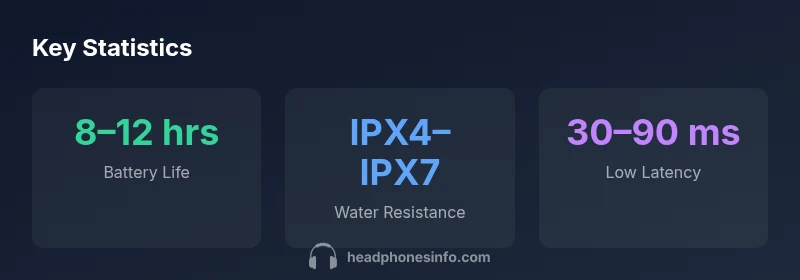
Headphones wireless sport offer a dependable, sweat-proof listening experience for workouts. According to Headphones Info, top models balance secure fit, IP ratings, long battery life, and codec support (AAC/aptX) for reliable wireless performance during runs and gym sessions. Expect 8–12 hours of playback on typical models and steady connectivity across common iOS and Android devices. This makes them ideal for athletes and active listeners seeking consistency.
Why wireless sport headphones matter
Wireless sport headphones have become essential gear for runners, cyclists, and gym-goers. The right pair stays put during bouncy sprints, resists sweat, and maintains a stable Bluetooth connection even as you move through multiple zones. In practice, secure fits come from ergonomic housings, silicone fins, and lightweight design that reduces fatigue. The Headphones Info team notes that the most reliable models blend comfort with durability, so you can train longer without distraction. For many athletes, the right headphones turn workouts into a data-driven routine—tracking metrics like stride rate and tempo alongside your favorite tracks. When selecting models, prioritize seal consistency, grip stability, and user-friendly controls that work with gloves or sweaty fingers.
Tip: Look for models with multiple ear tip sizes and optional fins for a tailored fit. A design that counters ear fatigue and pressure points helps maintain focus during long sessions.
Fit, stability, and comfort during workouts
A secure fit is non-negotiable in sport headphones. Lightweight shells with wing tips or ear fins reduce movement and seal gaps that let in ambient noise or sweat. Comfort isn’t just about the ear; headband or neckband weight distribution matters, especially during long runs. The best sport models distribute pressure evenly and use form-fitting materials that stay comfortable after hours of use. You’ll often find adjustable hooks, removable fins, and customizable cushions. When trying them, jog in place and perform a few dynamic moves to ensure they won’t loosen or shift during burpees or sprints. From Headphones Info analysis, models with a snug yet forgiving fit outperform those that clamp too tightly or flop around mid-workout.
- Look for multiple ear tip options.
- Test in motion: jump, squat, and head-turn quickly.
- Confirm that controls stay accessible while active.
Audio quality: codecs and real-world performance
Sports headphones can trade off raw sonic richness for durability and fit. However, codecs matter, especially if you’re streaming music on the go. AAC and aptX provide better fidelity and lower latency than basic SBC, improving clarity during fast-paced intervals. In real-world testing, the top sport models deliver controlled bass without masking detail in mids and highs, which helps with tempo cues and gym announcements. Noise isolation should be sufficient to enjoy music, yet breathable enough to stay aware of surroundings during outdoor runs. Headphones Info notes that the best sport headphones strike a balance: secure bass response for motivation and clear trebles for vocal cues, all while preserving a spacious soundstage for immersive workouts.
Battery life, charging, and smart features
Battery life dictates how many workouts you can complete before recharging. Look for a model with at least 8–12 hours of claimed playback, plus a quick-charge option for emergencies. USB-C charging and magnetic or flip-open cases simplify replenishment between sessions. Smart features—like rapid pairing, auto-pause when you remove a bud, and sweat-resistant micro-controls—save time during workouts. Some models offer ambient mode to let in essential sounds when running on busy streets. The Headphones Info team recommends checking whether the headset supports multipoint pairing for seamless switching between a phone and a smartwatch during workouts.
Durability and water resistance in sport use
Durability is more than a rating; it’s about real-world resilience. IP ratings give a baseline, with IPX4 handling sweat and splashes and IPX7 offering immersion protection for rain or accidental drops. Materials matter too: reinforced cables, Corrosion-resistant charging contacts, and robust seals reduce failure points. If you’re a swimmer or triathlete, you’ll want models explicitly rated for higher water resistance and quick-dry housings. Cleaning after workouts should be straightforward, so check removable ear tips and the ease of wiping down components. Headphones Info analysis shows that durability correlates with longer device life and better long-term value.
Connectivity and pairing for workouts
A stable wireless connection is non-negotiable for interval training. Bluetooth 5.x with strong antenna design reduces dropouts, especially when you’re moving through metal structures or crowd areas. Multipoint pairing lets you stay connected to both a phone and a smartwatch, which is convenient when you’re transitioning between activities. Low-latency modes are valuable for video workouts or gaming-like training sessions, providing synchronization with on-screen cues. Some models feature auto-pause when you remove a bud, which helps you maintain focus without fiddling with controls during sets.
How to compare models: a practical checklist
- Fit and comfort: try several tips and fins; ensure a secure hold during jumps and lunges.
- Durability: check IP rating, materials, and seal integrity.
- Sound and codecs: prefer AAC/aptX for better fidelity with low latency.
- Battery and charging: aim for 8–12 hours, and fast-charge options.
- Connectivity: look for reliable multipoint pairing and minimal latency.
- Controls: test tactile feedback and ease of use when sweating or wearing gloves.
- Case and portability: compact charging cases help with travel and storage.
Using this checklist helps you compare models beyond price and marketing claims.
Common myths and how to avoid them
Myth: All wireless sport headphones sound the same. Reality: Sound quality varies significantly by driver design and firmware tuning, even among sport-focused models. Myth: Sweat resistance guarantees lifetime protection. Reality: Durability depends on seals, build quality, and maintenance. Myth: Longer cables mean better battery life. Reality: Most sport headphones use small internal batteries; the charging case is what extends usage between sessions. The Headphones Info team emphasizes testing real-world performance and not relying on spec sheets alone.
Data-driven buying decisions: what to look for
A practical approach combines subjective fit with objective metrics. Prioritize ergonomic design for active use, plus a battery life range that comfortably covers your longest sessions. Codec support matters for fidelity, and low-latency modes help with video workouts. Ambient awareness features improve safety outdoors. Finally, consider the total cost of ownership, including replacement tips and maintenance, so you aren’t surprised by wear and tear after a season of training.
Key features and recommendations for wireless sport headphones
| Feature | Recommendation | Reason |
|---|---|---|
| Battery life | 8–12 hours | Covers typical training sessions without frequent recharging |
| Water resistance | IPX4–IPX7 | Protects against sweat and light rain during outdoor workouts |
| Codecs | AAC/aptX | Improves fidelity and reduces latency for video workouts |
| Fit options | Multiple ear tips + fins | Customizable fit reduces movement during sprints |
People Also Ask
What is the best battery life for wireless sport headphones?
Aim for 8–12 hours of continuous playback to cover most training days without recharging. If you train longer, look for quick-charge options to top up between sessions.
Look for headphones that offer eight to twelve hours of playback, and consider quick-charge options for long training days.
Do I need active noise cancellation for workouts?
ANC can help block ambient noise in busy gyms, but it may slightly reduce battery life. For outdoor runs, a transparent or ambient mode is often more practical for safety.
ANC can help in busy gyms, but ambient mode is often better for outdoor safety.
Are wireless sport headphones safe to use in the rain?
Most sport headphones with an IPX4–IPX7 rating handle sweat and rain. Do not submerge them unless the rating specifies immersion protection. Dry after use to prolong life.
They’re generally safe in rain if rated for it; avoid full submersion.
Can I use these for calls while exercising?
Many sport models include built-in microphones with wind/noise reduction. Expect decent call quality but not studio-grade performance during intense activity.
Most have mics that work for calls, though not perfect in loud workouts.
Is wired audio better for latency, or is wireless fine?
Wired designs offer negligible latency, but modern wireless sport headphones with low-latency codecs are typically sufficient for most routines and video workouts.
Wired can be lower latency, but good wireless models are usually fine for workouts.
What should I check on a buying checklist beyond price?
Fit, IP rating, battery life, codecs, latency mode, multipoint pairing, and ease of cleaning should guide your choice more than price alone.
Focus on fit, durability, battery, codecs, and easy cleaning, more than price.
“For runners and gym-goers, the best headphones wireless sport strike a balance between secure fit, durable build, and dependable battery life—without sacrificing sound quality.”
What to Remember
- Prioritize a secure, customizable fit to stay in place during workouts
- Choose headphones with durable water resistance for sweat and rain
- Opt for AAC/aptX codecs to balance sound quality and latency
- Aim for 8–12 hours of battery life with quick-charge options
- Use multipoint Bluetooth and low-latency modes for seamless training