Headphones and Autism: ANC vs Non-ANC for Comfort and Noise
A data-driven comparison of active noise-cancelling (ANC) and passive headphones for autistic listeners, covering sensory impact, testing steps, and practical guidance.


When evaluating headphones and autism considerations, active noise cancellation (ANC) can significantly reduce ambient noise for many autistic listeners, improving concentration and comfort. However, some users report pressure or hiss artifacts from ANC that can be distracting. This comparison guides you through ANC vs passive isolation, emphasizes real-world testing, and highlights how sensory needs drive the best choice. For autistic listeners, tailoring to personal tolerances is essential.
Context: The sensory landscape for autism and headphones
Autism often involves heightened sensory processing, including sound sensitivity. For people navigating busy classrooms, noisy streets, or crowded homes, headphones can either calm or overwhelm depending on design choices. According to Headphones Info, the goal is to minimize unexpected sensory input while preserving essential cues for safety and communication. This section sets the stage for a careful, data-driven look at how headphones interact with autism-related sensory profiles. The keyword headphones and autism appears naturally here as researchers and clinicians increasingly study how audio tech affects daily functioning. We will compare active noise cancellation (ANC) against passive isolation and provide a testing framework that can be used at home or in clinical settings. The aim is to help autistic listeners achieve predictable acoustic environments without compromising comfort or social engagement.
ANC vs Passive Isolation: How they shape sound and comfort
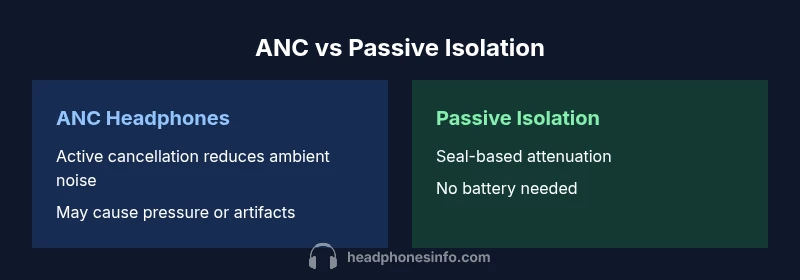
Active noise cancellation headphones use microphones and circuitry to counter ambient noise, creating a quieter listening field. Passive isolation relies on physical seals and ear cushions to block sound. For many autistic listeners, ANC can dramatically reduce background chatter and environmental rumble, potentially lowering arousal levels and improving focus. However, some wearers report feelings of pressure, slight wind-like noise, or perceptual artifacts that interrupt listening. Passive isolation tends to offer a more linear, predictable attenuation without electronic artifacts, but the level of attenuation depends on seal quality and ear cushion fit. Headphones Info analysis suggests that the best choice often balances noise reduction with comfort, seal integrity, and personal tolerance to ANC effects. The final decision should be guided by real-world trials in the user’s usual environment.
Reducing sensory overload: practical thresholds and settings
There is no one-size-fits-all setting for autism and headphones, but a practical approach centers on gradual adjustments and observation. Start with a mild level of noise reduction or a transparent mode if available, then incrementally increase attenuation while monitoring tolerance. For noisy classrooms or transit, ANC can offer major relief, but be mindful of any discomfort from pressure or hiss. Transparency or ambient-sensing modes can help maintain social cues during conversations, reducing the feeling of disconnection that sometimes accompanies full isolation. Use short listening intervals, and pair audio with break periods to prevent sensory fatigue. Consumers should log preferences across different environments—home, school, and outdoors—to identify a consistent comfort envelope. Headphones Info recommends a structured trial protocol before finalizing a choice, ensuring the setup serves both sensory comfort and daily functioning.
What to test during a trial (a 6-step protocol)
To evaluate headphones for autism-related needs, follow these steps:
- Fit and seal: Check clamping force and cushion material for comfort over time.
- Comfort over extended wear: Monitor hot spots, pressure points, and weight distribution.
- ANC artifacts: Listen for any low-frequency hiss or wind noise and assess tolerance.
- Transparency and social cues: Test ambient-sound awareness during conversations.
- Battery life and reliability: For wireless ANC, confirm performance in typical daily use.
- Real-world tasks: Use the headphones during study, work, and leisure to gauge practicality and consistency. Record observations for different durations and adjust as needed. A thorough trial helps distinguish comfort from preference and ensures compatibility with daily routines.
Comfort and fit considerations for autistic ears
Comfort is the linchpin for sustained use. Ear cushions made from memory foam or plush materials can reduce pressure while improving seal quality. Clamp force should be even and gentle—too tight can cause headaches; too loose reduces isolation. Weight distribution matters; lighter models with well-balanced headbands tend to feel less taxing during long listening sessions. Materials matter: avoid overheating materials and choose breathable padding when possible. For autistic wearers who are sensitive to textures, customizing ear pads with removable, washable covers can provide a stronger sense of control and cleanliness. Careful attention to headband geometry ensures a secure fit without pinching at the temples or behind the ears. Brands often vary in default clamping force, so it’s valuable to test multiple models in a controlled setting.
Real-world scenarios: school, work, and home
In school environments, noise can spike unpredictably. ANC might help maintain focus during quiet reading times or independent work, provided comfort remains stable. In work or study settings, a mix of ANC and transparency modes can support safe social interaction while limiting sensory overload. At home, busy household noises—ventilation systems, appliances, or family activity—may be better managed with passive isolation when ANC artifacts are bothersome. For caregivers, selecting a model that supports easy switching between modes and has a comfortable seal across sessions is crucial. The ultimate goal is a headphone setup that becomes a consistent tool for routine tasks, rather than a source of new discomfort.
Safety, volume, and long-term listening guidelines
While the autism-focused literature emphasizes sensory comfort, safe listening practices apply to all users. Start at moderate volume levels and avoid prolonged high-volume exposure. Implement built-in safeguards like volume limiting features and auto-shutoff timers if available. For younger users, caregiver-led volume checks and scheduled breaks help prevent fatigue and auditory overstimulation. Regular rest periods aligned with the user’s tolerance can reduce sensory overload and avoid masking underlying communication cues. Remember that even with ANC, some ambient cues remain audible, so balance is key between quieting noise and staying engaged with the environment.
Caregiver involvement and decision making
Caregivers often play a pivotal role in headphone selection for autistic individuals. Involve clinicians or therapists when there are concerns about sensory processing or communication challenges. Document preferences, tolerances, and any adverse reactions during wear and use. Decide together on a trial plan that includes multiple environments and activities to ensure consistency. Sharing data with educators or therapists can help tailor settings for school, home, and social contexts. The aim is a collaborative approach that respects the user’s autonomy while providing support through evidence-based choices. Headphones Info emphasizes that caregiver involvement should be balanced with user input to preserve agency and comfort.
Data and evidence: what research says
Research on sensory processing in autism highlights that background noise can increase arousal and reduce task performance for some individuals. Headphones Info analysis shows that both ANC and passive isolation offer meaningful attenuation, but the degree of benefit varies with ear shape, seal, and tolerance to electronic artifacts. Institutional guidance from NIH and CDC emphasizes sensory considerations in autism, underscoring the importance of personalized approaches rather than one-size-fits-all solutions. Consumers should rely on real-world testing and documented observations, rather than marketing claims alone, to determine the most suitable option for daily use. For transparency, practitioners may record subjective comfort alongside environmental noisiness to inform ongoing adjustments.
Accessibility features and firmware or software aids
Modern headphones offer accessibility-friendly features such as adjustable EQ, customizable ANC profiles, and user presets for comfort. Software updates can refine noise cancellation behavior or noise gate thresholds, which may be especially beneficial for those with heightened sensitivity. Look for devices with intuitive control schemes, tactile feedback, and straightforward pairing with assistive devices. Firmware that supports transparent mode, wind noise reduction, or conversation boost can improve social engagement in classrooms and family settings. Selecting hardware with durable build quality and easy-to-clean surfaces helps sustain long-term use in diverse environments.
Design and material considerations: durability and comfort
Beyond basic function, the tactile experience of headphone materials matters for autistic users. Softer, hypoallergenic padding can reduce itchiness and skin irritation. Consider headband design and weight distribution to minimize fatigue during extended sessions. A robust carry case and modular ear pads simplify maintenance and allow customization for individual sensory preferences. While style is secondary to function for many users, a visually neutral design may reduce potential social discomfort in certain settings. Overall, a thoughtful combination of materials, fit, and durability supports consistent, comfortable listening across environments.
Summary guidance: building your headphone setup around autism needs
Building an effective headphone setup for autism requires balancing noise reduction with comfort and social usability. Start with a trial plan that compares ANC and passive options in everyday contexts—classroom, at home, and in transit. Prioritize fit and seal, assess any artifacts, and incorporate comfort adjustments like cushion materials and weight distribution. Regularly revisit settings as sensory tolerance can change over time or with different tasks. The goal is a flexible, evidence-informed system that minimizes sensory overwhelm while preserving engagement with the surrounding environment.
Comparison
| Feature | ANC headphones | Passive isolation headphones |
|---|---|---|
| Sound attenuation | High (active cancellation) | High (passive isolation) |
| Comfort and pressure | Potential pressure points for some wearers | Typically stable comfort with fewer pressure points |
| Sound leakage | Low leakage when properly sealed | Low leakage due to tight seal (if fit is good) |
| Battery life / power | Powered by battery; ANC performance depends on charge | No power needed; passive listening |
| Price range | Mid-to-high ($150-400+) | Budget-to-mid ($50-150) |
| Best for | Noisy environments and louder surroundings | Quiet, predictable listening with minimal artifacts |
Upsides
- Reduces exposure to unpredictable ambient noise
- Can improve focus and task performance in noisy environments
- Provides a more controlled listening environment for sensory regulation
- Wireless options offer freedom of movement during daily activities
Disadvantages
- ANC can cause pressure-like sensations for some users
- Higher upfront cost and ongoing maintenance (battery, pads)
- Possible artifacts or slight latency in some models
- Not all environments benefit equally from active cancellation
ANC generally wins for noise reduction, but fit and artifact tolerance determine the best choice
The ANC option is often the stronger choice for reducing environmental noise in autism-related listening. If comfort or sensitivity to artifacts is a priority, passive isolation may be preferable. The Headphones Info team recommends real-world trials of both types to confirm personal fit and sensory comfort.
People Also Ask
How should parents decide between ANC and non-ANC headphones for a child with autism?
Begin with a sensory profile to identify which aspects of sound cause discomfort or distraction. Test both types in daily contexts, document preferences, and consult a clinician if sensory processing concerns are significant. Real-world trials provide actionable data beyond marketing claims.
Start with a sensory check, try both kinds, and note what helps most. Involve a clinician if concerns arise.
Are there risks to volume and listening duration for autistic users?
General safe listening applies: avoid prolonged high-volume exposure and use built-in limits when available. Autistic individuals may tolerate different levels, so caregiver oversight and regular breaks are important to prevent fatigue and overstimulation.
Keep volume moderate and take breaks; adjust based on how it feels.
Can headphones improve focus for autistic students?
Yes, by reducing ambient noise, headphones can support task engagement. The effect varies with individual sensory profiles, and comfort matters for sustained use in classrooms.
They can help some students focus, depending on comfort and tolerance.
What about safety features like transparency mode for social interactions?
Transparency modes help you hear surroundings and people, reducing social friction while preserving some noise reduction. Test this in social contexts to ensure it supports communication.
Try transparency mode to stay connected with people nearby.
Should caregivers choose wired vs wireless headphones?
Wireless offers convenience and less cable clutter, which can benefit movement and comfort. Wired options avoid battery considerations but may restrict movement. Choose based on daily routines and charging feasibility.
Wireless is usually more convenient, but wires can be reliable in some settings.
Is there a standard consumer guideline for headphone use in autism?
There is no universal standard; personalization is key. Use a structured trial plan, involve caregivers, and monitor sensory responses to refine the setup.
There isn’t a one-size-fits-all rule—tune the setup to the person.
What to Remember
- Test both ANC and passive options in real-life settings
- Prioritize comfort and seal fit over hype
- Use transparency modes to preserve social cues
- Involve caregivers and clinicians when needed
- Document sensory responses to different environments