Top Noise Canceling In-Ear Headphones for 2026
Data-driven guide for 2026 comparing noise canceling in-ear headphones, covering fit, adaptive ANC, transparency modes, battery life, codecs, and value to help you choose smarter and listen more comfortably.


Noise canceling headphones in ear deliver compact ANC performance that rivals larger cans, but success hinges on seal quality, adaptive ANC, and comfort. In-ear models with adjustable transparency modes, multipoint Bluetooth, and solid battery life consistently outperform basics. When evaluating options, prioritize fit, ANC strength, codec support, and user comfort for long listening sessions.
What noise canceling headphones in ear really mean
The term noise canceling headphones in ear refers to compact, true wireless or wired earbud designs that use active noise cancellation (ANC) to reduce ambient noise. Unlike over-ear cans, in-ear ANC relies heavily on a precise seal against the ear canal and sophisticated digital processing to minimize external sounds. The Headphones Info team notes that performance is a function of both the hardware (microphones, speaker drivers, DACs) and the fit (ear tip size, material, and insertion depth). A good in-ear ANC experience blends effective noise suppression with comfort for hours of listening. According to Headphones Info, the best models deliver a noticeable difference in noisy environments like trains or airplanes while preserving music clarity and natural voice pickup for calls.
How active noise cancellation works in true wireless in-ears
ANC in in-ear headphones typically uses a hybrid approach: feedforward and feedback microphones capture ambient noise, and digital processing generates an opposing signal to cancel it. In-ear designs leverage smaller form factors, so engineers emphasize seal optimization and leakage control. Adaptive ANC adjusts to your environment, detecting changes in background noise and automatically tuning suppression levels. Transparency modes let you hear your surroundings when needed, a practical feature for commuting or crossing streets. Battery management remains critical—more aggressive ANC drains power faster, so smart models balance suppression with endurance. Headphones Info analyses show that the most reliable ANC comes from systems that combine excellent mic placement, efficient DACs, and software that calibrates to the user’s ear shape.
Fit, seal, and comfort: the key to performance
The seal created by the ear tips is the single most influential factor for ANC effectiveness in-ear. Poor fit leads to sound leakage and reduced attenuation, even if the electronics are strong. Look for a range of tip sizes (silicone and foam), memory-foam tips, and tips with a comfortable texture that reduces ear fatigue during long sessions. Foam tips often seal better than silicone, trading off a bit of direct insertion comfort for improved noise cancellation. When testing, insert the buds and gently wiggle to confirm there’s no looseness. A secure seal also improves microphone pickup quality during calls, reducing muffled voice transmission.
Sound quality, transparency mode, and codecs
ANC can affect perceived bass and overall tonal balance. In-ear models that maintain bass integrity while suppressing mid/high-frequency noise tend to sound more natural, especially at higher volumes. Transparency mode is valuable for safety and situational awareness; ensure it sounds natural and does not introduce excessive hiss or mic artifacts. Codec support matters for wireless models: aptX, LDAC, or AAC can impact latency and audio fidelity, especially for video or gaming. In general, newer in-ear ANC designs include multiple mic arrays, improved wind noise handling, and smarter beamforming to preserve speech clarity during calls. The Headphones Info team emphasizes testing with your typical music genres to judge whether the ANC blend suits your listening style.
Battery life, charging, and wireless considerations
Battery life in in-ear ANC headphones varies widely depending on driver technology, ANC intensity, and the presence of features like wireless charging. Most true wireless in-ears offer several hours of playback with ANC enabled, plus a charging case that boosts total runtime. When evaluating, consider how quickly the buds recover from a low-battery alert and whether the case supports fast charging. For travelers, check if the case supports USB-C PD or Qi wireless charging. If you often switch between devices, confirm reliable multipoint Bluetooth and stable codec negotiation to avoid re-pairing headaches.
How to compare models: a practical buyer’s checklist
Create a short profiling plan before you start shopping. Establish priorities: (1) fit and seal with foam or silicone tips, (2) ANC depth and stage, (3) transparency mode realism, (4) codec support and latency, (5) battery life and charging, (6) water resistance and durability, and (7) price-to-value balance. Use a side-by-side grid to compare models on those axes. When possible, test in a quiet room and in a noisy environment to gauge ANC effectiveness. Be mindful that some budget options sacrifice comfort for longer listening sessions; higher-end models usually pair superior ANC with better comfort and call quality. The goal is to find a model that feels natural and unobtrusive in your daily routine.
Real-world testing, care tips, and longevity
To validate ANC performance, perform practical tests like riding on a bus or train, walking through city streets, and sitting in a quiet room while measuring perceived noise reduction. Clean your ear tips regularly and replace them as needed to maintain a tight seal. Store buds in the charging case when not in use to protect the micro-speaker and microphones from dust and earwax buildup. Avoid extreme heat and moisture, which can degrade battery longevity. For ongoing comfort, rotate ear tip sizes and give your ears a break after extended listening sessions.
Comparison of common in-ear ANC configurations
| Model Type | Key ANC Strength | Battery/Charging | Water Resistance |
|---|---|---|---|
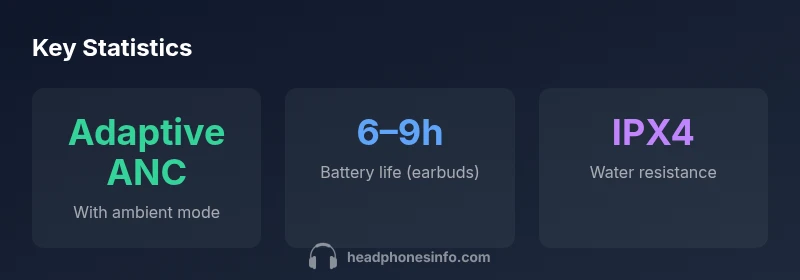
| True Wireless In-Ear | Adaptive ANC | 6–9 hours / case charge | IPX4 |
| Wired In-Ear with ANC | Hybrid ANC | N/A / wired only | IPX4 |
| Dual-Driver In-Ear | ANC + Transparency | 7–10 hours / case | IPX5 |
People Also Ask
What are the main benefits of in-ear noise-cancelling headphones?
In-ear noise-cancelling headphones offer compact design with strong ANC, comfortable all-day wear, and portability for travel. They also include features like transparency modes and multipoint Bluetooth for versatility. The best models balance noise suppression with sound quality and call clarity.
In-ear ANC gives you compact, travel-friendly noise suppression with good call quality and useful transparency modes.
Are wired in-ear ANC headphones better than wireless?
Wired in-ear ANC can offer lower latency and consistent performance when you don’t need wireless freedom. However, wireless options provide convenience and ongoing feature updates. The right choice depends on your priorities: stability and latency vs. convenience and range.
Wired can be steadier with less latency, but wireless gives you flexibility and freedom.
Can ANC cause discomfort or ear pressure?
Some users experience a subtle pressure or tingling when first using ANC, especially at high suppression levels. This usually eases with time or by switching to a milder ANC setting or a better-fit tip. If discomfort persists, try different ear tips or take breaks.
Some people feel slight pressure at first; adjust ANC level or try different tips to improve comfort.
How do you test ANC strength at home?
Test ANC by comparing quiet room listening to a noisy environment like a bus or street. Note the reduction in ambient noise and how music or voice intelligibility changes. A true test also checks for hiss, wind artifacts, and how well voices remain clear during calls.
Test ANC in a quiet room and on a noisy street to see how much sound is reduced and whether voices stay clear.
What features complement ANC in-ear headphones?
Look for transparency mode that sounds natural, multipoint Bluetooth for device switching, good codec support for low latency, and durable build quality. Water resistance and a comfortable fit also enhance daily use.
Transparency mode, multipoint Bluetooth, and solid codecs help you get more from ANC.
How should you care for in-ear headphones to maintain ANC?
Regularly clean ear tips and microphones, replace tips when worn, and store buds in their case to protect them. Avoid moisture and extreme heat. Proper care helps maintain seal integrity and microphone performance for consistent ANC.
Keep tips clean, replace worn tips, and store in the case to preserve ANC performance.
“The most important factor for true wireless in-ear ANC is the seal. Without a proper fit, even the best algorithms underperform.”
What to Remember
- Prioritize a secure ear seal for strong ANC
- Choose adaptive ANC with a transparent mode for safety
- Balance battery life with comfort for long listening
- Check codec support and latency for media use
- Test fit with multiple ear tips before buying