Snowboarding Headphones: The 2026 Buying Guide
A data-driven guide to snowboarding headphones, evaluating fit, weather resistance, wind noise reduction, and battery life to help riders choose helmet-friendly earbuds and over-ear options for winter sessions.


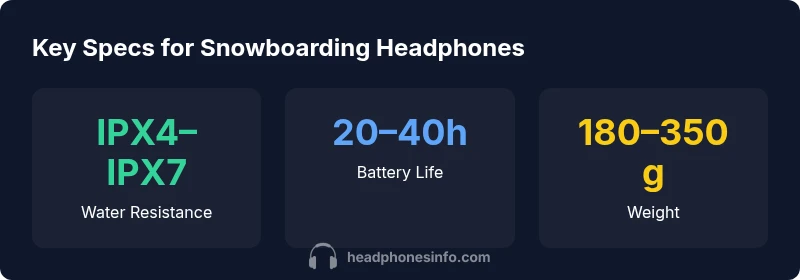
Snowboarding headphones typically balance weather protection, secure fit, and wind-noise reduction. Expect a battery life around 20–40 hours, water resistance typically ranging from IPX4 to IPX7, and a weight in the 180–350 g range. For slopes, prioritize helmet compatibility and reliable connectivity to avoid falls or wind distraction on cold days.
Why snowboarding headphones matter
On the slopes, music and situational awareness coexist with wind, cold, and rapid movement. Snowboarding headphones aren’t just about sound—they’re about safety, comfort, and performance. According to Headphones Info, the most impactful factors are secure fit, weather sealing, and wind-noise reduction. The right pair stays put during quick turns, fits under or over helmets without causing pressure points, and minimizes wind howl that can drown out music or calls. When riders compare models, they weigh sound quality against weather durability, battery life, and size, then prioritize features that enhance focus rather than distraction. This analytical approach helps you avoid choosing style over substance on the mountain.
Key features for snowboarding sessions
Snowboard-oriented headphones should combine several practical features. First, look for a secure fit that stays in place with a helmet. This often means adjustable headbands, memory-foam earcups, or over-ear cushions that don’t press uncomfortably against the temples. Second, wind-noise reduction is essential—look for closed-back designs or wind guards. Third, weather sealing matters; water resistance prevents sweat and snow ingress. Fourth, consider connectivity: Bluetooth can be convenient, but ensure reliable pairing with gloves and quick controls. Finally, battery life matters for longer days; many models offer 20–40 hours per charge at modest volumes. For safety, choose pass-through or ambient modes so you can hear others when needed.
Design considerations: fit, materials, and safety
Helmet compatibility drives much of the design language for snowboarding headphones. Some models use flat, low-profile pads to minimize pressure against the helmet liner, while others incorporate secure clips or magnetic clasps for helmet strap integration. Materials should withstand cold temperatures without becoming stiff or brittle. Insulation around the headband helps maintain comfort in subfreezing weather. In-ear options may require smaller tips with stabilizers to prevent slippage, especially during high-speed runs. Cable management is critical if you’re using wired variants: tangle-free cords and quick-detach connectors reduce snag risk during falls. Safety-wise, avoid bulky devices that obstruct hearing or movement and prefer models offering ambient sound modes for situational awareness.
Battery life and weather durability
Battery performance drops in cold weather, so choose models that maintain battery efficiency at low temperatures or offer quick warm-up times. A practical expectation is 20–40 hours of playback on moderate volume; high gain or ANC modes may shorten this window. Weather durability isn’t uniform: IPX4 is common for sweat resistance, IPX5–IPX7 adds splash or immersion protection, and some rugged variants may survive submersion. Remember that real-world use hinges on the combined effect of battery management, ANC/ambient modes, and volume. If you snowboard for long days, choose sleep-friendly charging options or swappable batteries where available. Headphones should still operate reliably when you sweat and when snow builds up on the exteriors.
Wireless vs wired: which is better for snowboarding?
Wireless headphones beat wired models for mobility and freedom, but reliability matters. Bluetooth 5.x variants offer better range and faster reconnection, yet latency can still be noticeable in some gaming-centric or video scenarios. In snow sports, you’ll prioritize stable pairing, quick reability, and gloves-friendly controls. If you need absolute reliability on the hill, consider a wired backup or a hybrid design with a detachable cable. For most riders, modern Bluetooth headphones with robust pairing, quick charge, and a compact form factor strike the best balance between convenience and performance. ANC can help reduce wind noise, but it’ll use more battery life and may introduce slight latency in some devices.
How to pick the right model: a shopper’s checklist
- Helmet compatibility: flat profiles reduce pressure and contact.
- Wind noise reduction: look for dedicated wind guards or physical barriers.
- Water resistance: aim for IPX4 or higher for snow exposure and sweat.
- Battery life: estimate needs for typical day-long sessions.
- Comfort and weight: choose lighter designs with plush padding and secure fit.
- Controls: gloves-friendly buttons and quick-access microphones.
- Connectivity: ensure solid Bluetooth pairing, fast reconnection, and low latency if video is used.
- Ambient mode: helpful in cross-country runs or city trips to remain aware of surroundings.
Care and maintenance for cold, wet environments
Snowboarding headphones deserve proper maintenance. Rinse off snow and salt after use, dry thoroughly, and store in a dry pouch. Avoid leaving devices in car dashboards or direct sun. Apply firmware updates when available to improve wind-noise processing and battery management. If condensation forms inside the earcups, let the device dry completely before powering on. Regular inspection for loose cables, cracked seals, or worn ear cushions helps prolong life. Keeping components clean and dry reduces corrosion and performance degradation over multiple seasons.
Real-world testing tips on slopes
Test new headphones in a controlled slope setting before a long trip. Check how the fit behaves with a helmet during rapid turns and when performing jumps. Verify that ambient sound mode remains accessible even with gloves on. Run a battery drain test with ANC on and off to understand real-world life expectancy under typical snow conditions. Finally, assess wind-noise suppression at different speeds and temperatures. Real-world feedback from riders, combined with Headphones Info’s data-driven approach, helps you pick models that perform consistently across varying weather and terrain.
Frequently overlooked factors on the mountain
Many riders underestimate how cold, wind, and moisture affect comfort and performance. Look for ear cushions that stay warm and soft, not stiff in winter air. Ensure the design doesn’t trap moisture inside the headband, which can cause skin irritation. Check that the device remains secure while wearing a neck gaiter or scarf. Consider a model with easy cleaning and minimal exposed electronics. The right pair should blend protection from the elements with ease of use in high-activity environments.
Key specs for snowboarding headphones
| Aspect | Typical Range | Notes |
|---|---|---|
| Battery life | 20–40 hours | Varies with ANC and volume |
| Water resistance | IPX4–IPX7 | Higher ratings offer better snow/water protection |
| Weight | 180–350 g | Depends on design and cushions |
| Connectivity | Bluetooth 5.0–5.3 | Reliability matters on cold days |
| Fit/Helmet compatibility | Over-ear/On-ear/In-ear variants | Choose secure fit and helmet compatibility |
People Also Ask
What makes a good pair of snowboarding headphones?
A good pair balances secure fit, helmet compatibility, wind-noise reduction, reliable weather sealing, and practical battery life. Sound quality matters, but durability in cold, wet conditions and ease of use with gloves are equally important.
A good pair keeps a secure fit, seals well against wind and snow, lasts through long days, and works smoothly with gloves.
Bluetooth or wired: which is better for the slopes?
Bluetooth offers mobility and hands-free control, but may introduce latency and require more battery. Wired options can be more reliable in extreme cold or long runs but limit freedom. Many riders prefer Bluetooth with a quick-disconnect option as a practical compromise.
Bluetooth is convenient, but if you really need rock-solid reliability on the mountain, consider a hybrid or detachable wired option.
Can I wear headphones with a helmet safely?
Yes, but you should choose low-profile designs or those designed for helmet use. Look for flat pads, adjustable bands, and secure clips that don’t press into the helmet’s liner. Always test fit before hitting the slope.
Yes, but pick helmet-friendly designs and test the fit with your helmet on to ensure comfort and safety.
Do snowboarding headphones have built-in mics for calls?
Many models include microphones suitable for calls or voice commands, but performance can vary with cold air and wind. Look for wind-reduction mic configurations and easily accessible controls in gloves.
Most have built-in mics, but wind can affect quality—choose models with wind-reduced mics.
What’s a sensible budget range for snowboarding headphones?
A practical budget range is broad, often spanning mid-range to premium options. Expect to invest more for robust wind protection, helmet compatibility, and longer battery life, rather than basic features.
You can find solid options from mid-range to premium—prioritize features over cost for slope conditions.
How should I care for headphones in winter conditions?
Wipe off snow, dry thoroughly after use, and store in a dry pouch. Avoid extreme temperature changes and moisture ingress in connectors. Regularly check seals, cushions, and cables for wear.
Dry them after use and keep them in a dry bag; check seals and cables regularly.
“For snowboarding, durability and a secure, helmet-friendly fit matter as much as sound quality. Battery life and wind-noise reduction can make or break sessions.”
What to Remember
- Prioritize a secure fit under a helmet to prevent slipping
- Choose models with wind-noise reduction and weather sealing
- Expect 20–40 hours of battery life for typical snow days
- Balance wireless convenience with reliability and quick controls
- Protect your investment with proper cold-weather maintenance