Difference Between Apple Headphones Lightning and USB-C
In-depth comparison of Lightning and USB-C Apple headphones, detailing compatibility, audio paths, ecosystem impact, and practical buying guidance for 2026.


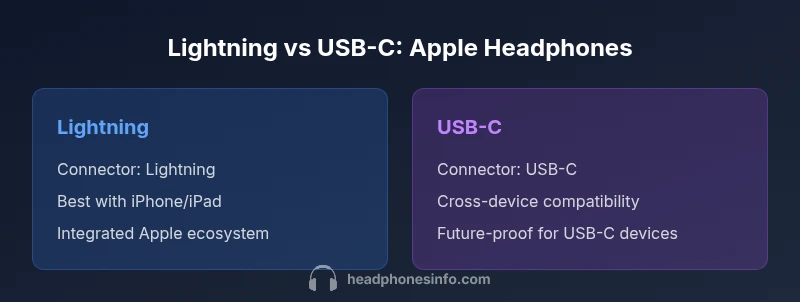
Lightning-based Apple headphones work smoothly with iPhone and iPad, delivering tight integration with Apple’s ecosystem, if you stay within that ecosystem. USB-C Apple headphones offer broader compatibility with newer Macs and iPads, plus easier access to non-Apple devices. For a simple, future-proof setup, USB-C typically wins on cross-device flexibility, while Lightning keeps things clean within Apple hardware.
Core Differences: Lightning vs USB-C in Apple Headphones
According to Headphones Info, the core difference between Apple headphones using Lightning and those using USB-C is not just the physical port, but how each path aligns with device ecosystems and future accessories. Lightning-based headphones lock you into Apple devices with a Lightning port, delivering a tightly integrated experience with iPhone, iPad, and certain iPods. USB-C headphones, in contrast, embrace a standard across many devices, including newer Macs and iPads, and a growing number of Windows and Android laptops. This leads to a trade-off: Lightning tends to offer a simpler setup within the Apple ecosystem, while USB-C emphasizes cross-device compatibility and future-proofing. As we move through 2026, USB-C is becoming more common in laptops and tablets, nudging buyers toward a path that minimizes dongles and adapters.
Connector Technology and Compatibility Overview
The Lightning connector is a proprietary Apple interface that debuted years ago and remains common on older iPhone accessories. It provides a compact, durable connection and, historically, draws power and data through a single pinout. USB-C is a universal, reversible connector that supports higher data throughput and multiple modes of operation, including audio, charging, and data. For headphones, USB-C enables direct compatibility with devices that ship USB-C ports, including newer Macs and some iPads. Conversely, Lightning headphones require an adapter to connect to USB-C devices and some USB-C-only computers. This fundamental difference influences everything from supported DACs to latency, microphone integration, and charging behavior. As of 2026, many manufacturers offer both Lightning and USB-C variants, but the choice often boils down to device affinity and the level of ecosystem lock-in a user is willing to accept.
Ecosystem and Accessory Compatibility
Apple’s ecosystem tends to reward users who stay within its product family. Lightning accessories often align with AppleCare and software updates in a predictable, streamlined way, minimizing compatibility surprises. USB-C accessories emphasize openness, enabling cross-brand usage, third-party adapters, and easier integration with Windows and Android ecosystems. For listeners who value seamless pairing and one-brand support, Lightning remains convenient; for those who want to mix devices or anticipate future hardware shifts, USB-C offers a more robust long-term strategy. Headphones designed for USB-C can also take advantage of common digital-to-analog interfaces, which reduces the likelihood of extra adapters failing over time. In practice, your choice should reflect your primary device lineup and how you plan to upgrade in the next few years.
Audio Quality and DAC Considerations
The underlying DAC (digital-to-analog converter) and driver support can influence perceived audio quality more than the connector itself once the path is established. With Lightning headphones, Apple has historically validated certain DACs for optimized performance on iOS devices, creating a consistently reliable sound experience when used with compatible apps and formats. USB-C headphones rely on a more generalized pathway, potentially offering similar or comparable audio quality but with broader compatibility across devices. The practical difference often shows up in dynamic range, headroom, and latency when using high-resolution audio or professional apps. For audiophiles, the decision may hinge on the specific headphone model, the DAC inside, and whether your primary playback environment is Apple-native or cross-platform.
Power, Charging, and Use With Devices
Power delivery and charging considerations can affect how you use Apple headphones with Lightning versus USB-C. Lightning-powered headphones can draw power from iPhone or iPad’s battery while in-use, reducing the need for distinct power sources in some setups. USB-C headphones can draw power from USB-C hosts and can support faster charging and accessory passthrough in certain configurations. In everyday use, this translates to fewer battery anxieties when traveling with USB-C kits that share a charger with your laptop. If your setup relies on battery-powered dongles or inline DACs, check the power profiles of the specific model to avoid dropouts or loudness inconsistencies during long listening sessions.
Device Scenarios: iPhone, iPad, Mac, and iPod
Within Apple’s own device lineup, Lightning accessories shine on iPhone and iPad models that retain the Lightning port, delivering stable compatibility and straightforward pairing. For Mac users, especially those with USB-C ports, USB-C headphones reduce the need for adapters and support simpler multi-device workflows. For iPods still in service with Lightning connectors, Lightning headphones remain a natural fit. The broader market, including Windows laptops and Android devices, tends to prefer USB-C, making USB-C headphones a prudent choice if you frequently mix systems. Consider your typical daily routes: commuting, desk work, and travel can all tilt the balance toward one connector or the other.
Cross-Platform Use: What You Gain with USB-C
USB-C headphones appeal to users who juggle multiple ecosystems. If you own a MacBook, an iPad, and an Android phone, USB-C minimizes the need for adapters and simplifies road trips or shared work setups. USB-C also aligns with the broader USB-C audio standard, which can reduce complexity when buying accessories, adapters, or DACs. The trade-off is potential variability in performance across brands, particularly if some USB-C headphones rely on generic audio paths that must be calibrated per device. For consumers prioritizing interoperability, USB-C represents a future-proofing strategy that helps future devices stay compatible without multiple dongles.
Setup and Pairing Experience
The pairing experience often reflects the ecosystem commitment of the device. Lightning headphones typically offer plug-and-play setup with iOS devices, leveraging the existing pairing surface in iOS and macOS. USB-C headphones rely on the host’s USB-C audio pathway and can behave differently depending on the device’s firmware and OS updates. In practice, USB-C headphones may require occasional driver or firmware updates to maintain full compatibility with newer devices. For many users, the smoother experience within a single ecosystem is a decisive factor; for others, the flexibility of cross-device pairing wins out, even if it requires occasional updates and a small learning curve.
Durability, Cables, and Longevity
Durability is often dictated by cable construction and connector robustness rather than the port type alone. Lightning cables have a reputation for reliable wear within Apple’s hardware environment, while USB-C solutions benefit from the industry-wide design for resilience and easier replacement. If you travel frequently, cable strain relief, shielding, and connector retention become critical; these factors influence long-term usability more than whether the product uses Lightning or USB-C. When choosing, look for reinforced strain relief, braided cables, and certification marks that indicate durability, water resistance, and robust build quality. A well-built USB-C headphone can outlast a poorly made Lightning alternative in multi-device setups.
Price, Availability, and Future-Proofing
Price and availability are shaped by product cycles and regional demand. Lightning headphones tend to be priced around a familiar range within Apple’s ecosystem, particularly when bundled with iPhone or iPad purchases. USB-C headphones often carry a broader market presence due to wider device compatibility, which can influence price competition across brands. Future-proofing considerations favor USB-C in markets leaning toward USB-C laptops, tablets, and new mobile devices, but the exact pricing varies by model and retailer. For shoppers, balancing upfront cost with anticipated usage across devices is essential.
Real-World Testing Tips
When evaluating Lightning versus USB-C headphones in real-world scenarios, test with multiple apps, streaming services, and formats to observe how each connector path handles latency, impedance mismatches, and dynamic range. Use a consistent listening environment and compare with a reference pair to isolate the connector variable. Pay attention to how each connector handles microphone input, inline controls, and any power-related dropouts in long listening sessions. If possible, run side-by-side tests with a friend to confirm your subjective impressions. This practical approach helps ensure your final decision aligns with your listening preferences and device ecosystem.
Which Should You Buy? Final Decision Guide
In the final decision, your choice depends on your device mix and priorities. If you primarily own Apple devices that still rely on Lightning, Lightning headphones deliver a streamlined experience with reliable pairing and ecosystem cohesion. If you frequently swap devices across ecosystems or expect future devices to drop legacy ports, USB-C headphones offer broader compatibility and future readiness. For many buyers, the sweet spot lies in USB-C as a universal path, but Lightning remains valid for those who want a simpler, Apple-centered setup. Consider your daily workflows, travel habits, and how you plan to upgrade in the coming years when deciding.
Comparison
| Feature | Lightning-based Apple headphones | USB-C Apple headphones |
|---|---|---|
| Connector Type | Lightning | USB-C |
| Device Compatibility | iPhone/iPad with Lightning | MacBooks/iPads with USB-C and newer devices |
| Data/Audio Path | Proprietary Lightning path | USB-C general path with wider support |
| Power Delivery | Power from Lightning host | Power from USB-C host with broader charging options |
| Accessory Ecosystem | Apple-first accessories | Cross-brand accessories and adapters |
| Future-Proofing | Apple-centric continuity | Cross-platform compatibility |
Upsides
- Tighter Apple ecosystem integration
- Simplified setup within Apple devices
- Often strong reliability with native apps
- Potentially better support within macOS/iOS accessories
Disadvantages
- Limited cross-platform compatibility
- More adapters needed for non-Apple devices
- USB-C devices may require firmware updates for parity
USB-C headphones are generally more versatile for multi-device setups; Lightning remains strongest for Apple-only ecosystems.
If your devices span multiple ecosystems, USB-C is the practical, future-proof choice. If you live entirely in Apple’s world, Lightning offers a simpler, cohesive experience with built-in compatibility benefits.
People Also Ask
What is the main difference between Lightning and USB-C Apple headphones?
The primary difference lies in the connector and ecosystem. Lightning is Apple-proprietary and streams best within Apple devices, while USB-C is universal, offering broader compatibility across brands and upcoming devices.
Lightning is Apple-specific and easy to pair with iPhones, while USB-C is universal and future-friendly for cross-device use.
Can Lightning headphones work with USB-C iPhones or devices?
Directly no; Lightning headphones require an adapter to connect to USB-C devices. Some adapters enable limited functionality, but ideal performance depends on the adapter quality and device support.
Lightning need adapters for USB-C devices, and performance depends on the adapter.
Are USB-C headphones backward compatible with Lightning devices?
Not directly. USB-C headphones rely on USB-C paths; Lightning devices use the Lightning path, so cross-compatibility typically requires adapters or different models.
USB-C adapters or different models are usually needed to use USB-C headphones on Lightning devices.
Do connector differences affect audio quality?
Audio quality is more closely tied to the headphone DAC and driver design than the port itself. Both Lightning and USB-C variants can sound excellent when paired with quality DACs and software.
Quality depends on the headphone’s internal DAC and setup, not just the port.
Which should I buy if I plan to upgrade devices soon?
If you expect device upgrades toward USB-C or cross-platform use, USB-C headphones are typically the safer long-term bet. If you’ll stay with Apple devices, Lightning remains a reasonable choice.
USB-C is usually better for future-proofing; Lightning fits Apple-centric setups.
What about adapters and dongles for everyday use?
Adapters add cost and potential failure points. If you want minimal clutter, choose the connector that matches your primary devices and accept a few adapters for edge cases.
Adapters can complicate things; pick the connector that matches most of your gear.
What to Remember
- Evaluate your device mix before buying.
- USB-C favors cross-device compatibility and future-proofing.
- Lightning provides Apple-centric simplicity and reliability.
- Check power delivery and DAC specs for best audio quality.
- Consider adapters and ecosystem alignment in total cost.