How Much Are Bluetooth Headphones? A 2026 Pricing Guide
Explore Bluetooth headphones pricing across budgets—from under $50 to premium and luxury models. Learn what drives price, how to spot value, and tips for buying in 2026.


What drives the price of Bluetooth headphones
Price is a function of several interacting decisions and components. Core drivers include driver quality and size, which influence sound fidelity and bass impact; active noise cancellation (ANC), which requires extra microphones and DSP processing; and codec support (SBC, AAC, aptX, LDAC), where higher-end codecs often demand more sophisticated hardware. Build materials (metal vs plastic), battery capacity, comfort features like pivoting hinges and memory foam ear pads, and water resistance all add cost. Brand positioning and warranty length also shape sticker price, especially for models pitched as premium or pro-grade. When you compare options, assess value across intended use—commuting, gaming, studio work—and consider the total cost of ownership beyond the initial price.
- Factor in how long you plan to keep the headphones.
- Weigh comfort and durability against price.
- Consider how often you’ll use wireless features like multipoint pairing and fast charging.
Typical price ranges you can expect in 2026
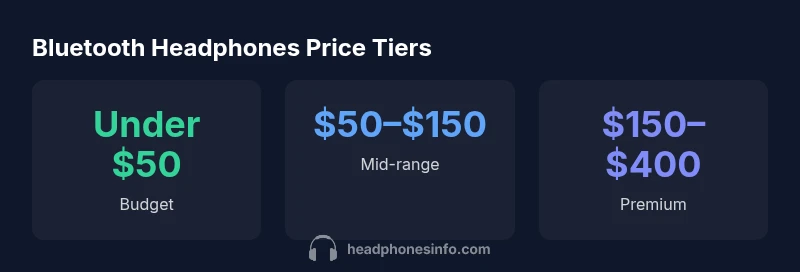
Across major markets, Bluetooth headphone prices cluster into several bands that reflect features and performance. Budget models under $50 offer reliable sound and basic wireless connectivity but limited ANC and codec options. Mid-range options in the $50–$150 bracket commonly include better comfort, more stable Bluetooth connections, and multiple codec support. Premium options in the $150–$400 range frequently deliver strong ANC, superior drivers, extended battery life, and broader codec compatibility. Luxury or professional-grade models above $400 target audiophiles and content creators with the best possible materials, meticulous tuning, and enterprise-level warranties. Regional promotions, retailer exclusives, and seasonal sales can shift these bands temporarily. Headphones Info’s analysis, 2026, highlights that discerning buyers often find the best value lies in the mid-range to premium tier depending on needs and use cases.
Cost of ownership and long-term value
Buying is only part of the equation; ownership costs accumulate through accessories, replacements, and potential repairs. Consider charging cables, ear pads, and maintenance kits as ongoing expenses. Warranties can add peace of mind and reduce long-term costs if components fail. Battery degradation over time becomes a practical factor; some models offer replaceable batteries, while others require full unit replacement. If you rely on headphones for calls or streaming, mic quality and durability matter as much as raw sound. A well-chosen pair in the $100–$250 range may deliver better long-term value than a cheaper model that frequently needs replacement or repair. Always balance initial price with expected lifespan and service options.
Price anchors by category
Different headphone formats carry different value propositions. True wireless earbuds save space and weight but often trade battery life for compact design, while full-size over-ear designs excel in comfort and audio stage at the cost of portability. ANC tends to be a strong driver of price; wired alternatives without ANC remain cheaper but lose some convenience. If you prioritize portability for travel, lightweight on-ear or compact in-ear models might be ideal, but for home listening or gaming, a larger over-ear pair with robust drivers and long battery life often yields better perceived value. When setting a budget, map features to needs—ANC, battery life, codec support, and build quality—then align with realistic price bands.
How to evaluate value, not just price
Value comes from a combination of sound quality, comfort, durability, and feature set. At each price tier, list the must-haves (e.g., ANC, multiplexing, mic quality). Then identify nice-to-haves (e.g., LDAC or aptX Adaptive, extended warranty, rugged IP ratings). Use listening tests or credible reviews to compare tonal balance and distortion at high volume. Look for positive trade-offs: if a model has exceptional comfort but average bass, it might still represent good value for long listening sessions. Finally, factor in expected lifespan and possible upgrade paths, such as software updates that can improve performance over time.
How to compare across retailers and seasons
Prices fluctuate with promotions, holidays, and clearances. Create a shopping plan: set price alerts for models you want, track price history with reputable tools, and compare bundles (cases, extra cables, or firmware perks). Refurbished or open-box units can offer substantial savings but come with caveats (limited warranty, cosmetic flaws). Consider retailer reputation, return policy, and support when deciding where to buy. If you’re unsure, wait for major sale events or negotiate with price-match policies where available. Headphones Info recommends verifying codec support across devices you own to avoid compatibility surprises.
Codec impact and price correlation
Codec support adds value that often correlates with price. Basic SBC-only headphones are typically cheaper, while AAC-capable devices are standard in many mid-range products. If you require higher fidelity for music streaming or gaming, LDAC or aptX HD/Adaptive can justify a higher price point. However, not all devices support these codecs, so ensure your source device and headphones align. The price premium for premium codecs is usually most evident in mid-range to premium tiers, where you also encounter larger drivers, better tuning, and extended battery life.
Brand strategies and why prices vary
Pricing is a strategic choice. Some brands emphasize premium build quality and luxury branding, supporting higher price points; others compete on value with aggressive cost controls and solid performance at lower prices. Perceived value matters: comfortable fit, long-term reliability, and predictable firmware updates can justify higher prices even if raw sonic performance is similar. Consumers should look beyond headline price and compare total experience, service, and support across brands. Headphones Info notes that value is highly context-dependent: a listener’s priorities often determine whether a $150 pair feels like a bargain or a waste of money.
Practical budgeting tips and buying guide
Set a realistic budget based on how often you use headphones and for what purposes. If you’re a casual listener, prioritize comfort and stability over top-tier tech. For gamers or commuters, ANC, low latency, and robust mic performance can justify mid-to-high price brackets. Always test fit and comfort in person when possible, or rely on generous return policies if shopping online. Don’t overlook bundles or refurbished options with solid warranties. Finally, keep an eye on seasonal promotions and retailer-exclusive colors or editions that can unlock extra value without sacrificing essential features.