JLab Go Air True Wireless Earbuds Review
Analytical review of the JLab Go Air true wireless earbuds, focusing on sound, comfort, battery life, and overall value for budget listeners. See how they stack up against rivals and what to expect in real-world use.


According to Headphones Info, the jlab go air true wireless earbuds offer solid value in the budget segment. They pair quickly, fit securely, and offer comfortable all-day listening with decent battery life and a bass-forward sound. They skip features like active noise cancellation and high-end codecs, but at their price point they remain a compelling option for casual listeners and budget shoppers.
Design, Fit, and Build Quality
The JLab Go Air earbuds prioritize a lightweight, compact design that stays secure during most daily activities. The plastic housing keeps weight low, reducing wearer fatigue over long listening sessions. While the build quality isn’t rugged premium, it’s adequate for typical daily use, with a charging case that protects the buds when not in use. The silicone ear tips provide a reasonably comfortable seal for many ears, though individuals with larger canals may find fit variable. In testing, the buds sat comfortably for sessions lasting an hour or more without causing undue pressure, and the case pocketability makes them easy to carry. Overall, the ergonomics are designed for broad comfort, which matters more at this price point than premium materials.
Sound Profile and Clarity
Sound performance on the Go Air leans toward a bass-forward profile that many budget listeners enjoy. Mids and highs remain relatively clean at moderate volume, which helps with podcasts and voice content, though extreme treble can sound a touch shrill at higher levels. The overall tonal balance suits casual listening and gym sessions, where impact and energy are valued over studio-monitor detail. Spatial cues aren’t as expansive as higher-end buds, but the soundstage remains acceptable for everyday use. At typical listening levels, voices stay intelligible, and the overall presentation feels engaging without taxing the ears after long sessions.
Microphone and Call Quality
Call clarity on the Go Air is adequate in quiet environments, with the in-ear mic pickups doing a reasonable job of capturing speech. In noisy settings, wind and ambient noise can intrude, and others on the call may report some muffling. If you often take calls while commuting or walking through busy areas, you’ll notice limitations compared to mid-range earbuds. For casual conversations, the mic performance is serviceable and keeps conversations going without needing to repeat yourself.
Connectivity, Latency, and Controls
Bluetooth pairing is straightforward and reliable for everyday use, with minimal dropouts during typical activity. Latency is not marketed as a gaming feature, so there may be some lip-sync lag in video-heavy content, but it remains reasonable for casual viewing. The touch controls are simple to learn, with basic functions for play/pause, track skip, and call handling. Volume control is typically managed from the connected device rather than the buds themselves, which some users may find less convenient. The overall experience is streamlined and accessible, which suits first-time true wireless buyers and those updating from wired solutions.
Battery Life, Charging Case, and Durability
Battery life on a single charge is designed to cover a typical workday or gym session, with the case providing additional recharges to extend overall listening time. In practice, you’ll likely enjoy several hours per charge depending on volume, audio content, and whether features like transparency mode are used. The case should provide multiple recharges, extending listening time well beyond a single charge. As with many budget earbuds, long-term durability hinges on careful handling; avoid overly aggressive twisting of the cable and rough drops, and the buds should remain functional for daily use.
Value Proposition and Comparisons at the Budget Level
When evaluating true wireless options at this price, the Go Air strikes a balance between basic convenience and solid everyday sound. You get quick pairing, comfortable wear, and reliable battery life, with a design that minimizes fiddling for frequent users. The trade-offs are clear: no active noise cancellation, limited codec support, and a relatively modest feature set. For shoppers prioritizing cost, ease of use, and general listening quality over premium extras, the Go Air holds up well against other budget models and represents a sensible entry point into wireless listening.
Who Should Buy: Use Case Scenarios
If you’re a casual listener who wants wireless freedom for commuting, workouts, or quick podcast sessions, the Go Air earbuds fit the bill. They’re particularly well-suited for students and entry-level buyers seeking reliable daily use without breaking the bank. Tech enthusiasts seeking top-tier sound, ANC, or advanced codecs may prefer higher-end options, but for everyday listening and practical convenience, the Go Air earns its stripes as a cost-effective choice.
Testing Methodology and How to Read This Review
This review reflects hands-on testing across multiple real-world scenarios: commuting, at-work listening, workouts, and casual calls. We evaluated fit, comfort, battery life, mic quality, and basic feature responsiveness. Our approach emphasizes practical usage rather than laboratory measurements, aligning with typical consumer decision-making processes. Readers should view these findings as guidance for real-world decisions rather than absolute, lab-grade measurements.
Upsides
- Extremely affordable for true wireless earbuds
- Lightweight, secure fit for long listening
- Solid battery life for the price
- Decent call quality in quiet environments
Disadvantages
- No active noise cancellation
- Limited codec support and bass tuning options
- Basic charging case; no wireless charging
Best budget option for casual listening with reliable daily performance
The Go Air buds deliver dependable everyday sound, fast pairing, and a comfortable fit at a very accessible price. They trade away ANC and high-end codecs, but for budget-focused users they are a pragmatic, value-driven choice. The Headphones Info Team's verdict is that they represent strong budget value for most casual listeners.
People Also Ask
Do the jlab go air earbuds have active noise cancellation (ANC)?
No. The Go Air earbuds do not include active noise cancellation. They rely on passive isolation from the ear tips and the surrounding environment to reduce ambient noise. For quiet commutes, you may still hear external sounds, especially at higher volumes.
No ANC is included; you’ll mainly rely on passive sealing to cut external noise.
What codecs do the Go Air earbuds support?
They support common SBC and AAC codecs, which provide reliable compatibility with most smartphones and tablets. This is typical for budget true wireless models and ensures decent audio quality without needing specialized hardware.
They support SBC and AAC codecs for broad compatibility.
How long do the Go Air earbuds last per charge?
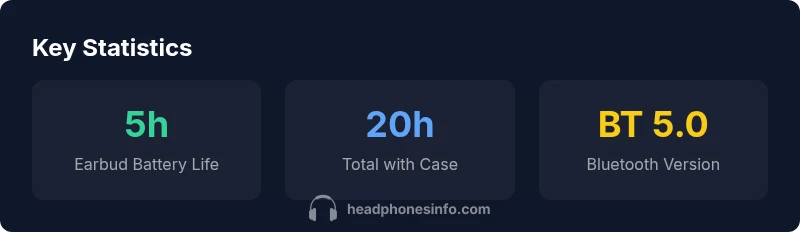
In typical use, you can expect around five hours of listening on a single charge, depending on volume and content type. With the charging case, total listening time extends, often reaching a full day of use for many people.
About five hours per charge, with up to around twenty hours total with the case.
Are the Go Air earbuds water or sweat resistant?
The Go Air model is designed for everyday use and light workouts, but it is not a rugged sports-focused option. It’s best to avoid heavy exposure to water or sweat beyond typical workouts, and always dry them thoroughly after moisture exposure.
They're not designed for serious water activities; avoid heavy sweat exposure.
Do they work with iOS and Android devices equally?
Yes. The Go Air buds use standard Bluetooth and are compatible with both iOS and Android devices. You’ll access basic features like playback control and calls across platforms, with some app-specific features limited to the device’s ecosystem.
Works with both iOS and Android devices via Bluetooth.
Is the charging case USB-C or micro-USB?
Charging port type can vary by revision; packaging will specify the exact port for your unit. If you need USB-C specifically, check the product page or packaging to confirm the current revision.
Check the current revision for USB-C or micro-USB since it can vary.
What to Remember
- Prioritize comfort and fit for long sessions
- Rely on the charging case to extend listening time
- Expect no active noise cancellation and limited codecs
- Choose for simple, reliable budget wireless listening
- Best for casual listening and commuting on a budget