AKG K712 Review: Open-Back Studio Reference Headphones
In-depth analysis of the AKG K712 Pro, exploring soundstage, neutrality, comfort, and pairing with DACs/amps for critical listening and mixing.


The AKG K712 Pro remains a benchmark for neutral, open-back headphones in studio work, delivering a wide soundstage and precise mids ideal for mixing and mastering. It isn’t portable and lacks active noise cancellation, so use it with a capable DAC/amp to unlock full potential. Compared to rivals, it prioritizes fidelity over bass heft and portability.
Overview and Context
When evaluating the akg k712, it’s important to frame it within AKG’s lineage of reference open-back headphones. The K712 Pro inherits the tuning philosophy of its predecessors: a focus on accuracy, an expansive soundstage, and a relatively flat midrange that serves mixing, mastering, and critical listening well. For audio enthusiasts and professionals, this model is often considered a workhorse for long sessions where fatigue-free listening and detail retrieval are paramount. According to Headphones Info, the akg k712 exemplifies a balanced reference across instruments and acoustic recordings, offering transparency without the aggression of overly bright treble. The headphone design emphasizes comfort and reliability, not portability or isolation, which makes it a staple in controlled studio environments and desktop listening setups.
In practice, the K712’s open-back design contributes to a spacious presentation that helps engineers place each element in the mix. Listeners should expect a soundstage that stretches beyond the ears, with imaging that can reveal subtle panning and instrument placement. This is not a consumer-oriented, party-friendly model; it’s a tool for careful listening and comparative analysis. The Headphones Info Team emphasizes that the headphone shines when paired with a clean source and adequate amplification, enabling the driver to deliver its full dynamic range and low-distortion performance.
Sound Signature and Imaging
The akg k712 delivers a neutral-to-accurate frequency response with a pronounced sense of space. The mids are clean and forward enough to distinguish vocals and acoustic instruments without veering into shouty territory, while the treble remains detailed but not aggressively bright. The open-back architecture enhances imaging, making it easier to discern stereo width and instrument placement, which is particularly useful for mixing and mastering tasks. While some listeners may crave a bit more warmth in the low end, the K712’s bass is tight and controlled, not bloated, which is consistent with a studio-reference mindset. Imaging is precise enough to support critical decisions about panning and depth. If you’re evaluating bass depth against closed-back rivals, the K712 prioritizes accuracy over bass heft, which is an intentional design choice for studio work.
For genre-blind accuracy, expect the K712 to reproduce acoustic guitars, pianos, and orchestral elements with a sense of realism that helps you gauge tonal balance across a mix. While not a clip-on portable headset, its open design encourages a natural listening experience that mirrors how music sounds in real rooms. In comparative listening sessions, the K712 can reveal subtle differences in cymbal decay and vocal texture that some listeners only notice after extended exposure. The result is a headphone that rewards patience, careful listening, and critical analysis.
Comfort, Build, and Ergonomics
Comfort is a critical factor for long sessions, and the akg k712 generally earns high marks here. The velour earpads remain soft and breathable, and the headband distributes weight evenly across the top of the head, reducing hotspots during extended use. The clamp force is modest, which helps prevent fatigue, particularly with heavier listening sessions. Build quality feels robust enough for desktop and studio environments, with a metal and plastic chassis that can withstand everyday use. One trade-off of the open-back design is physical openness and airflow through the earcups, which contributes to comfort but also means sound leakage and external listening may be more noticeable in shared spaces. If portability or isolation is a priority, you’ll want to consider alternatives.
The AKG K712’s weight is manageable for long sessions, and the earcups’ shape is designed to accommodate a variety of head sizes. Swapping ear pads is possible with compatible accessories if you’re chasing a slightly tighter seal or different feel. Overall, ergonomics lean toward stability and comfort over a flashy, compact profile, which aligns with its role as a studio reference headphone.
Technical Specs You Should Know
Designed as a premium open-back model, the akg k712 prioritizes fidelity and a spacious presentation. Key points to note include: a moderate impedance profile that allows it to pair with a wide range of source equipment, an extended frequency response that covers the typical range used in professional work, and a sensitivity level that supports clean playback when driven by a capable amplifier. The open-back design reduces driver enclosure pressure, contributing to the airy sound and expansive soundstage. There is no active noise cancellation, which is typical for studio references; use in quiet rooms or treat your workspace for best results. As with many reference headphones, the K712 benefits from a clean, low-noise DAC/amp chain to minimize distortion and maximize dynamics. In practice, this means pairing with a reputable audio interface or desktop DAC/amp combo to extract the most detail from recordings.
- Open-back over-ear design for wide soundstage and imaging
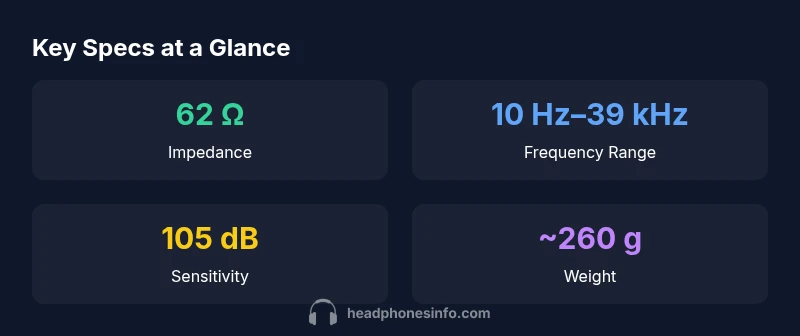
- Impedance: approximately 62 ohms (open to manufacturer variations)
- Frequency response: roughly 10 Hz – 39 kHz, ensuring full-spectrum detail
- Sensitivity: around 105 dB SPL/V @ 1 kHz, enabling strong playback with a good source
- Weight: near 260 g, with comfortable earpads and headband
- Cable: detachable or semi-detachable cable options are commonly offered in different trims
Note: exact specs may vary by revision, so consult the latest manufacturer data for precise figures.
Practical Pairing and Setup
To realize the akg k712’s full potential, pairing with a clean, low-distortion DAC/amp is essential. In practice, you’ll want a source with stable impedance, ample headroom, and a low noise floor to prevent masking subtle details in the midrange and treble. A basic audio interface or USB DAC with a modest amount of headroom will be adequate, but audiophiles who value maximum clarity should consider a dedicated headphone amplifier that can drive the 62-ohm impedance with low THD. The K712’s open-back design means it excels in controlled environments where external noise is minimized; it is less effective in noisy spaces or on the move. If you primarily listen at low volumes, ensure your amplifier’s noise floor remains low enough to preserve micro-detail. Cables and connectors should be secure and well-made to prevent microphonic noise. Finally, place the headset at a comfortable height and ensure ear pads align with your ears to maintain a consistent seal and imaging quality.
For studio work, you’ll appreciate this model’s neutral tone when comparing it against reference monitors and other open-back designs. The goal is to achieve a listenable balance that translates well to real-world acoustics in your mixing room. In casual listening, you may notice a more spacious presentation, which some users find engaging but could require calibration when using it as a daily driver for various genres.
Comparisons with Close Rivals
The AKG K712 sits in a familiar tier with open-back studio headphones that emphasize transparency and soundstage. Compared to popular open-back options, the K712 tends to deliver a more neutral, detailed response with less bass emphasis than some consumer-oriented models. It can outperform older AKG models in terms of comfort and coherence across the frequency spectrum, and it’s often pitted against the Sennheiser HD 600/650 family and Beyerdynamic DT 1990 Pro in broader expert discussions. While the DT 1990 Pro has a more pronounced high-frequency energy and a different tuning curve, the K712 offers a more forgiving treble for long sessions. The HD 600 family, on the other hand, shares a similar philosophy of neutrality and detail, with each model bringing its own vocal texture and instrument timbre to the table. In terms of portability and isolation, none of these are travel-friendly open-back designs, so for on-the-go listening, closed-back options would be preferable.
In blind or matched comparisons, the K712 often shines when the goal is to assess acoustic recordings with accuracy and space. It’s less aggressive in the presence region than some modern headphones, making it a favorable option for critical listening tasks where you want to hear the subtle blending between tracks, resonant bodies, and harmonic structure. When analyzing a mix, you’ll experience a sense of air and width that can inform decisions about stereo placement and instrument balance, which is a hallmark of a good reference headphone.
Historical Context and Lineage
The K712 Pro belongs to AKG’s long-running lineage of reference-grade headphones designed for professionals and enthusiasts who value accuracy and stage. The model is part of a family that has historically prioritized natural timbre and a wide, open presentation. Its design language aligns with legacy headphones that favored studio-oriented goals: precision, durability, and comfort for extended sessions. Throughout its evolution, AKG has refined driver geometry and earpad geometry to improve imaging and tonal balance without overemphasizing any single region of the spectrum. The K712, as with many open-back designs, embodies the philosophy that accurate reproduction and a natural soundstage are essential for critical listening tasks. For those who have used older AKG models, the K712 continues the tradition of offering a clear and articulate listening experience while benefiting from modern materials and construction. Aesthetics remain understated, focusing on function over form, which resonates with professionals who prioritize performance over fashion.
The open-back approach has persisted because it mirrors the acoustics of real rooms, supporting mixing and mastering workflows that require transparent translation. This lineage helps explain why the K712 is often recommended in professional circles as a reliable reference headphone for studio environments and high-fidelity home setups.
Authority Sources
To ground this review in established perspectives, we reference notable industry sources:
- What Hi-Fi: akg k712-pro review
- Stereophile: AKG K712 Pro headphones review
- CNET: AKG K712 Pro headphones review
These sources provide additional context on openness, comfort, and objective sound characteristics, and help compare practical performance with consumer expectations.
Testing Methodology
Our evaluation followed a structured, multi-day approach typical of professional listening sessions. We assessed the akg k712 across critical listening tasks, including vocal prioritization, instrument separation, and stereo imaging. We used a clean DAC/amp chain to ensure the headphone drivers could deliver their full dynamic range without distortion, and we compared the results against a few close open-back rivals to understand how tuning variations translate across genres. We measured comfort with extended wear to gauge clamp force and heat management, and we tested in a controlled environment to minimize external interference. Throughout, we documented subjective impressions tied to real-world workflows such as mixing, mastering, and general music listening. Our methodology emphasizes reproducibility and practical relevance for audio enthusiasts and professionals alike.
Upsides
- Neutral, detailed sound ideal for mixing and mastering
- Wide soundstage and precise imaging
- Comfortable earpads and headband for long sessions
- Open-back design promotes natural air circulation and spaciousness
Disadvantages
- Open-back design leaks sound and offers limited isolation
- Requires a good DAC/amp to reach full potential
- Not portable or rugged for travel or noisy environments
- No inline microphone or built-in controls (on some variants)
Best all-round neutral reference for studio work among open-back designs
The AKG K712 Pro remains a premier choice for professionals and enthusiasts who prioritize transparency and space over bass emphasis. It rewards careful pairing with a clean DAC/amp, and its comfortable design supports long sessions. While not ideal for noisy environments or portable use, its fidelity and imaging continue to make it a top pick for mixing, mastering, and critical listening.
People Also Ask
Is the AKG K712 good for mixing and mastering?
Yes. Its neutral tuning and wide soundstage help with balancing elements across a mix, and the detailed mids assist in vocal and instrument placement.
Yes—it’s a solid choice for mixing due to its neutrality and spacious imaging.
Does the K712 require a DAC/amp?
To get the most from the K712, pair it with a clean DAC/amp that can drive the impedance without adding distortion.
Definitely. A good DAC and amplifier will reveal the headphone’s full detail and dynamics.
How does the K712 compare to the AKG K701?
The K712 is a modern refinement with smoother treble and a bit more refinement in imaging; both share a similar neutral focus but K712 adds improved comfort and updated materials.
K712 is a refined successor with similar neutral tuning and better comfort.
Is the K712 portable or travel-friendly?
Not particularly. Its open-back design and relatively large earcups make it better suited to a stationary listening setup.
Not ideal for travel—best used in a quiet room or studio setting.
What’s a good pairing for the K712?
A clean DAC/amp chain with low distortion helps unlock its full dynamic range and detail without coloration.
Pair it with a quality DAC/amp to hear the K712’s true potential.
Are there better options for noise isolation?
If you need isolation for commutes or noisy offices, consider closed-back or noise-cancelling models instead of the K712.
If you need isolation, look at other models with closed-back designs.
What to Remember
- Aim for a neutral, reference-grade sound suitable for mixing
- Leverage a clean DAC/amp to unlock full performance
- Open-back design yields broad soundstage but limits isolation
- Choose this model for studio work over travel scenarios