Beyerdynamic DT 770 Pro Headphones Review
In-depth, analytical review of the Beyerdynamic DT 770 Pro headphones, covering sound profile, build quality, comfort, and practical buying guidance for studio work and critical listening.


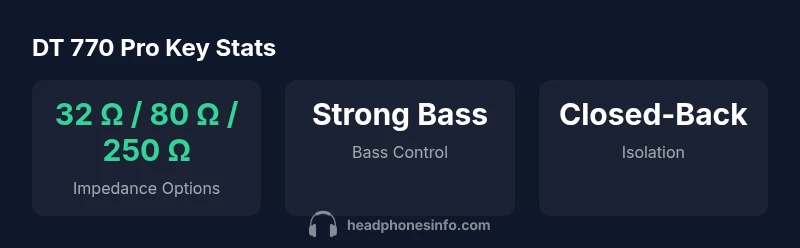
The beyerdynamic dt 770 pro headphones deliver a dependable closed‑back monitoring experience with strong bass and clear highs, ideal for studio work and long sessions. They come in multiple impedance variants (32 Ω, 80 Ω, 250 Ω) that affect amp pairing. Comfort is a standout plus, thanks to plush velour pads and balanced clamp. Headphones Info analysis suggests consistent performance across variants, making them a reliable baseline for many studios.
About the Beyerdynamic DT 770 Pro headphones and their studio role
The beyerdynamic dt 770 pro headphones are a long-standing staple in many recording and mixing environments. They are a closed‑back design known for reliable isolation and a bass-forward yet controlled sound signature that many engineers rely on for bass management and tonal balance during sessions. The product line exists in several impedance variants (32 Ω, 80 Ω, and 250 Ω), and the choice typically depends on the user’s gear: portable devices may favor the 32 Ω version, while professional interfaces and headphone amps benefit from the higher impedances. In reviews we run at Headphones Info, we assess consistency across variants, comfort, and durability to help you decide which variant best fits your setup.
Design and comfort for long sessions
The DT 770 Pro employs a robust metal and plastic chassis with a padded headband and generously sized ear cups. The velour-covered ear pads provide a soft seal that remains comfortable over many hours of use, though clamping force can be noticeable out of the box. A well-balanced clamp is crucial for long monitoring sessions; too much pressure can lead to fatigue, while too little can reduce isolation. Users often praise the padding for keeping heat mild during extended sessions, which is a meaningful factor for studio work and home listening alike.
Sound signature across impedance variants
In practical listening, the DT 770 Pro maintains a solid, bass-forward profile with a clear top end. The low end tends to be tight and well controlled, which helps with kick drum and bass guitar tracking and playback. The mids stay relatively forward, though some users note a mild emphasis in the lower mids that can brighten vocals in certain genres. The highs are crisp but not aggressively bright, helping cymbals and high hats remain intelligible without fatigue. Impedance changes tend to affect loudness equivalence and required drive more than the tonal balance itself, making proper amplification a key variable for the higher-impedance versions.
Isolation, leakage, and real-world use
As a closed-back design, the DT 770 Pro offers solid isolation from surrounding noises and keeps sound leakage relatively contained, which is beneficial in shared studios or small rooms. However, isolation is not absolute; in extremely quiet environments you may still perceive minor bleed when playing loud transients. This makes them suitable for tracking certain instruments in a home studio, provided you manage headphone level carefully to avoid bleed into sensitive microphones.
Amping and listening requirements for different variants
The 32 Ω variant is generally the easiest to drive and performs well with portable players and basic audio interfaces. The 80 Ω version sits in a comfortable middle ground, offering good volume with typical studio interfaces. The 250 Ω model usually requires a capable headphone amplifier or an audio interface with a strong headphone out to reach the same listening levels without compression. For critical listening and mixing, investing in a decent headphone DAC/amp can unlock the full potential of the higher impedance variants, ensuring clean headroom and dynamic range.
Ideal use cases in professional and home studios
For mixing and monitoring workflows, the DT 770 Pro provides a dependable reference while avoiding overly aggressive treble that can mask problems in the upper mids. In tracking scenarios, the deep bass and solid stage anchoring can help with low-end tracking decisions without creating excessive bleed into microphones in close-mic setups. In home listening, the headphones excel for enjoyable, accurate playback with a slightly warm character that many listeners appreciate for long sessions.
How the DT 770 Pro stacks up against peers
Compared to other closed-back monitoring headphones, the DT 770 Pro shines in bass control and comfort. It often competes well with popular studio standards in the same price tier, though some peers deliver more expansive soundstage or a different brightness profile. The Beyerdynamic family has a reputation for durability and serviceability, which can translate into lower long-term ownership costs when paired with appropriate care and storage.
Testing methodology and what we measure
Headphones Info follows a structured approach: subjective listening across multiple genres, measurement-aligned analysis of frequency balance, impulse response, and impedance behavior, and cross-comparison with contemporary studio models. We also consider real-world ergonomics, long-session comfort, and build reliability. Our testing emphasizes consistency, drive sensitivity, and how well the headphones hold up under typical studio workloads, aided by a standardized testing playlist and controlled listening environments.
Practical care, maintenance, and accessories
To maximize longevity, store the DT 770 Pro in a protective case, avoid excessive twisting of the headband, and periodically inspect the cable for signs of wear. Replacement pads and cables are commonly available from Beyerdynamic and third-party suppliers, which can extend life and refresh comfort. While the standard cable suffices for most users, upgrade options exist for improved comfort or rugged environments, including longer coiled cables or replacement headbands.
Value assessment: pricing context and ownership considerations
The DT 770 Pro sits in a price range that often makes sense for those building a dedicated monitoring setup or a home studio on a budget. They deliver a reliable monitoring reference, with the caveat that the higher-impedance variants demand better amplification. Considering build quality, comfort, and sonic character, many buyers find a good balance between upfront cost and long-term utility, especially with regular use in a studio environment.
Final buying guidance: who should consider the DT 770 Pro
If you need a closed-back monitoring headphone with strong bass control, reliable isolation, and long-session comfort, the DT 770 Pro is a strong candidate. Choose 32 Ω for mobile or simple audio interfaces, 80 Ω for standard studio interfaces, and 250 Ω if you plan to pair with a robust headphone amp. Always audition with your typical material and workflow to confirm that the tonal balance aligns with your preferences and mix decisions.
Upsides
- Excellent comfort for long sessions due to plush pads and balanced clamp
- Solid bass control with clear highs, suitable for monitoring
- Durable construction with supported accessory ecosystem
- Good isolation for a closed-back design and studio use
Disadvantages
- Requires quality amplification for 250 Ω variant
- Weight and bulk can be tiring for portable use
- Mids can sound slightly recessed to some listeners depending on material
Best all-around studio headphones for comfort and dependable monitoring
The Beyerdynamic DT 770 Pro delivers a predictable, balanced reference with strong bass control and long-session comfort. The main trade-offs are weight and the need for adequate amplification on higher-impedance variants. For many studios, this model remains a reliable workhorse.
People Also Ask
Are the Beyerdynamic DT 770 Pro headphones closed-back?
Yes. The DT 770 Pro is a closed-back design, which provides solid isolation ideal for studio tracking and crowded spaces. This also reduces sound leakage during loud monitoring sessions.
Yes, these are closed-back headphones with solid isolation, great for studio use.
What impedance variants exist for the DT 770 Pro?
The DT 770 Pro is available in several impedance variants, typically including 32 ohms, 80 ohms, and 250 ohms, with each variant suited to different gear and listening contexts.
They come in 32, 80, and 250 ohms, so pick based on your gear.
Do I need an amplifier for the higher-impedance versions?
Yes. The 250 Ω variant generally benefits from a capable headphone amplifier or a robust audio interface to reach optimal loudness and dynamic range.
A good amp helps the 250 ohm version shine.
Are these good for mixing and critical listening?
They are widely used for monitoring and mixing due to reliable bass control and a balanced tonal footprint, though some engineers note a slight midrange emphasis that may affect certain material.
Many use them for mixing; they’re dependable if you pair them with proper gear.
Are the cables detachable on all versions?
Cable attachment varies by version and retailer. Some variants have fixed cables, while others offer detachable options or replacement cables.
Cable setup depends on the version—check your model.
How do they compare to other studio headphones like the DT 880 Pro?
The DT 770 Pro delivers stronger bass and tighter low-end control, with a more intimate soundstage. The DT 880 Pro tends to offer a more expansive stage and a brighter treble. Your choice depends on preferred balance and recording workflow.
DT 770 feels bass-forward and intimate; DT 880 has a wider stage.
What to Remember
- Choose impedance by your gear: 32 Ω for mobility, 250 Ω for dedicated amps
- Prioritize comfort for long monitoring sessions
- Expect a bass-forward, controlled sound suitable for mix decisions
- Ensure adequate amplification to preserve dynamics on higher-impedance variants
- Consider a protective case and replacement pads for long-term use