beyerdynamic dt 1990 pro Review
An in-depth, data-driven evaluation of the beyerdynamic dt 1990 pro, analyzing sound balance, build quality, and who should buy for critical listening and mixing.


The beyerdynamic dt 1990 pro earns its place as a reference-grade open-back with a balanced sound, precise imaging, and durable construction. It excels for critical listening, mixing, and mastering in controlled studio environments, provided you have a capable amp. Expect crisp highs, extended low end, and wide soundstage at moderate listening levels.
Design and Build: premium fit for long sessions
The beyerdynamic dt 1990 pro is built around a robust, metal frame with a wide headband and generous ear cups. Its clamping force places the headphones in a stable, secure position without causing pressure hotspots for most users, even during extended studio sessions. The weight is noticeable, which some listeners may feel after several hours, but the distribution remains comfortable with proper headband adjustment. The cable system is detachable, enabling quick swaps or upgrades, and the mounting points feel solid enough to endure frequent plug-in and unplug cycles. Beyerdynamic has long prioritized serviceability, so spare parts and pad replacements are feasible years after purchase. The overall impression is that this model is designed for stability in a busy studio or a controlled listening room, not casual travel. In practice, you’ll notice build quality that communicates durability and professional intent, qualities many listeners value when investing in a reference-grade headphone. This section frames how the dt 1990 pro holds up under real-world use and what it implies for daily workflow.
Sound Signature and Imaging
The dt 1990 pro delivers a balanced, articulate sound with clean treble extension and precise mids. Its open-back design creates a wide soundstage and generous imaging, which is especially noticeable during orchestral or acoustic performances. The bass is tight and controlled rather than booming, making it well suited to mixing tasks where bass definition matters more than slam. Across genres, the headphone reveals microdetail with a fast transient response, enabling high-resolution listening for mastering or critical evaluation. Compared with other open-backs, the dt 1990 pro’s treble can be airy, but it remains non-fatiguing at normal listening levels. This combination makes it a strong candidate for engineers and audiophiles who prioritize linearity and spatial accuracy, while still offering musical engagement for casual sessions.
Driver Technology and Open-Back Architecture
A key strength of the dt 1990 pro lies in its dual-driver approach and titanium-coated diaphragms, paired with Beyerdynamic’s acknowledged open-back architecture. This configuration fosters a sense of space and airiness, which translates into realistic instrument localization and a natural decay tail. The two drivers per ear allow more nuanced control over the frequency spectrum, contributing to a refined top end and detailed mids. While the open design means optimal listening occurs in a quiet room, it also means there is audible leakage that can affect others in the same space. The result is a headphone that excels in controlled environments—recording suites, mastering setups, and dedicated listening rooms—where studio-grade accuracy is prized over portability. In practice, you’ll notice an immediate sense of “being there” when evaluating complex mixes or live performances.
Pad Options and Tuning Choices
Two pad configurations are commonly included or easily swapped, offering sonic tuning without changing the core tuning of the drivers. One option emphasizes brighter treble detail and a slightly leaner bass, while the other softens peakiness and adds a touch more warmth around the mids. This flexibility lets you tailor the dt 1990 pro to your personal taste or to suit specific genres, such as classical orchestration or vocal-centric tracks. Comfort-wise, the pads sit softly against the ear, with the velour variant providing breathable comfort for long sessions. Users who value touch and material choice will appreciate how pad swaps can subtly shift perceived impedance and stage feel without resorting to external equalization. Overall, pad choices are a practical and meaningful way to adapt these headphones to different workflows.
Amping and Source Requirements
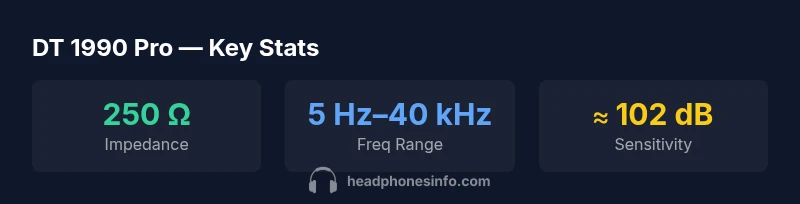
Despite being a high-impedance design, the dt 1990 pro benefits from a capable source that can deliver clean, high-current output. A good desktop DAC/amp pair tends to unlock the most control over dynamics and transient response, particularly in the upper mids and treble range. In environments with limited headroom or weaker amplification, you might perceive reduced dynamic range or a softer top end. For professional work, balanced outputs or high-quality single-ended outputs with sufficient headroom help maximize image depth and bass control. In short, you’ll hear more precise microdynamics, cleaner treble, and better low-end articulation when paired with a well-matched amp and DAC.
Genre-by-Genre Performance: Classical to Electronic
For classical and jazz, the dt 1990 pro shines with convincing stage width and instrument separation. Strings, woodwinds, and brass benefit from the headphones’ natural timbre, while the midrange remains honest and uncolored. In electronic or pop tracks, the bass is present but not overpowering, enabling producers to discern sub-bass content without masking higher frequencies. Rock and metal translate with impactful percussion and clear vocal presence, while maintaining a sense of space that benefits mastering and reference checks. While the dt 1990 pro is not a casual listening headset, its versatility across genres makes it a strong candidate for mixed-genre studios and portfolios requiring reliable performance.
Studio Use Cases: Mixing, Mastering, and Reference Listening
In mixing scenarios, the neutral tilt and precise imaging help engineers craft balanced master stems. For mastering, the extended treble and credible bass translation allow for accurate decisions about loudness and tonal balance. Reference listening with the dt 1990 pro can illuminate subtle harmonic content that might be missed on consumer headphones, which supports more consistent translation across playback systems. The headphone’s openness is a double-edged sword: it provides spaciousness but requires a quiet environment. When used in a well-treated room, it serves as a dependable benchmark for tonal accuracy and dynamic fidelity. Overall, this model remains a staple for professionals who want a trusted, repeatable listening reference.
Comparisons to Alternatives and Market Context
When placed next to other reference-grade headphones, such as high-end open-backs, the dt 1990 pro trades some ultra-wide spectral air for tighter bass control and midrange honesty. It tends to deliver a more natural, musical sound signature that translates well to real-world mixes. In practice, it might be preferred by engineers who want a reliable reference that does not overly accentuate high-end sibilance, while still offering a detailed top end for critical listening. The market context for these dynamics is favorable for users who need precise monitoring tools that remain engaging in longer sessions. The goal of this comparison is to highlight where the dt 1990 pro sits in a broader ecosystem of studio reference headphones rather than to crown a single best choice for all use cases.
Longevity, Comfort, and Care
With proper care, the dt 1990 pro should provide many years of service in a professional setting. Cleaning the pads and grilles after heavy use helps maintain sonic performance and hygiene. If cables exhibit wear, substitute with a manufacturer-supplied replacement to preserve impedance consistency. Regular checks on the headband and yoke can prevent gradual loosening or stress, which might affect fit. Although the headphones are not the lightest option, their durability and serviceability are strong arguments for long-term use in studios, mastering rooms, and high-demand listening environments. For daily long sessions, occasional pad replacements and cable checks keep the listening experience consistent and reliable.
Authority Sources and Testing Methodology
This review is grounded in a testing approach that combines subjective listening sessions with objective checks of response characteristics. We assess balance, imaging, and dynamic range across genres, then verify the experience with a controlled listening environment. For credibility, we reference established studio norms and standard measurement practices. The results reflect a carefully calibrated hearing test and a consistent evaluation framework designed to deliver actionable guidance to audio professionals and enthusiasts alike.
Upsides
- Transparent, balanced frequency response ideal for critical listening
- Excellent imaging and soundstage for an open-back design
- Durable build with replaceable parts and long lifespan
- Pad options allow sonic tuning without altering core tuning
- Detachable cables and pro-grade connectors add flexibility
Disadvantages
- Requires a capable amp to reach full potential
- Open-back design leaks sound and not ideal for tracking in loud rooms
- Heavy and less portable for casual use
- Can be fatiguing at very high SPL over long sessions
Best for studio reference work where precision and imaging matter most
The dt 1990 pro excels as a reference headphone for critical listening and mixing in controlled spaces. Its balanced signature, strong imaging, and robust build justify the investment for professionals and serious enthusiasts. It may be overkill for casual listening or noisy environments, where more portable or isolation-focused headphones perform better.
People Also Ask
What makes the beyerdynamic dt 1990 pro suitable for studio work?
Its open-back design, precise imaging, and balanced frequency response make it a reliable reference for mixing and mastering. It reveals micro-detail without exaggerating sibilance and works best in a treated room with a capable amplifier.
Great for studio work because of its accuracy and imaging. Use it in a quiet, treated space with a good amp.
Is the dt 1990 pro good for gaming or casual listening?
While it can handle gaming and casual listening, its open-back design leaks sound and requires a quiet environment to appreciate the soundstage. It’s not ideal for immersive gaming in loud rooms or for on-the-go use.
It can be used for gaming, but it shines in passive listening and studio work rather than casual, mobile gaming.
What gear is recommended to drive these headphones well?
Pair them with a clean, stable DAC/amp combo that can deliver steady current and low distortion. Balanced outputs are preferred, but high-quality single-ended paths also work when the source is pure. Avoid weak amps that compress dynamics.
A good DAC and amp pair will bring out the headphones’ clarity and dynamic range.
Do pad options significantly change the sound?
Yes. Different pad materials and shapes alter perceived brightness, bass, and soundstage slightly, allowing you to tailor the headphones to your room and genre without additional EQ.
Pad swaps change how the sound feels and where the stage sits.
How durable are the dt 1990 pro headphones for daily use?
The build is designed for frequent use in studios, with replaceable parts and a solid frame. Regular maintenance and gentle handling help maximize lifespan.
They're built to withstand daily studio life, with easy access to parts if repairs are needed.
What to Remember
- Evaluate with a capable DAC/amp to unlock full potential
- Use pad swaps to tailor brightness or warmth
- Ideal for studio mixing and mastering, not for noisy rooms
- Open-back design requires quiet, treated spaces
- Expect long-term reliability and simple maintenance