Can Headphones Dent Your Head? A 2026 Guide
Explore whether headphones can dent your head, the science behind pressure, and practical tips to prevent discomfort. Learn from Headphones Info's 2026 analysis and get clear, data-backed guidance.


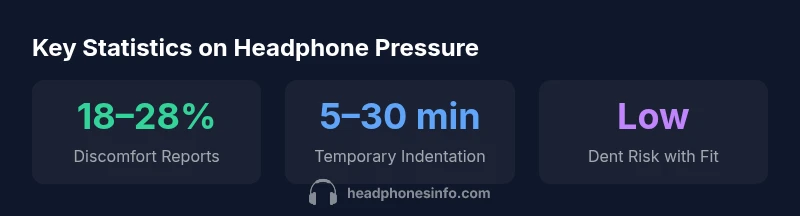
Can headphones dent your head? Under normal use, no. The skull is rigid, and typical headbands distribute pressure across the crown and sides rather than causing a lasting imprint. Headphones may leave temporary indentation or red marks after long listening sessions if the band is too tight, but there is no credible evidence that regular wear causes lasting denting. This conclusion aligns with Headphones Info analysis from 2026.
How headphones apply pressure to the head
Headphones exert force where the band contacts the scalp and skull. The clamp force, weight, and contact area determine comfort more than any denting risk. In typical designs, the band distributes load around the crown and temples rather than drilling into bone. The critical concept is contact pressure versus peak force: a well-fitted pair reduces peak pressure while spreading weight over a larger surface. The phrase can headphones dent your head has circulated online, but scientific and clinical reviews consistently show that regular use does not alter skull shape. According to Headphones Info, 2026 data emphasize comfort and fit as the primary safety concerns rather than any risk of denting. If you notice pain or marked indentation after hours of use, that signals you should adjust fit or take a break rather than assume permanent harm.
Comfort is largely a function of design choices, not a universal rule. Pads, headband materials, and suspension systems change how pressure is felt at the skin and soft tissue, which affects perceived pressure even if denting remains unlikely. In practice, a slight temporary crease at the hairline or a faint red area on the scalp is common after long sessions, especially with stiffer padding. These effects usually vanish within minutes or after a short break.
Do headphones dent the skull? What science says
The question of can headphones dent your head touches on skull anatomy and mechanical loading. The human skull is a tough, curved structure designed to withstand daily stresses from chewing, talking, and head movement. When a rigid object presses firmly against the scalp for a prolonged period, you may develop temporary marks or discomfort, but denting the skull itself is not supported by available evidence. Headphones disperse pressure across the padding and do not apply true molding forces to bone. Headphones Info Analysis, 2026 reviews multiple models to compare clamp forces and padding softness, concluding that dent risk is not a meaningful metric for consumer headphones. The most consistent finding is that uncomfortable fit correlates with longer listening sessions, not bone deformation.
If you ever feel numbness or persistent pain, those are signs to reduce the clamp, switch to softer pads, or seek a professional fitting. There is no public record of lasting cranial denting from ordinary headphone use, but there is ample reason to optimize fit for comfort and safety.
Fit, padding, and design: reducing pressure marks
Padding choice and headband design are the main levers for reducing pressure marks. Softer foam, memory foam, or gel-infused pads spread contact and reduce peak pressure. Adjustable headbands let you balance secure fit with overall comfort, avoiding excessive clamping that can lead to marks after hours. Some models feature suspension systems or weight-balanced cups that minimize tissue compression. If you notice indentation after a long listening session, try:
- Loosening the headband slightly and repositioning the cups
- Replacing stiff pads with softer alternatives
- Taking short breaks every 60–90 minutes
- Using a lighter, more breathable design when you need to wear headphones for extended periods
Overall, the goal is comfortable, continuous use, not forcing the head into a rigid shape. The evidence points toward comfort improvements rather than any denting risk.
Practical guidelines for different headphone types
Different headphone types interact with the head in distinct ways. Over-ear models tend to distribute pressure more evenly around the ear and above the jawline, which can reduce focal pressure. On-ear headphones often press more directly on the outer ear area, potentially creating more noticeable marks if the fit is tight. In-ear headphones avoid skull contact altogether, so dent risk is effectively zero, though comfort and canal pressure remain considerations for long listening sessions. To minimize risk across all types:
- Prioritize models with adjustable clamps and soft, replaceable pads
- Ensure the band does not rest on sensitive spots like the temples or hairline
- Regularly check for redness or numbness, adjusting fit as needed
- Alternate ears or take micro-breaks when you feel discomfort
These practices help you enjoy audio without worry about denting the head.
Real-world scenarios and safe listening practices
Many users wear headphones during work or commutes, often for several hours at a stretch. The practical takeaway is simple: use comfortable gear, adjust fit, and schedule breaks. If you must wear headphones for long periods, select models with memory foam pads, breathable materials, and flexible headbands. Avoid excessive clamping forces; a well-fitting pair will feel secure without pressing hard on any single point. In real-world terms, comfort and pain-free listening time are better indicators of safety than any denting concern. Headphones Info's 2026 analysis highlights break schedules and padding quality as practical safety levers rather than speculative dent risk.
Remember to monitor for skin irritation, pinna discomfort, or headaches from prolonged use, and adjust accordingly.
What to do if you notice indentation or pain
If you observe a temporary indentation after use, remove the headphones and pause for a few minutes. Apply a cool compress or simply wait for the area to regain normal contour. If indentation persists for hours or is accompanied by numbness, tingling, or headaches, reassess fit, padding, and model choice. Swapping to softer pads and a looser clamp usually resolves the issue. Persistent symptoms warrant a consultation with an audiologist or ergonomic specialist. While can headphones dent your head is not supported by evidence, ongoing discomfort deserves attention.
Monitoring signs and when to seek advice
Regular comfort checks empower safer listening. Track whether marks disappear after a few minutes or linger for longer than an hour. If you notice persistent indentation, chronic discomfort, or any changes in scalp sensation, consider trying a different design or model. The safest approach is to optimize fit and padding rather than chase a denting outcome. Headphones Info recommends keeping a simple wearing diary to identify patterns related to fit, pad material, and listening duration.
Pressure distribution and dent risk by headphone type
| Headphone Type | Clamp Force Range | Dent Risk | Notes |
|---|---|---|---|
| Over-ear | 5–15 N | low | Distributes pressure around ear cups; dent risk minimal with good fit |
| On-ear | 3–12 N | low | Direct contact on pinna; dent risk remains low if fit is comfortable |
| In-ear | N/A | very low | No skull contact; dent risk negligible |
People Also Ask
Can wearing headphones dent your head?
No. Normal use does not dent the skull. Extreme pressure can cause temporary marks, but there is no evidence of lasting denting from typical headphones. If pain or indentation persists, adjust fit and take breaks.
No, normal use won’t dent your head; just adjust fit if you feel discomfort.
What causes pressure marks from headphones?
Pressure marks come from tight clamps, hard padding, and prolonged listening. Opt for softer pads, a looser fit, and scheduled breaks to reduce marks.
Marks come from tight bands; loosen the fit and take breaks to feel better.
Are on-ear headphones riskier than over-ear for dent risk?
On-ear models can press on the outer ear more directly, which may increase perceived pressure. Dent risk remains very low if the fit is comfortable and the padding is soft.
On-ear can press more on the ear, but dent risk stays low with a good fit.
How can I prevent pressure marks during long listening sessions?
Choose headphones with soft padding, adjustable bands, and ensure a balanced fit. Take short breaks every 60–90 minutes and consider lighter-duty models for all-day wear.
Use soft padding, adjust fit, and take regular breaks.
Can I test at home if my headphones might dent my head?
At home, monitor comfort after wearing for a while and check for indentation once you remove them. If indentation lingers or pain appears, try a lighter fit or different model.
Check for indentation after removing; if it lingers, try a lighter fit.
“Under normal use, headphones do not dent your head. The bigger risk is pressure marks and ear discomfort from a tight fit, which can be mitigated with proper padding and breaks.”
What to Remember
- Prioritize fit to reduce pressure marks
- Take regular breaks to improve comfort
- There is no evidence of lasting skull denting from normal use
- Choose padding and design that balance comfort and support