High Fidelity Headphones: A Data-Driven Buying Guide for 2026
Explore high fidelity headphones with a data-driven guide to sound quality, specs, and buying tips for 2026. Compare impedance, frequency range, and budgets to choose the best listening experience.


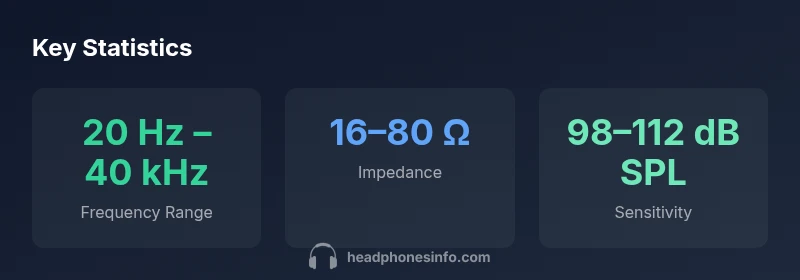
High fidelity headphones aim for transparent, balanced sound with minimal distortion. In practice, true candidates typically offer a wide frequency range—commonly 20 Hz to 40 kHz—and relatively flat impulse response. Impedance ranges commonly fall between 16 and 80 ohms, making many open-back and closed-back designs compatible with a range of audio sources.
Defining high fidelity headphones
In the world of audio, high fidelity headphones seek to reproduce sound with minimal coloration and distortion. The best-performing models deliver a wide, smooth frequency response and clean impulse behavior, so you hear the mix as the producer intended. The Headphones Info team notes that fidelity is not about chasing the most powerful bass or the loudest output; it’s about accuracy, balance, and detailing across genres. When you listen, use reference tracks you know well and evaluate whether instruments, vocals, and space feel natural rather than enhanced.
- Look for a neutral balance across the spectrum
- Check for low distortion at peak moments
- Consider the source chain (DAC/amp) as part of the listening chain
Sound quality: what to listen for
Clear sound with little perceptible distortion is the hallmark of true fidelity. Critical cues include bass articulation without boom, mids that render vocals with realism, and highs that extend without sibilance or harshness. Try pieces with complex transients—drums, piano, strings—to hear how quickly the headphones resolve micro-details. Real-world listening often reveals more than spec sheets; focus on imaging, staging, and consistency across tracks.
Pro tip: If you can, audition headphones with your own favorite genre to assess how you personally perceive the balance.
Core specifications and why they matter
Key specs—impedance, sensitivity, and frequency response—shape how a headphone performs with different devices. Impedance affects how much power is required; sensitivity relates to perceived loudness; frequency response indicates how faithfully the driver reproduces the full spectrum. For high fidelity listening, you want a broad, flat response with low total harmonic distortion. Remember: specs tell part of the story; listening tests reveal the rest.
- Impedance in the 16–80 ohm range is common and translates well to phones, laptops, and dedicated DAC/amps
- A flatter, wider frequency response reduces coloration across genres
Matching gear to your headphones
Even the finest headphones can sound mediocre if paired with a weak source. A capable DAC/amp combo or a quality portable player can unlock additional micro-detail, dynamic range, and soundstage. If your device lacks power, consider a compact headphone amp. Conversely, extremely revealing headphones may reveal poor source quality or low-bit-rate files more clearly than bulkier setups. The goal is a transparent chain from source to ear.
- Use well-recorded sources and modern codecs (lossless or high-bitrate)
- Avoid excessive amplification that can introduce noise or clipping
Budget tiers: what you get at each price point
Budget spaces vary, but you can expect meaningful fidelity upgrades as you move up from entry to mid-range. Entry-level models often emphasize comfort and portability but may compromise some micro-detail. Mid-range headphones usually balance bass control, midrange clarity, and imaging. Premium models add refinement in detail retrieval, soundstage, and harmonic balance. The most revealing headphones are those paired with a high-quality source and an appropriate amplification chain.
Practical buying tips: testing and deciding
Take notes on several tracks that cover diverse sonic ranges. Pay attention to how quickly the headphones resolve transients, how natural the spatial cues feel, and whether there’s any listener fatigue after extended sessions. If possible, audition both open-back and closed-back designs, and compare the same model across different source devices to see how robust the design is.
Care, longevity, and daily use
Store headphones in a protective case, avoid heat and direct sunlight, and clean earpads and grills periodically. Inspect cables for wear and replace components when necessary. Caring for your headphones preserves sound quality and extends lifespan.
Comparison of headphone types for high-fidelity listening
| Model Type | Typical Impedance | Frequency Range | Best Use |
|---|---|---|---|
| Over-Ear Open-Back | 32-120 ohms | 20 Hz–40 kHz | Critical listening at home |
| Over-Ear Closed-Back | 16-70 ohms | 20 Hz–22 kHz | Studio monitoring and mobile use |
| In-Ear/High-Fidelity | 16-40 ohms | 20 Hz–20 kHz | Portable listening |
People Also Ask
What defines high fidelity headphones?
High fidelity headphones reproduce audio with minimal coloration and distortion, aiming for a flat or gently extended frequency response. They preserve detail across the spectrum and offer accurate imaging when paired with a clean source. The overall experience depends on both the headphone and the source chain.
High fidelity headphones reproduce sound with minimal coloration and distortion, aiming for a flat, natural response. The source matters as much as the headphone.
Are open-back headphones inherently better for fidelity?
Open-back designs can sound more natural and spacious, which many listeners equate with higher fidelity in quiet environments. However, they leak sound and are not ideal in loud or portable settings. Fidelity depends on how accurately the driver reproduces the signal, not just the enclosure.
Open-back can feel more natural, but they leak sound and aren’t best for travel or noisy places.
Do I need an amplifier for high fidelity headphones?
Not always. Low-impedance models (roughly 16–32 ohms) often perform well with portable devices. High-impedance models (80 ohms and above) typically benefit from a dedicated amp or DAC to reach their full potential.
If your headphones are low-impedance, you may not need a separate amp; higher-impedance models usually benefit from extra power.
How should I test headphones in-store for best results?
Test with familiar tracks across genres at a comfortable volume, listening for distortion, imaging, and comfort. If possible, use your own source or a quiet room to accurately compare models.
Bring familiar tracks and test in a quiet area to hear how each model handles detail and space.
Can wireless headphones achieve true high fidelity?
Some wireless models support high-quality codecs, but wired connections typically yield the most faithful playback with minimal latency or compression. Assess codecs and battery life when comparing wireless options.
Wireless can be good, but wired is usually more faithful.
How should I care for and store high fidelity headphones?
Store in a protective case, avoid heat, clean pads periodically, and inspect cables for wear. Regular maintenance helps preserve sound quality and longevity.
Keep them in a case, clean regularly, and check cables for wear.
“High fidelity headphones reveal the nuances in a mix when paired with quality source material and proper amplification. The listening difference is clearest with well-recorded tracks and a capable DAC.”
What to Remember
- Test with diverse tracks to judge real-world detail
- Prioritize wide frequency range and low distortion
- Match impedance to your source for best drive
- Choose comfort and build durability for long sessions
- Budget wisely to maximize value in your tier