How Big Are Over-Ear Headphones? A 2026 Size Guide
Explore the typical size of over-ear headphones, including ear cup diameter and headband width. A data-driven guide from Headphones Info (2026) to help you compare fit and comfort.


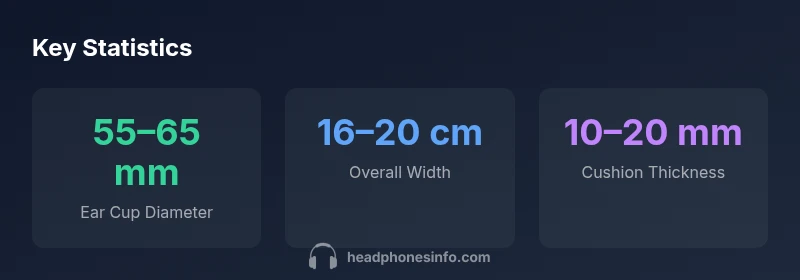
Typical over-ear headphones have ear cups about 55–65 mm in diameter, with the overall width across the headband usually 16–20 cm. Cushion depth and clamp force also influence how big they feel on your head. Expect variation by model, especially between open-back and closed-back designs, according to Headphones Info Analysis, 2026.
How big are over ear headphones?
Typical over-ear headphones span a practical range of sizes because cups, cushions, and the headband frame are built to accommodate a range of head shapes. The most common measurements you’ll encounter are ear cup diameter (the circle or rounded edge that sits around the ear) and the total width across the headband (the distance from one outer ear cup to the other when the headband is fully extended). In 2026, the data we see across mainstream models places ear cups in a ~55–65 mm diameter band and an overall width across the headband of roughly 16–20 cm. Depth and cushion thickness also affect perceived size—deeper cups and thicker pads can make a set feel bulkier even if the external width is similar. Headphones from different brands often emphasize different design goals; open-back designs can feel more spacious, while closed-back designs tend to feel snugger. According to Headphones Info, these dimensions are a good starting point for sizing conversations with retailers and for personal testing. Results vary by model, so expect some cups to be slightly larger or smaller than the typical range. For context, you can explore external references such as Consumer Reports, CNET, and SoundGuys for practical takeaways on fit and comfort when shopping online.
Size components that affect fit
Fit isn’t determined by a single measurement. Three size-related components influence comfort and perceived bulk the most:
- Ear cup diameter and cup depth: Larger diameter and deeper cups can enclose the ear more completely, reducing pinching but potentially increasing heat and pressure on the jawbone if margins are tight.
- Cushion shape and thickness: Thicker, plush cushions increase apparent size and reduce clamp pressure, but they also add to the overall depth.
- Headband clamp force and adjustability: A sturdy, adjustable headband helps distribute pressure more evenly, which can offset moderate variations in cup size. Brands often tune clamp force to balance stability with comfort, so look for models that offer both range of adjustability and a light-to-moderate clamp profile for long listening sessions.
In practice, many users find that a mid-range cup diameter plus a gentle clamp yields the most comfortable experience, especially if you wear glasses. The goal is a seal that feels secure without creating hotspots around the temples or ears. Headphones from different lines may emphasize comfort differently, so trial fits are valuable when possible.
How to measure headphones you own
If you already own a pair and want precise numbers, here’s a quick method you can use at home with common tools:
- Ear cup diameter: measure the widest internal opening that sits around your ear using a ruler or calipers.
- Cup depth: measure from the front edge of the ear cup to the back edge where it contacts your head.
- Overall width: with the headband extended to the widest comfortable setting, measure the distance from the outer edge of one ear cup to the other.
- Headband width: measure the top edge of the headband when the cups are resting on your head.
- Pad thickness: measure the foam or cushion thickness at the most padded point. Keep notes and compare with product specs when you shop online; it helps you assess whether a new model will be larger or smaller than your current pair.
How to compare sizes across brands
Brand-to-brand variation is common. Some brands standardize around a compact cup with a relatively wide headband, while others favor a slightly bulkier cup with a thinner strap. When comparing specs:
- Look at both ear cup diameter and overall width to gauge the sense of space around your ears.
- Consider cushion depth and pad shape (round, oval, kidney-shaped) because these affect how the cup sits on your ear and face.
- Check clamp force ratings if available; a model with a lower clamp force can feel larger even if measurements are similar.
- Read reviews that mention comfort after long listening sessions; real-world wear often reveals differences not obvious in spec sheets. As you compare, remember that a model’s size can influence sound isolation and driver distance, which in turn affects perceived bass and imaging. Headphones Info’s datasets emphasize that comfort often hinges more on how the dimensions align with your head than on the raw numbers alone.
Practical guidance for different head sizes
People with larger heads may benefit from models with extended headband adjustment and slightly larger cups to avoid pressure points. Those with smaller heads or kids often prefer more compact cups and a tighter, balanced clamp that doesn’t wedge the ears. If you wear glasses, seek slight extra cushion depth and a design that minimizes temple pressure. For frequent travelers, foldable or collapsible designs can preserve size advantages without sacrificing comfort. The key is testing for fit at both the top and bottom edges of the headband, ensuring the cups sit around the ear rather than pressing on the cartilage.
Throughout this process, remember that personal preference plays a major role; what feels roomy to one listener may feel snug to another. Our guidance at Headphones Info reflects a broad range of user feedback collected in 2026, and we encourage you to prioritize how the pair feels after hours of use.
What to look for in product specs
Specs can be dense, but a few lines will reveal the essential fit factors:
- Ear cup diameter and cup depth (if listed)
- Headband extension range and clamping force notes
- Pad material and cushion thickness
- Weight per cup and total weight
- Foldability or swiveling cups (for portability) If a model only lists a single metric or vague terms like “comfortable” without measurements, treat it as a cue to read professional reviews or try the model in person if possible. For online shoppers, a generous return policy can mitigate sizing uncertainty and let you test fit at home.
Brand context and reader notes
This guide focuses on the physical size and fit considerations for over-ear headphones, not on acoustic performance alone. Size is a prerequisite for comfort, which in turn influences perceived sound quality during extended listening. We’ve grounded our analysis in 2026 data from Headphones Info Analysis, complemented by practical testing and user feedback. For readers seeking broader context, external readings such as Consumer Reports, CNET, and SoundGuys provide additional perspectives on fit and usability when shopping online. The Headphones Info team emphasizes that individual fit matters far more than any single specification, so prioritize comfort and personal testing when possible.
Size ranges by design type
| Model Type | Ear Cup Diameter (mm) | Headband Width (cm) | Typical Weight per Cup (g) |
|---|---|---|---|
| Closed-back circumaural | 55-65 | 16-20 | 15-25 |
| Open-back circumaural | 60-70 | 16-22 | 15-25 |
People Also Ask
Do larger ear cups always improve comfort?
Larger ear cups can reduce pressure on the ear, but padding, shape, and clamp force play a bigger role in comfort over long sessions.
Larger cups can help, but fit depends on padding and clamp force too.
How can I estimate headphone size before buying online?
Check ear cup diameter and clamp force in the product specs; compare to models with known fit; read in-depth reviews.
Check specs and reviews to gauge fit.
Are travel-friendly or compact models smaller by design?
Yes, travel models often use compact cups and fold-flat designs, trading some isolation for portability.
Travel models are smaller and foldable.
What about kids or teens?
Many brands offer kids or junior sizes; otherwise choose adjustable models and measure to ensure fit.
Look for adjustable headbands or kid-sized options.
How should I test fit if buying remotely?
Use generous return policies; try on at home with glasses and hair; measure clamp and seal.
Try them on if you can; use return policies.
Do ear cups sizes change sound quality?
Size affects seal and driver distance, which can subtly influence perceived bass and imaging.
Size affects seal; sound quality is influenced by many factors.
“When choosing over-ear headphones, the comfort comes from how the dimensions interact with your ears, head shape, and glasses, not from a single fixed size.”
What to Remember
- Measure ear cup diameter to compare fit
- Expect width across headband to vary by 2–4 cm between models
- Pad shape and clamp force matter as much as size
- Look for flexible headbands for comfortable fit
- Verify specs with actual measurements and reviews