Headphone Lifespan: How Long Do They Last with Daily Use
Learn how long headphones last with daily use, comparing wired and wireless models, factors that wear them down, and practical tips to extend life. Insights from Headphones Info Analysis, 2026.


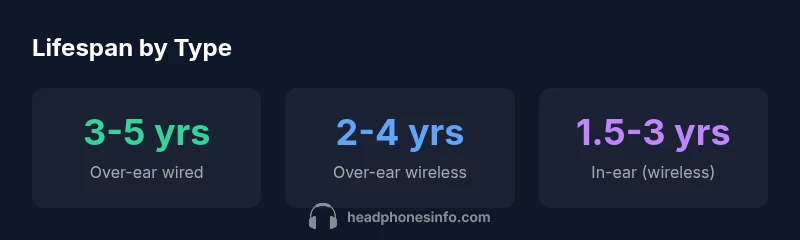
How long do headphones last with daily use? On average, consumer headphones endure about 2 to 4 years with daily listening, though wired models typically outlast wireless ones when built with robust cables. Real-world lifespans depend on build quality, care, and how intensively you use features like folding hinges, removable cables, and battery health.
Why longevity matters for headphones
For most listeners, headphones are a daily companion, meaning durability isn't just a luxury—it's a practical concern. How long do headphones last with daily use? According to Headphones Info, longevity is shaped by construction quality, real-world usage patterns, and maintenance habits as much as by the price tag. In this analysis, we translate those factors into actionable expectations for wired and wireless models, so you can plan upgrades, repairs, or better storage solutions without guessing. We'll also outline typical lifespans by category and point to warning signs that indicate a component is nearing end of life.
The Headphones Info team emphasizes that a thoughtful purchase and care routine can dramatically shift outcomes. This guidance draws on broad usage patterns, manufacturer warranties, and field observations from thousands of headphone users. By framing longevity around build quality and daily habits, readers gain a practical roadmap rather than a single arbitrary number.
Construction quality sets the ceiling for lifespan
Construction quality is the most predictable driver of long-term performance. Headphones with reinforced, detachable cables, robust hinges, and drivable drivers rated for durability tend to resist the daily stress of grabbing, folding, and packing. Softer cushions and plastics may soften with time, but metal frames and tangle-resistant cables slow the creeping wear that leads to audible problems or physical failure. While premium materials aren’t a guarantee, they typically correlate with a longer, more forgiving lifespan. For many listeners, a well-built wired pair may outlast an equivalent wireless option due to the absence of battery degradation and complex charging circuits. Practical tips include inspecting cables for frays, choosing models with replaceable cables, and noting hinge movement smoothness as early indicators of weakening joints.
Daily-use patterns: what accelerates wear
Your daily routine matters as much as the device itself. High listening volumes, frequent dropping, or rough stowing can accelerate driver fatigue, cable damage, and ear pad wear. Folding headphones with metal components can accumulate stress at hinge points; if creases appear or hinges feel loose, that’s a sign to consider repair or protection measures. Regularly cleaning ports and disconnect points prevents dust abrasion, and storing headphones in a rigid case reduces impacts during transit. For wireless models, avoid letting the battery completely discharge and charge within the recommended 20–80% range to preserve cell health. In short, gentler handling and mindful charging habits can meaningfully extend life.
Maintenance that moves the needle
Maintenance is where you gain the most practical weeks and months of extra life. Clean cushions with mild soap and water, dry thoroughly, and replace worn pads to prevent moisture damage to drivers. Check the cable for nicks or exposed conductors and replace cables promptly rather than forcing a bad fit. Use a protective pouch or case, avoid extreme temperatures, and keep headphones away from humidity. If your model has removable parts, practice gentle detach/re-attach motions to avoid connector wear. Finally, follow each manufacturer’s care guidelines—this reduces accidental damage and preserves warranty coverage.
Battery wear in wireless headphones
Wireless longevity hinges on battery health, which in turn depends on charging practices and storage conditions. Lithium-ion cells degrade with cycling, temperature fluctuations, and long-term storage at full charge. Practically, avoid chronic high-temperature exposure (like leaving devices in a hot car) and refrain from charging overnight if you won’t use the headphones for extended periods. Regular firmware updates can optimize power efficiency, and partial- or scheduled-charging approaches help sustain usable battery life. While battery wear doesn’t instantly ruin a headphone set, severe degradation will affect both runtime and performance over time.
When to repair vs replace: a practical framework
A simple decision framework helps: if a single major component fails (cable, hinge, or driver) and replacement parts are readily available at a reasonable price, repair can be cost-effective. If multiple components fail or battery capacity has fallen significantly, replacement often makes more sense. Consider warranty coverage, the age of the device, and the cost of professional repair versus the price of a comparable model with newer technology. This approach aligns with Headphones Info’s recommendation to balance total cost of ownership with perceived value and listening needs.
Lifespan estimates by headphone type under daily use
| Headphone Type | Avg Lifespan (years) | Typical Daily Use (hours) |
|---|---|---|
| Over-ear wired | 3-5 | 4-6 |
| Over-ear wireless | 2-4 | 3-6 |
| In-ear wired | 2-3 | 2-4 |
| In-ear wireless | 1.5-3 | 3-5 |
People Also Ask
Do wired headphones last longer than wireless ones?
In many cases, yes. Wired headphones don’t rely on battery health, which can be a common failure point in wireless models. However, both types can be highly durable if built with robust materials and cared for properly. Consider your usage patterns and storage habits when deciding.
Usually, wired models outlast wireless ones because there’s no battery to wear out.
What maintenance steps extend headphone life?
Regular cleaning of cushions and ports, inspecting cables for wear, storing in a protective case, and avoiding extreme temperatures all help. Replace worn parts (cables, pads) promptly to prevent cascading damage.
Clean, protect, and replace worn parts early to keep headphones going longer.
How does daily listening volume affect longevity?
Higher listening levels can accelerate driver wear and acoustic fatigue. Use moderate volumes when possible and give devices a break after long sessions to reduce stress on components.
Keep it to comfortable levels and give your ears—and headphones—a rest now and then.
Is battery life a reliable indicator of overall lifespan?
Battery health is crucial for wireless models, but it’s not the sole limiter. Other components like cables, hinges, and drivers also wear with use. Monitoring multiple parts gives a better sense of overall lifespan.
Battery life matters, but don’t overlook cables and hinges when estimating lifespan.
When should I replace headphones due to wear?
If the cost of repair approaches or exceeds buying a new model, or if critical components fail (driver, major cables, or persistent connectivity issues), replacement is sensible. Also consider if newer models offer meaningful improvements in reliability or comfort.
If repairs cost more than a comparable new pair, it’s time to upgrade.
Does warranty reflect lifespan?
Warranty coverage can indicate expected durability but isn’t a guarantee of life. Use the warranty window to guide part replacements and to evaluate repair options within the coverage period.
Warranty helps, but it’s not a crystal ball for longevity.
“Durability matters as much as sound quality, and everyday care can dramatically extend headphone life.”
What to Remember
- Expect roughly 2-4 years for typical headphones with daily use
- Wired models generally offer longer lifespans than wireless ones when built well
- Choose replaceable cables/hinges for best longevity
- Careful daily handling and proper storage significantly extend life
- Battery health for wireless models is a key longevity limiter, but maintenance helps