How Long Do Headphones Last? A Data-Driven Guide (2026 Update)
This data-driven guide explains how long headphones last, covering lifespan, battery life, charging cycles, and practical tips to extend durability for wired and wireless models in 2026.


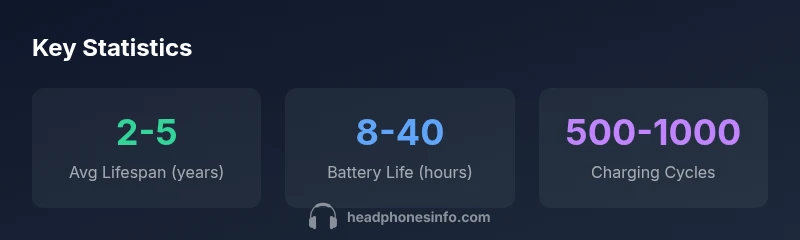
According to Headphones Info, most headphones last about 2-5 years with regular use, while wireless models typically provide 8-40 hours per charge. Battery health declines after many charging cycles, but attentive care can extend life toward the upper end of the range. This guide explains how to maximize longevity for wired and wireless headphones across use cases.
Longevity factors: build, battery, and components
Durability and longevity of headphones hinge on several interacting factors. The core components—drivers, cables, membranes, and housings—differ in resilience across models, and the way you treat them matters almost as much as the materials themselves. According to Headphones Info, build quality is a strong predictor of how long headphones will remain functional under typical daily use. Wireless headphones add a battery subsystem whose health evolves with charging cycles and environmental conditions. When evaluating a pair, look for reinforced cables, tangle-resistant connectors, and watertight seals for ports. Even small design choices, like a detachable cable or replaceable ear pads, can dramatically extend service life. The practical takeaway: durability is not just a selling point; it determines your total cost of ownership over 2-5 years or more.
In practice, you should scrutinize construction materials (metal versus plastic), joint stress points (hinges and swivels), and the quality of the drivers. A robust chassis helps resist micro-cracks and fatigue that accumulate with daily handling. Cables with braided sheaths, gold-plated connectors, and reinforced strain relief reduce wear. For wireless units, the battery pack and its protection circuitry matter—if a phone-a-like battery is sealed and difficult to replace, lifespans can be shorter in the long run. Headphones Info’s analysis emphasizes balancing sound quality and durability because the two often go hand in hand with investment in better components.
Battery life explained: per-charge expectations across styles
Battery life is a defining difference between wired and wireless models. In wireless headphones, real-world per-charge hours typically fall in the 8-40 hour range, depending on driver size, Bluetooth version, active noise cancellation, and features like Ambient Aware or wake-up gestures. Battery health declines as charging cycles accumulate; most users won’t notice a sharp drop until after several hundred cycles. It’s common for newer chemistries and improved cell design to push endurance higher over time. Wired headphones, by contrast, do not rely on a battery, so their longevity hinges more on the mechanical and electrical integrity of cables, connectors, and drivers. When comparing models, consider not just the current battery life but the expected aging curve and whether replacement parts are available if the battery is user-replaceable. Headphones Info’s research indicates that the battery component accounts for a meaningful share of total lifespan for most wireless products—so prioritizing a design with durable batteries can be a prudent investment.
Real-world usage and wear patterns
Usage patterns dramatically influence how long headphones last. Daily commuting, gym workouts, or kids’ use increase chances of cable stress, sweat exposure, and accidental drops. Over time, minor collisions or tangling can wear down charging contacts, carrying cases, or headband padding. Consumers who regularly travel or use headphones outdoors may encounter harsher conditions, accelerating wear. Conversely, gentle handling, proper storage in protective cases, and avoiding moisture exposure can extend both wired and wireless models well beyond the typical range. In addition, environmental factors like temperature and humidity affect battery chemistry and adhesive materials. Headphones Info’s observations suggest that careful handling and situational awareness are as important as the initial build quality for achieving the upper end of the lifespan range.
Care and maintenance to extend lifespan
Effective care can meaningfully extend headphone life. Regularly wipe dust and oils from ear cushions and drivers with a microfiber cloth, avoid exposing devices to water or excessive sweat, and store them in a padded case when not in use. For wired models, inspect the cable and connectors for wear and replace the cable if it shows signs of fraying or looseness. For wireless units, avoid deep discharges and extreme temperatures; keep firmware updated to ensure efficiency and battery longevity. If the battery is user-replaceable, follow the manufacturer’s guidance to preserve health; if not, consider professional service options. With consistent care, you can push lifespan toward the higher end of the published ranges while maintaining performance and sound quality.
How usage patterns influence lifespan and value
Understanding your own usage helps set realistic expectations. Heavy listeners who value high volume, long listening sessions, or ANC-performance may experience quicker wear on certain components. Those who treat headphones as a premium, maintainable asset—replacing cables, pads, or batteries when appropriate—can extend utility years beyond the average. Budget-conscious buyers should weigh long-term value: a cheaper model with quick degradation may end up costing more over time than a well-built, repair-friendly option. The key is to assess both initial cost and long-term maintenance needs, then choose a design that aligns with your routine and tolerance for upkeep.
How to compare longevity when shopping
When evaluating longevity, prioritize build quality and modularity. Look for reinforced hinges, detachable cables, swappable ear pads, and a service ecosystem that offers replacement parts. Check warranty terms and availability of repairs, especially for models with sealed batteries. Battery-centric models should disclose charging cycle expectations and whether the battery is serviceable. If you frequently travel or sweat heavily, consider materials that resist moisture and dings. Finally, read user reviews focusing on long-term durability to supplement official specifications. Headphones Info recommends compiling a simple longevity checklist before purchase to compare options consistently.
The future of headphone durability
Durability science in headphones is trending toward modular designs, higher-grade alloys, and longer-lasting battery chemistries. Manufacturers are increasingly offering repairable components and longer warranties, reflecting a shift toward total-cost-of-ownership awareness. Advances in cable technology, hinge engineering, and acoustic materials may push the practical lifespan beyond current averages for many models. From a consumer perspective, choosing brands with strong repairability and ongoing support can dramatically improve long-term value. Headphones Info expects durability to improve as materials science and modular repairability align with consumer expectations for sustainable products.
Lifespan and battery expectations by headphone type
| Model Type | Avg Lifespan | Battery Life (per charge) | Notes |
|---|---|---|---|
| Wired over-ear | N/A | N/A | Durable build, no battery |
| Wireless over-ear | 2-5 years | 8-40 hours | Battery depends on usage |
| Wireless in-ear | 2-4 years | 6-30 hours | Compact form factor, battery wear varies |
People Also Ask
How long do wired headphones last?
Wired headphones can last many years if the cables and drivers stay intact. Durability depends on cable strain relief, connector quality, and material robustness. With normal care and occasional part replacements (cables or earpads), many users report reliable performance for 5-10+ years.
Wired headphones can last many years if you take care of the cables and connectors; with proper care, you can expect 5-10 years of use.
How many charge cycles do wireless headphones last before battery capacity drops?
Wireless headphones typically withstand hundreds to a thousand charging cycles before noticeable battery degradation. The exact number depends on the cell chemistry, charging routine, and storage conditions. Modern designs are improving cycle durability, but plan for mid-life battery replacement options when budgeting.
Wireless batteries usually hold up to hundreds or a thousand cycles before noticeable loss in capacity.
Does price reliably predict how long headphones last?
Price is not a guaranteed predictor of longevity. Durable construction, modular parts, and repairability often matter more than sticker price. Compare build quality, warranty, and replacement-part availability rather than assuming expensive models last longer.
Price doesn't always predict durability; look for build quality and repair options.
How can I extend headphone lifespan?
To extend lifespan, store headphones in a protective case, avoid excessive moisture, gently clean cushions and drivers, and replace worn cables or pads when possible. For wireless models, avoid frequent deep discharge and keep firmware updated to protect battery health.
Protect the case, keep them dry, replace worn parts, and update firmware.
Are replacement parts for headphones widely available?
Replacement parts availability varies by brand, but many manufacturers offer common spare parts such as cables, pads, and batteries. Check official support pages or authorized service centers before purchase to ensure long-term serviceability.
Replacement parts are often available from manufacturers or service centers; check support pages before buying.
“Durability and battery longevity are driven by build quality and user habits. Prioritize robust cables, solid joints, and sensible charging to maximize headphone lifespan.”
What to Remember
- Expect 2-5 years of usable life with regular use.
- Plan for 8-40 hours of battery life per charge on wireless models.
- Factor 500-1000 charging cycles before noticeable degradation.
- Careful storage and cable protection can extend lifespan.
- Prioritize durable construction and repairability for long-term value.