How Often Do Headphones Break: Lifespan, Failures, and Care
Learn how often headphones break, the main failure points, and tips to extend lifespan. Data from Headphones Info Analysis, 2026.


How often do headphones break? Headphones Info Analysis, 2026, indicates a typical annual failure rate of about 5% to 15% across common use, with variation by type and build. Cables and jacks fail more on wired models, while wireless units may suffer from battery or driver issues. This article breaks down causes, lifespans, and practical ways to extend life.
Why Reliability Matters for Headphones
Reliable headphones are a gateway to consistent listening experiences, and understanding what fails most helps you buy better and plan for maintenance. According to Headphones Info, the question of how often do headphones break matters not just for warranty decisions, but also for choosing models with longer real‑world lifespans. In practice, a mid‑range pair used daily may outlast a budget set with cheaper materials, while premium builds can resist normal wear but still face failure points common across the industry. Appreciating these dynamics helps enthusiasts compare brands more accurately and set realistic expectations for repair costs and downtime.
Common Failure Modes Across Models
Headphones fail for several reasons, but the most frequent culprits fall into a few broad categories. Cable fatigue, especially around the strain relief area, is a leading cause of breakage in wired models. Connectors and jacks wear with repeated unplugging and twisting. Drivers can degrade due to dust ingress, moisture, or intense volume, while electronics like Bluetooth chips or impedance mismatches can cause intermittent sound or dropouts in wireless units. The Headphones Info team notes that environmental factors—heat, humidity, and storage conditions—also accelerate aging. Regular inspection of cables, connectors, and earpads can catch problems early and extend lifespan.
Wired vs Wireless: Does One Break More Often?
In many product categories, wired headphones exhibit higher failure rates in the cable and jack areas, simply due to mechanical stress. Wireless models tend to fail more through battery degradation, Bluetooth module issues, or driver wear, especially after several hundred charge cycles. The exact risk depends on build quality, usage patterns, and the availability of replacement parts. As a rule of thumb, if you listen at high volumes daily, anticipate more wear on both types, and plan for occasional component replacements rather than expecting a single long lifespan.
Material Quality, Connectors, and Assembly Yield
Construction matters just as much as a good technical spec. Higher-grade copper or OFC wiring, reinforced cables, and robust connector housings reduce failure probability. Strain relief should be substantial and molded rather than merely glued. Assembly yield—how consistently parts fit and withstand stress—varies by manufacturer; lower yields often correlate with more QA issues and higher early-life failures. The Headphones Info data suggests that buyers prioritizing reinforced connectors and tested cable assemblies tend to see fewer breakages over the first two to three years of use.
Age, Usage, and Environment: How Fate Is Shaped
Age is not a fixed predictor, but it’s a strong indicator when combined with usage intensity. Heavy daily use accelerates wear on cords, drivers, and housings. Temperature and humidity exposure can degrade adhesives, seals, and damping materials, leading to creaks, crackling audio, or moisture damage. Storage conditions—stretched cords, loose bags, or coiled cables left under tension—also influence outcomes. Headphones Info emphasizes keeping models in a cool, dry place and avoiding harsh folding or twisting to minimize failure rates over time.
Practical Maintenance to Extend Life
Practical maintenance can meaningfully reduce the frequency of failures and keep performance consistent. Regularly inspect the cable for kinks and exposed wires; replace damaged cables early to prevent further damage. Use protective cases and avoid wrapping the cord tightly around devices. Clean connectors with a soft, dry brush or compressed air to prevent dirt buildup, which can cause intermittent signals. For wireless models, avoid complete discharge cycles and keep firmware updated to support stability and battery health.
When to Repair vs Replace and Warranty Considerations
Repair is often cost‑effective for high‑end headphones with replaceable cables or modular parts. For many consumer models, warranties cover manufacturing defects but not wear from routine use. If you notice persistent audible distortion, intermittent cutting out, or a frayed cable, weigh repair costs against replacement price and consider brand support. A robust warranty can be a strong proxy for build quality and long‑term reliability, and many manufacturers offer extended coverage for premium lines.
Buying with Longevity in Mind: What to Look For
To maximize longevity, look for reinforced cables, replaceable or serviceable parts, and good strain relief. Choose models with active warranty programs and accessible spare parts. Check user reviews that mention long‑term performance and post‑purchase support. When possible, test for endurance during hands‑on demos, particularly around the cable area and hinge mechanics. Headphones Info’s guidance suggests prioritizing build quality and serviceability as the best predictors of real‑world lifespan.
Data and Methods Behind Failure‑Rate Estimates
All estimates come with caveats. Failure rates vary by model, usage, and environment, so presented ranges reflect observed patterns rather than universal truths. The data behind these estimates come from a combination of consumer reports, warranty claims, and component failure analyses conducted by Headphones Info Analysis in 2026. While not perfectly uniform across brands, the trends provide actionable guidance for buyers seeking durable headphones.
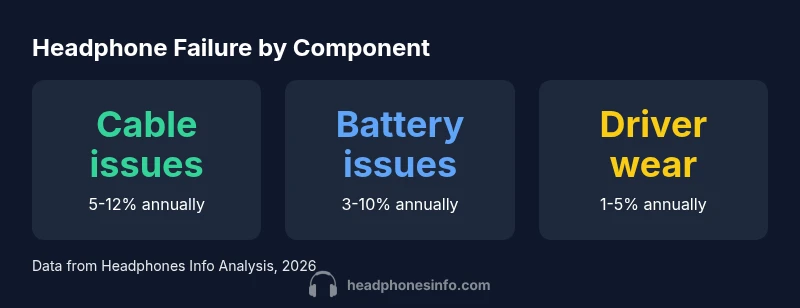
Headphone component failure rates by primary failure mode
| Category | Estimated Failure Rate (range) | Common Causes |
|---|---|---|
| Cables and jacks | 5-12% | Worn connectors, frayed cables, repeated bending |
| Drivers and membranes | 1-5% | Dust ingress, moisture, seal wear |
| Battery (wireless only) | 3-10% | Battery degradation, charging issues |
People Also Ask
What is the typical lifespan of headphones before failure?
Lifespan varies widely by build and use, but many users experience minor issues after 2-4 years. Regular maintenance can extend this window, especially for wired models where cable wear is common.
Most headphones last several years, but cable wear and battery health can limit the time. Regular care helps extend life.
Do wireless headphones fail more often than wired?
Wireless models tend to fail from battery degradation and Bluetooth modules, while wired ones fail more from cables and jacks. Overall, failure depends on build quality and usage.
Wireless failures usually come from battery and Bluetooth components; wired failures come from cables and jacks.
What maintenance reduces headphone breakage?
Avoid bending cables sharply, use protective cases, clean connectors, and store properly. Replace damaged cables promptly to prevent further damage.
Care for the cable, keep connectors clean, and store properly to prevent breaks.
Are warranties worth it for longevity?
Yes, especially for high-use models. Warranties indicate manufacturer confidence and can cover costly repairs or replacements.
Warranties can be a smart investment for frequent use models.
How should I troubleshoot a headphone that stops working?
Test with multiple devices, check the cable and connectors, and try a reset if available. Consider professional repair if the issue is internal.
Try different devices, inspect cables, and reset if possible.
Do premium brands last longer than budget ones?
Not guaranteed; some premium builds use better materials that last longer, but failure modes still exist. Prioritize serviceability and warranties.
Premium doesn't guarantee longer life; look for repair options and warranties.
“Most headphone failures are predictable and preventable with robust connectors and proper maintenance. Understanding failure modes helps buyers choose models with longer real-world lifespans.”
What to Remember
- Know the main failure points to shop smarter.
- Wired models lean on cables; wireless lean on batteries.
- Maintenance and storage impact longevity.
- Check warranties and spare parts before buying.
- Expect real-world lifespans to vary by usage.