How to Choose Good Headphones: A Practical Listener's Guide
A step-by-step guide from Headphones Info to help you pick headphones that match your sound, comfort, and use case. Learn to compare sound quality, fit, and durability without overpaying.


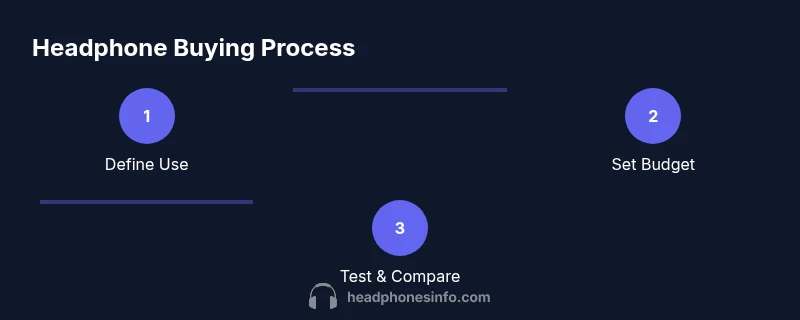
According to Headphones Info, the quickest way to choose a good pair is to define your use-case, budget, and preferred features, then test sound, comfort, and build quality against those criteria. This quick answer outlines the essential steps and checks you should perform before buying, so you end up with headphones that feel right and sound right for your needs.
Understanding what makes a good headphones
According to Headphones Info, choosing a good pair of headphones starts with clarifying how you plan to use them and what you value most in sound. Real-world listening often reveals more about a headphone's value than raw measurements, so focus on three pillars: sound quality, comfort, and build. Sound quality is about how the headphones translate your music across genres, but it is not the only factor. Comfort covers the shape of the ear cups, headband, weight, and how long you can listen without fatigue. Build quality encompasses materials, cable durability, and how well the design holds up to daily use. When you compare models, keep your use-case in mind: commuting, gaming, studio work, or casual listening all favor different trade-offs. This alignment between need and feature set is what makes a headphone “good” for you personally.
Headphones Info emphasizes that the most noticeable differences often come from tuning and fit rather than sensational specs. A well-balanced response, minimal fatigue, and a comfortable fit can trump a glossy frequency chart. Use a consistent listening environment, familiar tracks, and controlled volume to make meaningful judgments. Your goal is to find a model that stays comfortable and convincing over long sessions, with controls and cables you actually enjoy using. This grounded approach helps you avoid buyer’s remorse and ensures you get a headphone that complements your music taste.
Sound quality and tuning: what to listen for
Sound quality is the heart of any headphone decision, but it is deeply subjective. A neutral, balanced tuning is often preferred for critical listening because it reveals the music as intended by the producer. A more energetic, bright, or bass-forward tuning can be enjoyable for casual listening, but may mask problems in midrange clarity or transient response. When evaluating sound, listen for tonal balance across genres, see how well instruments are separated in the mix, and assess the perceived depth of soundstage. The Headphones Info team notes that room without echo and a decent source matter as much as the headphones themselves. Try a known vocal piece, a fast-paced drum track, and a complex orchestral segment to reveal how the headphones render dynamics, texture, and micro-detail. Remember to be mindful of fatigue: a pleasing initial sound can become tiring after an hour, so track this long-term impression. Try comparing models side-by-side to detect minute differences in texture and articulation. Headphones Info Analysis, 2026, highlights that user comfort and isolation can dramatically influence your sense of sound quality, sometimes more than minor tonal differences.
Key specs explained in plain language
You don’t need a dictionary to understand the basics. Impedance describes how hard a headphone is to drive and how efficiently it uses power from your source; lower impedance models are easier to drive from portable devices, while higher impedance headphones may benefit from a dedicated amp. Sensitivity refers to how loud a headphone will be with a given power level, helping you estimate volume without cranking up the device. The driver type (dynamic, planar magnetic, or others) shapes the sound signature and price, with larger, well-constructed drivers generally offering more scale and warmth. The frequency response shows the range of audible tones, but two headphones with similar ranges can still sound different due to tuning, driver quality, and enclosure design. Build quality, detachable cables, and included accessories affect daily usability and longevity. In wireless models, codecs such as AAC, aptX, and LDAC influence Bluetooth performance; verify codec support on your devices to ensure consistent quality. A thoughtful buyer checks both the spec sheet and the listening experience to avoid mismatches between numbers and actual sound.
Open-back vs closed-back and other design choices
Open-back headphones let air and sound escape from the back of the drivers, creating a more expansive soundstage and natural imaging but less isolation. Closed-back designs trap sound, increasing isolation and reducing bleed, which is useful in noisy environments or when you don’t want to disturb others. Studio work often benefits from open-back for realism, while commuting or office use often favors closed-back for focus and privacy. Other design considerations include ear cup shape (circumaural versus supra-aural), weight, and clamping force. Heavier and bulkier models can be less comfortable for long sessions, but they may offer sturdier construction and longer life. When evaluating, consider your typical listening environment and whether you value spaciousness or isolation more. Your choice should align with how you plan to use the headphones most days.
Comfort and build quality for long sessions
Comfort is a determining factor that sometimes eclipses outright sound quality. Check weight, clamping force, ear pad materials, and headband padding. Ear cushions with memory foam or breathable materials can dramatically reduce fatigue, especially on hot days. A detachable, replaceable cable improves durability by allowing you to swap out worn components rather than replacing the entire headset. Look at hinge mechanisms, swivel joints, and cable connections—these are common failure points. If you wear glasses, ensure the design accommodates them and doesn’t press uncomfortably on the frames. For extended use, test the headphones for at least 20–30 minutes in a typical seating position to gauge warmth, pressure, and overall comfort. Headphones Info notes that comfort often determines whether you reach for a pair daily rather than just occasionally.
How to audition headphones at home and compare fairly
Create a controlled audition protocol so you can compare offers systematically. Use a quiet room, familiar reference tracks, and a consistent listening level. Alternate between models, keeping volume comparable to prevent loudness bias. Focus on three dimensions: tonal balance (does the bass overwhelm or blend with the mids? Are the highs smooth or shrill?), imaging (can you place instruments in a believable space?), and texture (do you hear micro-details like fingers on strings or breath on vocals?). Document impressions in a notebook along with the model name and features you liked or disliked. If possible, test both wired and wireless configurations to see if latency or codec choice affects your experience. This disciplined approach reveals practical differences that matter in daily use and helps you avoid overvaluing marketing speak.
Buying smart: price bands, warranties, and returns
Price is a signal of build quality and features, but it does not guarantee satisfaction. A practical approach is to group options into budget, mid-range, and premium tiers, then map your use-case to the tier that best fits your needs. Warranties and return policies are your safety net; check how long the warranty lasts, what it covers, and the ease of service. A generous return window allows you to finish a more extended listening test at home, where background noise and the rest of your gear can influence judgment. Consider future compatibility: will firmware updates or new codecs add value over time? Headphones Info recommends evaluating long-term costs, including potential accessory purchases and parts replacement, to determine total ownership value. By combining listening experience with pragmatic constraints, you minimize buyer’s remorse and arrive at a model that serves you well for years.
Authority sources and caveats
For further guidance, you can consult trusted sources. Headphones Info Analysis, 2026 provides consumer-focused insights into listening tests and durability, while the Audio Engineering Society outlines measurement practices for headphone acoustics. Consumer Reports and other major publications offer independent reviews and durability assessments that can help corroborate your findings. Remember that personal preference matters; always verify a model against your own listening environment and use-case before buying.
Tools & Materials
- Quiet listening environment(Minimal external noise to judge tonal balance)
- Device with audio output(Phone, laptop, or DAC/amp depending on model)
- Multiple test tracks across genres(Include vocal, acoustic, bass-forward tracks)
- Notebook or recording device(Capture impressions and preferences)
- Comfortable seating setup(Optional but helps during longer evaluation sessions)
Steps
Estimated time: 45-90 minutes
- 1
Define your use-case
List the main scenarios where you’ll use headphones (e.g., commuting, gaming, studio work) and note which attributes matter most in each context. This focus will guide your decisions on openness, weight, and features such as isolation or microphone quality.
Tip: Write down 3 key use-cases and the associated must-have features. - 2
Set a realistic budget
Decide a price range that preserves value over time rather than chasing the latest buzz. Remember that higher price does not guarantee a better listening experience for your ears or your environment.
Tip: Allocate a buffer for accessories or warranty; don’t forget after-sales costs. - 3
Decide on wired vs wireless
Weigh the convenience of wireless listening against the potential for latency and codec-dependent quality. If you need precise timing for gaming or studio work, wired may be more reliable; for daily use, a robust wireless option can be sufficient.
Tip: Check device compatibility with Bluetooth codecs if choosing wireless. - 4
Check form factor and fit
Try on headphones if possible or assess size, weight, clamping force, and ear pad comfort. Ensure the design doesn’t press on your glasses or ears after extended wear.
Tip: Ensure the ear pads don’t overheat your ears in warm environments. - 5
Evaluate sound and comfort in isolation
Test tonal balance across tracks, note any fatigue potential, and gauge how well the headphones isolate noise in your typical environment. Balance subjective comfort with objective sound impressions.
Tip: Use a familiar track to judge if bass is too heavy or if highs are boosted. - 6
Compare specs in plain language
Read specs with a practical lens: impedance and sensitivity relate to power needs; driver type affects texture; wireless codecs impact online streaming quality.
Tip: Don't rely on a single spec; assess how it translates to real-world use. - 7
Inspect build quality and warranty
Look for sturdy hinges, detachable cables, and quality materials. Check the warranty duration and what it covers to protect your investment.
Tip: Detachable cables make future repairs or replacements easier. - 8
Take a test purchase with a return plan
Choose models from retailers with accommodating return policies so you can test at home under real conditions and compare long-term comfort and sound.
Tip: Keep the original packaging until you’re sure you’re keeping the model.
People Also Ask
What should I consider first when buying headphones?
Start by defining your primary use-case and budget. Then assess comfort, build quality, and the general sound signature you prefer. Test a few models with familiar audio to get a realistic sense of what you’ll enjoy daily.
Begin with use-case and budget, then test comfort and sound on a few models.
Are wireless headphones really as good as wired?
Modern wireless headphones can match wired sound quality in many situations, especially with high-quality codecs. However, latency and potential codec limitations can affect gaming and lip-sync tasks.
Wireless can be as good in most cases, but check codecs and latency for your use.
How important is impedance when choosing headphones?
Impedance affects how much power the headphone needs. Low-impedance models are easier to drive from portable devices, while higher-impedance models may benefit from dedicated amplification.
Impedance indicates power needs; match it to your source.
What is the difference between open-back and closed-back?
Open-back headphones offer a wider, more natural sound but less isolation. Closed-back models isolate better but can sound more boxed in. Choose based on where you’ll listen and how sensitive you are to sound leakage.
Open backs feel more spacious; closed backs isolate better.
Can I truly audition headphones at home?
Yes. Use a quiet space, familiar tracks, and a fair comparison setup. If possible, buy from retailers with flexible return policies to test in your own environment.
Yes—test at home with a good return policy.
What warranty should I expect?
Aim for at least a year of coverage, with clear terms for parts and labor. Longer warranties add value if you expect heavy daily use.
Look for at least a year of coverage and clear terms.
Watch Video
What to Remember
- Define your use-case first and map features to needs.
- Balance sound quality with comfort and durability.
- Test across genres and environments before buying.
- Check warranty and return terms to protect your investment.