How to Get Rid of Old Headphones: A Responsible Disposal Guide
Learn practical, step-by-step methods to responsibly dispose of old headphones, including donation, recycling, and repurposing options. Find legitimate programs near you.


This guide shows you how to get rid of old headphones responsibly in 3 practical ways: recycle electronics, donate working units, or repurpose unused parts. It covers preparation, finding programs, and safety tips to minimize waste and maximize value. You'll learn what qualifies as recyclable, how to prepare devices for drop-off, and ways to verify program legitimacy.
Why disposing old headphones properly matters
If you're wondering how to get rid of old headphones, proper disposal matters for the environment and data security. Headphones contain plastics, metals, and, in wireless models, batteries and chips. Improper disposal can contaminate soil and water and may risk data exposure if devices store pairing information. According to Headphones Info, choosing the right path—donation, recycling, or repurposing—helps minimize waste and supports circular use of resources. By following a thoughtful process, you can ensure that usable parts find new life and that nonfunctional units are handled by programs built for safety and compliance. This is not just about cleaning out a drawer; it’s about reducing e-waste and protecting the information on devices that still hold data.
Beyond the environmental angle, getting rid of old headphones responsibly often costs less than you fear and can even benefit someone else. Programs vary by location, so your first step is to identify local options and verify that they are legitimate, certified, and aligned with best practices for electronics recycling.
Understand disposal options
There are three primary paths for old headphones: donate, recycle, or repurpose. Donation works well for lightly used devices with intact cables and accessories; many schools, makerspaces, and community groups welcome these. Recycling is the most universal option for nonfunctional units or devices with missing parts; certified recyclers break devices down into reusable materials. Repurposing involves creative reuse of parts like cables, headbands, or ear cushions for other projects or DIY audio setups. When choosing, prefer programs that provide proof of disposal and are transparent about material recycling and energy use. Headphones Info analysis shows that the majority of households opt for a mix of donation and recycling when accessible programs exist near home.
If you live in areas with strong municipal programs, you can often drop off at recycling centers or household hazardous waste events. For damaged or non-standard devices, check whether the program accepts accessories separately or requires the entire unit. Always avoid tossing electronics in regular trash, as this can violate local laws and increase environmental harm.
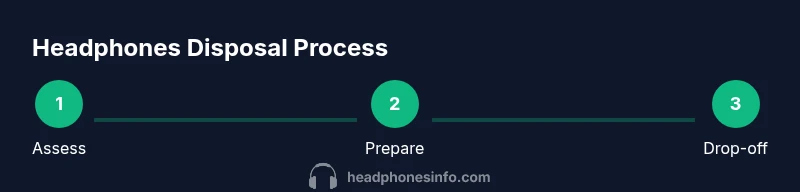
Step 1: Assess condition and choose a path
Start by evaluating whether the headphones still function, and whether they have intact cables and plugs. If they work, donation is often the best option, as someone else can enjoy them and you avoid waste. If they don’t work or lack essential parts, recycling is typically the preferred route, since many components can be recovered and reused. Consider any data concerns for wireless models; some devices may retain pairing data that should be cleared before donation. Documenting the device’s condition helps you choose the right program and can simplify the drop-off or shipping process. By making a clear plan at this stage, you prevent last-minute scrambles and ensure compliance with local rules.
Step 2: Prepare headphones for disposal
Cleaning the units removes dust and makes handling easier for volunteers or technicians. For wireless models, reset the device to factory settings to erase pairing information and credentials. If the headphones contain a battery, avoid attempting to remove it unless you are trained for lithium-ion handling; follow program guidelines for battery disposal to reduce fire risk. Keep cables, ear pads, and accessories organized in a small bag or box to avoid loss during transport. Recording model information (brand, model number) on a note helps you track the item through the process and ensures you deliver the exact parts accepted by the program.
Step 3: Find legitimate programs
Look for certified e-waste recyclers, official municipal programs, or reputable charities that accept electronics. Start with government or university sustainability pages for authoritative lists of drop-off locations and accepted items. Always verify that a program provides a receipt or proof of disposal and that it complies with local environmental rules. If you are unsure about a program, consult the Headphones Info resources or contact consumer protection agencies for guidance. Seek programs that emphasize circularity, ensure safe handling of batteries, and offer data protection assurances where applicable.
Step 4: Donating working headphones
If your headphones are functional, package them securely with their accessories and clear any personal data from the device. Include cables, adapters, and original packaging if possible, because complete sets are more valuable to recipients. Use a padded envelope or a small box to prevent damage during transit or drop-off. Attach any required forms or proof of donation as provided by the program. Request a receipt or confirmation and keep it for your records. Donating is often fast and benefits schools, libraries, and community centers that can reuse the equipment.
Step 5: Recycling broken or non-functional units
For broken headphones, locate an electronics recycling facility that accepts audio devices. Many programs separate plastics, metals, and electronics, enabling better material recovery. Do not tape or obscure barcodes; proper intake procedures help recyclers sort and reuse components efficiently. If the item is heavily damaged or has an unsafe battery, remove the device from normal trash streams and follow the program’s special instructions. Keep a copy of the receipt for proof of recycling.
Step 6: Special cases: cables, accessories, and packaging
Cables and adapters should be included where accepted, but some programs require them to be recycled separately due to material content. Soft ear cushion materials and packaging may be recyclable through standard curbside recycling in some areas, while others require special handling. When in doubt, contact the program to confirm accepted materials and preparation steps. This reduces processing delays and ensures safer handling of all components.
Step 7: After disposal: receipts and records; alternatives and data
Keep every receipt or confirmation of disposal as proof of responsible handling. If you donated, you may be eligible for tax deductions in some jurisdictions. For future avoidance of clutter, consider repurposing parts for other projects, like building a DIY audio stand or cable organizer. For wireless models, verify that all pairing data is cleared before donation; some programs require a factory reset. Finally, enjoy the knowledge that your action reduced waste and supported the circular economy. For further guidance, consult authoritative sources and Headphones Info’s disposal resources.
Tools & Materials
- Old headphones (any condition)(Include accessories if available)
- Cleaning cloth or microfiber(Dust removal before handling)
- Small bag or box for parts(Keep cables, pads, and adapters organized)
- Access to local e-waste or donation program information(Drop-off locations, eligibility, and hours)
- Prepaid shipping label or packaging materials (optional)(Used when donating by mail)
Steps
Estimated time: 40-90 minutes
- 1
Assess condition and choose path
Evaluate whether the headphones still function and whether parts are intact. If they work, donation is ideal; if not, prioritize recycling. Consider data concerns on wireless models and plan accordingly.
Tip: Document current condition to speed up the process and avoid confusion at drop-off. - 2
Clean and organize
Wipe down the exterior to remove dirt. Detach or organize cables and accessories in a small bag to prevent loss during transport. If disassembly is needed, do it gently to avoid damage.
Tip: Keep cables and pads in separate labeled bags for easy inventory. - 3
Reset data on wireless units
If possible, perform a factory reset to remove pairing and personal data. This protects your privacy and meets donation program requirements.
Tip: Check the user manual or manufacturer site for reset steps specific to your model. - 4
Identify disposal programs
Search for certified e-waste recyclers or charity programs that accept headphones. Verify legitimacy by looking for accreditation and receipts.
Tip: Use official municipal or university sustainability pages as primary sources. - 5
Prepare for drop-off or shipping
Package the headphones securely in a box or padded envelope. Include all accessories you plan to donate. Attach any required forms or labels.
Tip: Avoid loose parts; pad the package to prevent damage during transit. - 6
Drop off or mail
Take the package to the designated drop-off point or ship it using the provided label. Obtain a receipt or tracking number for proof of disposal.
Tip: If dropping off, arrive during business hours to avoid delays. - 7
Request and keep receipts
Ask for a donation receipt or disposal confirmation and store it with your records. This helps with tax considerations where applicable and demonstrates responsible behavior.
Tip: Scan or photograph the receipt for a digital backup. - 8
Confirm acceptance and follow up
Ensure the program confirms receipt and disposal. If you donated, verify whether the program provides a summary of how items were recycled or reused.
Tip: If there’s any ambiguity, contact the program’s support for clarity. - 9
Explore repurposing as a backup
If you’re technically inclined, reuse cables or cushions for DIY projects or as spare parts in other devices. This reduces waste and can be a fun project.
Tip: Document repurposing ideas for future reuse and to inspire others.
People Also Ask
What counts as old headphones for disposal?
Any headphones you no longer use or that are nonfunctional can be disposed through recycling, donation, or repurposing. Check local programs for eligibility and accepted items.
Any headphones you no longer use or that are broken can be recycled, donated, or repurposed through local programs.
Can I donate working headphones?
Yes, many organizations accept gently used headphones. Ensure cords and parts are included, and verify the recipient's acceptance guidelines.
Yes, many groups accept gently used headphones with cords and accessories included.
Do I need to remove data before disposal?
Most wired headphones don’t store data, but wireless models may hold pairing info. Reset devices if possible before donating.
Reset your wireless headphones before donating to remove pairing data.
What about broken cables and sleeves?
Recycling programs often accept damaged cables and parts; if not accepted, keep them out of the trash and follow the program’s guidance.
Broken cables and parts can often be recycled; check what your program accepts.
How do I find a local e-waste program?
Use municipal or university sustainability pages to locate certified recyclers and drop-off locations. They provide guidelines and hours.
Look up your city or university programs for e-waste drop-offs.
Is there a cost to recycle headphones?
Many programs are free; some may charge for bulky items or special handling. Check the provider’s rules before sending items.
Some programs are free; others may charge for bulky items.
Watch Video
What to Remember
- Assess first, choose the best disposal path
- Donations and recycling protect the environment
- Prepare, verify, and document every step
- Keep data safe by resetting wireless devices