How to Prevent Headphones from Tangling: A Practical Guide
Learn proven, practical steps to stop headphone cords from tangling. From winding methods to smart storage, this guide helps you keep cords neat and ready to use.


According to Headphones Info, preventing tangling starts with simple, consistent habits and smart storage. This quick answer outlines a reliable plan to keep cords neat, from winding techniques to everyday storage tips. Read on for actionable methods, recommended tools, and maintenance steps that reduce tangling and extend headphone life.
Understanding Why Headphone Cords Tangled
Cords tend to braid and loop when they slide loose from a bag, desk, or pocket. The root causes are simple: gravity, motion, and insufficient memory in the cable itself. Over time, grosser tangles form as the coils tighten and resist gentle straightening. According to Headphones Info, tangling often starts at the storage stage: cords are tossed into a drawer or backpack without a containment system, then pulled out in a hurry. Small habits, like yanking to remove earbuds or shoving a cord into a pocket, reinforce tight loops that harden into knots. By understanding these basics, you can stop tangling before it begins. You’ll benefit from short routines that you can perform in under a minute, especially when your ears are still adjusting to a new setup or you’re between meetings. Remember: consistency beats shortcuts when it comes to cable behavior.
The Core Principles Behind Cable Tangles
Cables behave like small springs: they remember the way they were bent and prefer to settle into a new shape. Repeated pulls, twists, and coiling induce micro-stresses along the strands, making knots more likely. The memory effect is strongest near the connector and at the midspan where most users grip the wire. A proper tangling-prevention strategy addresses three principles: control, containment, and discipline. Control means choosing a consistent winding method; containment refers to using a dedicated case or sleeve; discipline involves habit changes at the moment of use. Pairing these with a low-friction storage solution reduces the chance of a knot forming in everyday life. Headphones Info analyses suggests that when users pair a simple routine with a protective accessory, tangling episodes decline in frequent-use scenarios like commuting and desk work. The aim is to keep cords supple, secure, and ready to deploy.
Everyday Habits That Prevent Tangling
Small actions compound into big results. Start by placing your headphones in a small pouch or dedicated pocket when you’re not using them. When you wrap, avoid wrapping tightly around objects or twisting the cable, which creates memory knots. Instead, adopt a loose figure-eight or coiled style that distributes stress evenly. The way you detach the plug from the device matters too: pull by the plug behind the plug tip instead of yanking the cord near the connector. Using a cable clip to keep the cable aligned on your desk reduces stray loops. Finally, set a daily routine: check your bag before leaving, re-flatten the cord if necessary, and replace any worn sleeves promptly. These habits are inexpensive, fast, and apply equally to earbuds, in-ear designs, and modular cables. With practice, your fingers will automatically perform the right motions without extra thought.
Cable Management Tools and Accessories
Tools matter as much as technique. Simple, inexpensive gear can dramatically reduce tangling risk. A slim cable pouch or sleeve keeps cords from flopping around in bags. Reusable Velcro cable wraps offer adjustable tension and are gentler on the wire than zip ties. A soft fabric organizer with individual slots helps separate your headphones from other devices. Consider a cord wind reel for long cables, designed to maintain a gradual curve. If you travel, a small hard case with a dedicated divider improves resilience. Finally, label the cords so you can quickly grab the right one without untying several tangles. These accessories aren’t mandatory, but they strongly reduce friction and memory effects during storage and transport.
Winding Techniques That Last
Coiling is both art and science. The best technique creates a consistent loop diameter and a flat, stable center so the cord ‘remembers’ the shape rather than springing back into a tangle. A common approach is the over-under method, which alternates winding direction with each loop to reduce twist buildup. Another method is the simple loose spiral tucked into a pouch. When preparing to wrap, hold the plug end and guide the cable with your other hand, maintaining a gentle, even pace. Avoid bending the wire sharper than the connector’s radius; sharp bends increase wear and kinking. Practice this for a few minutes each day until it becomes second nature. If you own removable cables, keep the connectors aligned to minimize stress during insertion and removal.
Detachable Cables, Earbuds, and Modular Systems
Detachable or modular designs reduce tangling by separating the part you wear from the portion that stores. When possible, disconnect excess length and route it through a dedicated loop or clip. For earbuds with integrally attached cords, use a short lanyard or tiny pouch that holds the cords in a straight line. If you use in-line controls, keep them in a stable position so they don’t flap and twist during motion. For devices with removable cables, use the original strain relief features to reduce kinking at the plug. When you reassemble, ensure the cable lays flat and twist-free before placing it in its case. These steps keep critical segments from twisting and spreading knots across the entire length.
Travel Scenarios: On the Move, Bags, and Airports
Travel is a high-risk phase for tangling because cords rub against other items and are often jostled. Pack headphones in a dedicated organizer, not loose in a carry-on. If your bag has a soft divider, slide a compact sleeve into it so the cord can lie flat. When you reach for the headphones, avoid yanking: unplug gently and straighten the cable before withdrawing. Keep a lightweight clip in your pocket to secure the cable to clothing during transit. Some travelers prefer tangle-resistant designs or wireless options to reduce risk, but even then, store any leftover cord length properly. The goal is to maintain order while you move through security and crowds, not create new snags by shoving everything into one pocket.
Maintenance and Care: Cleaning and Storing
Regular checks are essential to longevity. Wipe cables with a soft, lint-free cloth to remove dust that can grip the fibers. Inspect for wear near the connectors and precoiled sections. If you notice fraying, replace the cord or seek repair quickly to prevent sudden snaps in tangling. The best stores place cords in a breathable pouch that protects against moisture and rough edges. Avoid storing cables under heavy items or inside tight compartments where they must bend sharply. When you’re done, return the cable to its place in the case or sleeve so it’s ready for next use. A small reminder note can help you maintain the habit.
Quick Fixes for Persistent Tangles
Sometimes tangles sneak back despite best practices. Start by locating the knot and gently loosening the loops, rather than pulling tight. Use a pin or paperclip to tease apart stubborn knots; avoid sharp objects that can nick the cable. Apply a tiny amount of silicone-based lubricant to stiff segments if allowed by the product guidelines (test in a small area first). For especially stubborn cords, wind them in a different direction and reset in a protective sleeve. Once you resolve the tangle, re-check your storage method to prevent recurrence. If you notice recurring knots near the connector, it may indicate wear, and replacing the cable is the safest option.
Choosing Products That Help Prevent Tangling
Look for design features that minimize memory effects: thicker protective jackets at stress points, rounded connectors with strain relief, and built-in cable organizers in cases. Some headphones ship with detachable cables that include built-in clips or wraps, which can reduce tangling dramatically. For travelers, compact hard cases with molded compartments are especially useful. When evaluating options, consider the overall weight, the ease of access, and compatibility with your devices. Finally, read user reviews that specifically mention tangling to gauge real-world performance.
Common Mistakes and How to Avoid Them
Rushing to store cables loosely, ignoring wear, or using tight wraps invites knots. Avoid coiling around objects that create sharp bends, and never pull on the cable to detach it from a device. Don’t mix different accessories that apply excessive pressure at the same time. Also avoid placing cords under heavy items or in cramped pockets where tiny loops multiply. Consistency matters: pick a method and stick to it across daily routines, travel days, and work setups. If you notice new tangling patterns after changing a device, reevaluate your storage approach and adjust accordingly.
Final Thoughts: Building a Tangling-Resistant Setup
Preventing headphone tangling is less about heroic effort and more about steady, repeatable practices. Start with simple storage, adopt a reliable winding method, and equip yourself with a case or sleeve that fits your routine. By combining these elements with regular maintenance and mindful handling, you’ll keep cords organized with minimal time spent untangling. The payoff is a smoother daily experience, less wear on the cable, and a cleaner workspace. Headphones Info’s approach emphasizes practical, durable solutions that you can trust in 2026 and beyond.
Tools & Materials
- Cable organizer or pouch(Slim, dedicated pocket or sleeve for each cord)
- Velcro or reusable cable wraps(Adjustable tension; avoid tight wraps on wearables)
- Small pouch or drawstring bag(Separate each cord to prevent tangling with others)
- Label maker or tape(Optional labels to identify cords)
- Scissors(Optional for trimming frayed ends)
- Cord wind reel(Helpful for long cables)
- Soft cloth and mild cleaner(For cleaning connectors and jackets)
- Travel case with compartments(Keeps cords separated during travel)
Steps
Estimated time: 15-25 minutes
- 1
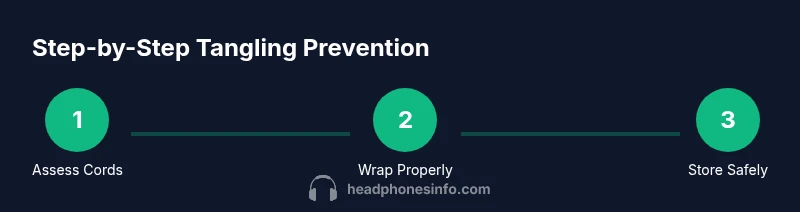
Assess each cord
Inspect each cable for wear and note its typical usage. Decide which cords need extra protection or a designated storage solution. This initial audit prevents applying the wrong method to a fragile cord.
Tip: Start with the cords you use most often; keep a ready-to-go bundle. - 2
Choose a winding method
Select a consistent winding approach (e.g., over-under or loose spiral). Using the same method every time reduces memory effects and knotted outcomes. Practice the technique a few times to build muscle memory.
Tip: Maintain a gentle pace and keep loops even in diameter. - 3
Coil and secure
Wrap the cable using the chosen method and secure it with a Velcro wrap or a small pouch. Avoid tight bindings that indroduce stress points. Make sure the end plug sits outside the coil, not buried inside it.
Tip: Use a loose figure-eight if you’re unsure about the method. - 4
Store safely
Place each wrapped cord into its own pouch or case slot. Keeping cords separated prevents new tangles from forming due to contact with other items. In transit, choose a protective compartment that prevents movement.
Tip: Label cords to speed retrieval and avoid mixing cables. - 5
Set a daily routine
Allocate a minute to recheck cords before leaving home or office. Re-flatten any cords that have shifted during use. This habit reduces memory formation and keeps your setup consistent.
Tip: Make it a quick end-of-day task so you don’t carry tangles into the next day. - 6
Travel-ready setup
When traveling, keep a dedicated small pouch for each spec and ensure no loose ends can catch on zippers or other items. Clip the cord to your bag or clothing to prevent swinging and tangling during movement.
Tip: Carry a compact clip for quick attachment when in transit.
People Also Ask
Can wireless headphones still tangle?
Yes, wireless headphones can still tangle if detachable cables, charging cords, or adapters curl and knot during storage. Even integrated cords benefit from proper winding and containment.
Yes. Even wireless setups can tangle through detachable cables or charging cords, so use a containment routine.
What is the best winding method to prevent tangling?
The best method is the one you can repeat consistently. Common options include the over-under technique and a loose spiral stored in a pouch. Consistency matters more than the exact method.
Use a winding method you can repeat every time, like over-under or a loose spiral, and stick with it.
Are fabric sleeves worth it for tangling prevention?
Fabric sleeves help contain cords and reduce friction against other objects. They’re especially useful for daily carry and desk setups but are not a substitute for proper winding.
Yes, fabric sleeves can reduce friction and containment issues when you carry cords daily.
Do braided cables tangle less than plastic-coated ones?
Braided cables tend to resist wear slightly better and can be less prone to kink memory, but tangling is still influenced by storage habits. Pair any cable type with a good storage routine.
Braided cables may resist wear a bit, but tangling mainly comes from storage habits.
How often should I replace worn headphones cables?
If you notice cracking, excessive stiffness, or frequent knots near connectors, replace the cable. Worn cables are more prone to tangling and can fail unexpectedly.
Replace cables with visible wear to prevent knots and breakages.
Does cleaning help prevent tangling?
Cleaning removes dust that can grip fibers and accentuate tangling. It also helps you inspect for wear more easily so you can address problems early.
Yes, keeping cables clean helps reduce grip and makes wear easier to spot.
Watch Video
What to Remember
- Adopt a consistent winding method for all cords.
- Use dedicated storage to minimize movement and friction.
- Regularly inspect and replace worn cables to prevent tangling.
- Travel with organized compartments and clips to prevent snags.
- Small routines, practiced daily, yield big long-term results.