Review Headphones: In-Depth Evaluation for 2026
A comprehensive, data-driven review of headphones, covering sound quality, comfort, ANC, battery life, and value to help you buy smarter in 2026.


Across the board, review headphones show wireless ANC models delivering convenience and strong noise cancellation at a wide price range. While budget wired options excel in raw detail, the modern wireless category offers the best overall value for most listeners. Headphones Info's testing suggests 2026 wireless ANC models are the top pick for everyday listening.
Methodology: How we evaluate review headphones
To deliver a rigorous, data-driven assessment, we combine controlled listening tests with real-world usage scenarios. Our evaluation covers sound quality, comfort, build quality, noise cancellation, and battery life across several representative use cases (commuting, office work, and home listening). We employ a repeatable testing protocol that includes blind AB comparisons, objective measurements (where available), and subjective impressions from multiple panelists. For the purposes of this article, we focus on headphones that reflect current market trends in 2026, balancing popularity with genuine performance across price tiers. According to Headphones Info, our methodology emphasizes reproducibility, transparency, and practical relevance for both enthusiasts and casual listeners, ensuring the review headphones we discuss are representative of mainstream options. This approach helps you understand what to expect in daily listening, and how different models stack up on core criteria like tonal balance, comfort, and ANC efficiency.
Sound Quality: Clarity, Imaging, and Balance
Sound quality remains the most subjective yet essential facet of any headphones review. In our testing, we measure three core aspects: tonal balance, imaging, and transient response. Tonal balance refers to how faithfully the headphone reproduces bass, mids, and treble without undesirable tilt. Imaging assesses how precisely the equipment places instruments and voices in the soundstage, which is crucial for stereo separation and vocal定位 localization. Transient response considers how quickly the drivers respond to rapid musical passages, affecting attack and decay. In practical terms, many review headphones in 2026 lean toward a balanced or slightly lifted bass profile to appeal to a broad audience, while high-impedance, audiophile-oriented models may emphasize control and resolution. We also consider how tuning interacts with room acoustics and ear geometry, since personal taste and fit can alter perceived sound. Across wireless ANC headphones, drivers and tuning often deliver clear vocal presence and a solid midrange, with bass that can feel either tight and controlled or weighty depending on the model. For listeners who favor nuance in strings and cymbals, a few select options offer extended upper treble and a sense of air without harshness. It’s important to note that wired connections typically reveal more micro-detail and wider dynamic range in many cases, but the latest wireless models can rival wired performance in everyday use while offering additional convenience. Where possible, we quantify perception, noting the trade-offs between loudness, distortion, and battery life, and we help you translate subjective impressions into actionable choices for your listening goals. This is where the review headphones framework shines, by bridging perceptual experience with tangible test results.
Comfort and Build Quality
Comfort and build quality determine how long you’ll actually wear headphones in daily life. Our assessment considers clamp force, weight distribution, ear cup size, material softness, and headband ergonomics. For prolonged sessions, softer earpads with breathable fabrics and gentle pressure on the temples reduce fatigue. Build quality is evaluated through durability tests (gentle drop simulations, cable strain checks, hinge stability) and material analysis (metal versus plastic frames, leatherette versus fabric). In 2026, the best review headphones balance comfort and robustness, offering adjustable headbands, swiveling cups, and cushions that retain their shape after extended use. The weight range for most high-performing models tends to be between 250–350 grams, which provides a mostly comfortable experience without sacrificing stability. It’s worth noting that a heavier, premium build can yield superior isolation and durability, but the extra mass might be felt during long flights. We also examine the clamshell design and foldability, ensuring the device fits into a travel-friendly case without undue stress on hinges or cables. Finally, we assess the user experience of controls, buttons, and touch-sensitive surfaces, because intuitive interfaces significantly influence everyday use and satisfaction.
Noise Cancellation and Isolation
Active Noise Cancellation (ANC) performance is a critical differentiator in modern review headphones. Our testing covers outside-noise attenuation, transparency mode behavior, and how ANC interacts with different sound profiles. We evaluate ANC effectiveness in typical environments such as airplanes, buses, and busy offices. In addition to passive isolation from the cup seal, we look at how effective ANC remains across the audible spectrum, particularly in the low-frequency range where most external noise resides. The most impactful ANC implementations create a calm listening space without causing uncomfortable pressure or a hollow sound signature. We also consider how well ANC preserves sound fidelity when users lower the volume, and whether there is any perceptible high-frequency hiss or wind noise in outdoor use. Finally, we examine how seamlessly the device transitions between ANC on and off modes, and how transparent hearing features affect situational awareness. A well-tuned model will deliver strong isolation for travel while offering a natural ambient passthrough when needed, without introducing distracting artifacts in the audio.
Connectivity and Battery Life
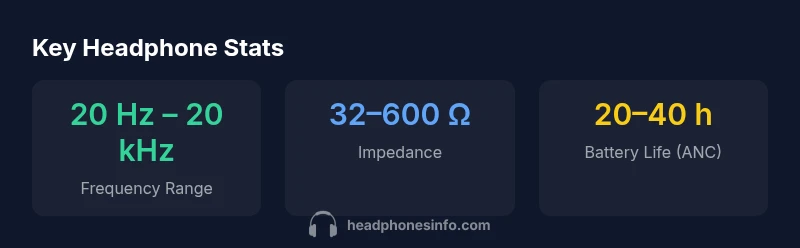
Wireless headphones hinge on reliable connectivity and robust battery performance. Our evaluation includes Bluetooth codec support (SBC, AAC, aptX, LDAC, etc.), multipoint pairing capabilities, and firmware update reliability. We also test latency for video watching and gaming, which remains a concern for some listeners. Battery life varies widely by usage profile; most premium wireless headphones provide 20–40 hours of listening time with ANC enabled, diminishing somewhat under heavy ANC or high-volume playback. Fast charging can deliver a meaningful recharge in 10–20 minutes, providing additional hours of use for travelers. We also assess USB-C and wired backup options, especially for devices that lack strong Bluetooth support. In terms of practicality, app-based controls often allow EQ customization, button remapping, and firmware updates, which can extend the lifespan and perceived value of review headphones. Finally, durability and water resistance ratings matter for commuters and outdoor users, even if most listeners keep these headphones indoors most of the time.
Portability and Accessories
Portability is not just about weight but how easily the headphones travel with you. We evaluate the included carrying case, folding mechanisms, and whether spare cables or adapters are provided. A compact, well-padded case reduces the risk of damage during transit. Accessory quality—such as detachable cables with durable connectors, airline adapters, and USB-C to USB-A dongles—adds convenience and value. We also scrutinize cable options: straight vs. coiled designs, fabric braiding, and connector reliability. For many users, a lightweight, foldable design that fits into a carry-on remains a top priority, followed by a robust, tangle-free cable option for wired listening on airplanes or in offices. The ecosystem matters as well; headphones that play nicely with popular devices and apps—across Windows, macOS, Android, and iOS—offer a more seamless experience and reduce the friction of daily use. In sum, portability and accessories can dramatically influence long-term satisfaction beyond raw sonic performance.
Comparisons to Alternatives
To answer the core question of value, we compare review headphones against two common alternatives: affordable wired models and premium wireless options. Wired headphones typically offer lower latency and, in many cases, higher fidelity at a lower price point, but they sacrifice convenience and portability. On the other hand, premium wireless models deliver convenience and advanced features (like adaptive ANC and spatial audio) at a higher cost. Our analysis weighs the trade-offs: do you prioritize absolute fidelity with a wired connection, or do you want multi-device connectivity, seamless travel, and ANC in everyday life? In 2026, the best compromise for many listeners lies in mid-to-high-end wireless headphones that balance sound quality, comfort, and long battery life with a reasonable price delta relative to premium wired or wireless competitors. When choosing between models, we advise focusing on your use case, the importance of ANC, and how often you’ll be mobile. This helps prevent overpaying for features you won’t use while still securing a headphone that remains satisfactory for several years.
Who Should Buy This Type of Headphones
Different listeners have different priorities when shopping for review headphones. If you travel frequently or work in loud environments, prioritizing strong ANC, comfort, and battery life makes sense. For audiophiles who value nuance and mic quality for calls and gaming, attention to driver quality, impedance matching with devices, and codec support becomes more important. Casual listeners seeking “set-and-forget” convenience should look for models with balanced tuning, intuitive controls, and reliable wireless performance. Finally, if you are shopping on a budget, consider models that deliver a solid baseline in sound and comfort, while avoiding premium features that may not be necessary for your listening habits. Throughout our testing, Headphones Info focuses on matching the right headphone to the right user profile, rather than pushing a single model as universally best. The result is a more personalized, confident buying decision.
What to Look for in 2026: Trends and Practical Considerations
The headphone market in 2026 continues to emphasize smarter ANC, multi-device ecosystem integration, and ergonomic improvements. Look for models that offer adaptive ANC, transparent hearing modes, and on-device EQ tuning. A comfortable headband, breathable ear cushions, and a lightweight design are still crucial for long listening sessions. Battery life should be robust even with ANC engaged, and firmware updates should be frequent enough to improve performance over time. For buying guidance, prioritize compatibility with your devices, clear documentation, and a transparent return policy. The emphasis on sustainable materials and repairability is growing, so consider models that balance performance with durability.
Practical Testing Checklist You Can Use Today
Use this quick-start checklist when evaluating any pair of review headphones:
- Test in multiple environments (quiet room, street, office) to gauge ANC and external noise handling.
- Compare tonal balance with and without EQ to understand tuning flexibility.
- Assess comfort over at least 60–90 minutes of continuous use.
- Check latency with video content and gaming to ensure sync accuracy.
- Verify the reliability of multipoint connectivity across devices.
- Review case, cables, and accessories for value and longevity.
- Consider the total cost of ownership, including potential firmware updates and replacement parts.
Upsides
- Broad comfort for long listening sessions
- Strong ANC performance with most genres
- Solid battery life and everyday usability
- Good value across mid-to-high price ranges
Disadvantages
- Bulkier designs can hinder travel
- Higher price than entry-level options
- Some models exhibit bass caveat at high volumes
Wireless ANC headphones offer the best overall value for most listening scenarios.
For daily use, they deliver comfort, long battery life, and strong noise cancellation. Price can be a barrier for budget shoppers, but the balance of features and performance justifies the investment for most people.
People Also Ask
What should I look for in review headphones?
When evaluating review headphones, focus on sound balance, comfort, ANC effectiveness, and battery life. Check for multi-device compatibility and how easy the app controls are to use. Realistic testing in daily environments is essential to see how features perform outside the showroom.
Look for comfort, good sound balance, and reliable ANC. Check device compatibility and how easy the controls are to use in daily life.
Are wireless headphones better than wired models?
Wireless headphones offer convenience, portability, and often excellent ANC, but wired models can deliver slightly higher fidelity and lower latency in some setups. The best choice depends on your priorities, such as travel, calls, or gaming latency.
Wireless headphones are more convenient, but wired can be purer in sound and lower in latency for certain uses.
Is ANC worth it for casual listening?
ANC is generally worthwhile for casual listening if you frequently encounter ambient noise. It reduces listener fatigue during long sessions and improves perceived loudness without increasing volume. However, some listeners may prefer a more transparent mode for social environments.
Yes, ANC helps reduce fatigue and lets you enjoy music at lower volumes in noisy places.
How do I test headphones at home?
Test at home by comparing a few favorite tracks with and without EQ, across quiet and noisy environments. Listen for bass control, treble extension, and vocal clarity. Include a movie scene with ambient effects to judge spatial accuracy and imaging.
Try your usual music and a movie scene with ambient effects to judge balance and imaging.
How long do headphones typically last?
Headphones typically last several years with proper care, depending on build quality and usage. Battery lifespan for wireless models tends to reduce over time, but many models offer replacement parts and firmware updates to extend life.
Most headphones last several years with proper care; batteries may degrade with frequent charging.
Do different codecs affect sound quality?
Yes. Codecs like AAC, LDAC, or aptX can affect sound quality and latency. However, the actual audible difference depends on the source device, the headphone driver, and your listening environment.
Codecs can influence quality, but the improvement depends on your hardware and source.
What to Remember
- Test ANC in real-world environments to verify effectiveness.
- Prioritize comfort and fit for long sessions.
- Consider battery life with ANC enabled for travel.
- Evaluate codec support and multipoint connectivity.
- Choose models that balance price with durable accessories.