Headphones Wireless: In-Depth 2026 Comparison Guide
Data-driven comparison of headphones wireless across sound, comfort, battery life, ANC, and price to help you choose the best fit in 2026. Insights from Headphones Info.


Headphones wireless offer a balance of sound quality, comfort, battery life, and reliable connectivity. The standout models combine strong ANC, solid codec support, and durable builds, with multipoint pairing for seamless device switching. If you value premium features, look at flagship options; for everyday listening, mid-range headphones wireless often deliver the best value.
The Landscape of Headphones Wireless
According to Headphones Info, the headphones wireless market has expanded rapidly, driven by better battery life, improved ANC, and more versatile connectivity. Today’s models come in a range of form factors from compact on-ear to over-ear, and many offer environmental sealing, foldable designs, and travel-friendly features. For enthusiasts and casual listeners alike, 'headphones wireless' means a flexible listening setup that pairs easily with phones, laptops, and in some cases, televisions. The best options balance audio fidelity with practical realities: comfort for long sessions, reliable wireless range, and predictable battery life. In 2026, shoppers should expect feature-rich options across price tiers, making a thoughtful comparison essential to avoid overpaying for features they won’t use.
Key Metrics for Evaluation
When comparing headphones wireless, focus on a consistent set of metrics. Sound quality is subjective but can be guided by driver size, tuning, impedance, and distributed bass. Battery life matters in real-world use; test with typical volume and features like ANC enabled. Connectivity and latency influence everyday use, especially with videos. Comfort and fit determine long-term listening pleasure, while build quality affects durability. Finally, value is about price relative to features, including the ecosystem and ongoing software support. By anchoring your assessment to these criteria, you can navigate the market with confidence rather than chasing marketing claims about 'best' headphones wireless.
Sound Quality: Objective Measures vs Subjective Perception
Sound quality is the most personal attribute of headphones wireless. Objective measurements like frequency response, harmonic distortion, and total harmonic distortion provide a baseline, but the listening experience varies with genre and environment. A larger driver or higher sensitivity can yield cleaner highs and more controlled bass, but tuning and phase alignment matter just as much. For many listeners, the most important attributes are clarity, separation, and an even response across the midrange. Headphones Info emphasizes trying different tunings and ensuring the device supports the codecs you care about, since codec choice can alter perceived dynamics in wireless playback.
Battery Life, Real-World Usage, and Charging
Battery life projections are most meaningful when translated into real-world use. Headphones wireless with 20-40 hours of stated endurance often deliver about 12-28 hours under typical daily usage, depending on volume and ANC. Fast charging can recover substantial runtime in minutes, but it’s important to review total recharge cycles and the longevity of the battery. Comfort-friendly headbands and lighter frames tend to drain less power, while ANC and high-volume playback increase current draw. The practical takeaway is to map your daily schedule and how often you can plug in, rather than relying solely on manufacturer figures.
Active Noise Cancellation and Transparency Modes
ANC performance varies by design: feed-forward vs. feed-back, closed-back drivers, and physical seal all influence noise attenuation. The most effective systems reduce low-frequency rumble without muffling detail in midrange and high frequencies. Transparency modes let ambient sound in when needed, which can be crucial for safety or situational awareness. For headphones wireless used during commutes or in busy offices, you want a balance between noise suppression and natural sound. Premium models with adaptive ANC adjust to your environment automatically, while budget options rely on static modes.
Connectivity, Codecs, and Latency
One of the most important differences among headphones wireless is connectivity and supported codecs. Bluetooth versions, multipoint pairing, and codecs such as AAC, SBC, aptX, LDAC, or LHDC shape both latency and sound quality. If you use Android and iOS devices, LDAC or LCAC support might improve perceived fidelity at close-range; if you work with a PC or console, low-latency codecs reduce audio-video sync issues. Multipoint connectivity remains a crucial feature for switching between a phone and computer without interruption. Make sure your chosen model maintains stable connections across rooms and devices.
Comfort, Fit, and Longevity
Long listening sessions require comfortable headbands, soft earpads, and a balanced weight distribution. The best headphones wireless use breathable materials and clamping force that does not cause fatigue after hours. Ear cup geometry matters for audio imaging and comfort around the ears. Durable hinges, replaceable parts, and robust cables (for wired mode) contribute to longevity. If you wear glasses, check temple incompatibility and pad shape. The goal is to minimize pressure points and hot spots while maintaining a seal for immersive sound.
Build Quality, Materials, and Durability
Materials like aluminum or magnesium alloys, steel hinges, and high-grade plastics influence how headphones wireless survive daily use. A rugged outer finish and a properly sealed enclosure help resist moisture and dust. The best models provide reinforced joints and user-serviceable components such as detachable cables and replaceable ear pads. While premium builds tend to add weight, they also offer improved sound staging and durability. For travelers and commuters, travel-friendly hinges and folding mechanisms make a difference. Assess warranties and replacement parts availability as part of your decision.
Use-Case Scenarios: Travel, Home Office, Gym
Travelers rely on compact form factors, robust ANC, and long battery life for long flights. In a home office, you may prioritize comfortable wear and natural-sounding mic performance for calls. Gym use requires sweat resistance, secure fit during workouts, and a stable Bluetooth link with low latency for video calls or music streaming. Each scenario highlights different strengths: for travel, look for foldable design; for office, mic quality and voice pick-up; for workouts, physical security and moisture resistance.
How to Choose: A Practical Checklist
Begin with your listening priorities: sound quality, ANC, or battery life. Then test fit with your head shape and ear size. Check connectivity: multipoint, codecs, and carrier compatibility. Consider platform ecosystems—some headphones wireless integrate more deeply with specific devices. Finally, compare price-to-feature value, warranty terms, and available accessories such as replacement cables and ear pads. The checklist approach ensures you focus on what matters most to you and avoid buyer’s remorse.
Maintenance, Care, and Warranty Considerations
To maximize the lifespan of headphones wireless, clean pads regularly, store them safely, and avoid extreme temperatures. Replace ear cushions as they wear, inspect cables for wear, and keep firmware up to date. Use soft bags or cases when traveling. Review warranty coverage and service options, particularly for mid-range and premium models where repair costs can be high. A proactive maintenance routine helps preserve sound quality and comfort over time.
What to Expect in 2026: Trends and Predictions
Market watchers expect continued improvements in battery technology, more efficient ANC, and smarter software enhancements for headphones wireless. We anticipate broader adoption of high-resolution wireless codecs and improved integration with mobile and desktop ecosystems. Price-to-performance convergence may push mid-range models to encroach on premium territory for many users. As always, listening preferences, device compatibility, and personal comfort remain the deciding factors in choosing the best headphones wireless.
Feature Comparison
| Feature | Budget Headphones | Mid-Range Headphones | Premium Headphones |
|---|---|---|---|
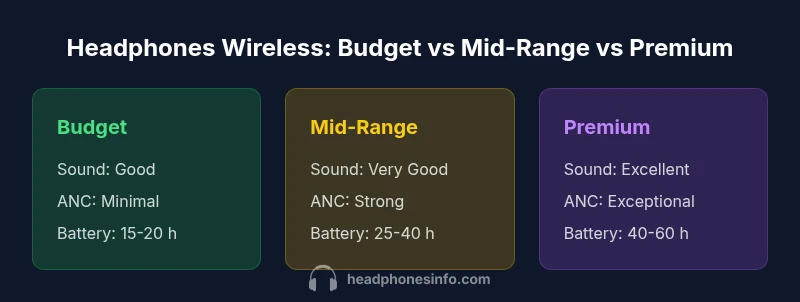
| Sound Quality | Good | Very Good | Excellent |
| ANC | Weak/None | Strong | Exceptional |
| Battery Life | 15-20 h | 25-40 h | 40-60 h |
| Comfort & Build | Lightweight | Balanced | Premium materials |
| Connectivity & Codecs | Bluetooth 5.x | Bluetooth 5.x + multipoint | Bluetooth 5.x + multipoint + LDAC/aptX |
| Best For | Budget-conscious buyers | General use and commuters | Audiophiles and enthusiasts |
| Price Range | $50-120 | $120-260 | $260-420 |
Upsides
- Strong value in mid-range options
- Broad compatibility and easy setup
- Excellent battery life across tiers
- Effective ANC in premium models
- Good durability and warranty options
Disadvantages
- ANC effectiveness varies by model
- Premium features can inflate price
- Some models are heavier and less comfortable
- Codec support can be inconsistent across ecosystems
Mid-range headphones strike the best balance of value and performance for most listeners.
For everyday listening, mid-range headphones wireless offer strong sound, long battery life, and robust features. Premium models excel in ANC and materials, but cost more; budget options cover basics with limited features. The right pick depends on your priorities and how you plan to use them.
People Also Ask
What defines the best headphones wireless for most buyers?
The best headphones wireless balance sound quality, comfort, battery life, and reliable connectivity. Look for models with multipoint pairing and strong ANC, and choose a fit that feels comfortable for long listening sessions. Avoid paying for features you won’t use.
The best wireless headphones balance sound, comfort, battery life, and reliable Bluetooth.
Do wireless headphones require frequent charging?
Battery life ranges widely by model. Many mid-range and premium headphones offer 25-40 hours of playtime, with real-world use often lower depending on volume and ANC usage. Charging every few days is common for daily listeners.
Most people recharge every few days depending on use and ANC.
Is multipoint connectivity reliable across brands?
Multipoint is generally reliable for switching between devices, but performance depends on the chipset and firmware. If you frequently alternate devices, verify compatibility with your phone and computer families before purchase.
Multipoint works well for most people, but check device compatibility.
Should I care about wired backup in wireless models?
Some wireless models include a 3.5mm jack for wired use, which can be useful on long flights or when the battery is depleted. Wired mode preserves latency and can improve reliability in certain environments.
Many models offer a wired option for reliability and no battery worry.
Are expensive models worth it for casual listening?
Premium models deliver the best ANC, comfort, and materials, but mid-range options offer the strongest value for most listeners. Prioritize features that matter to you and try before you buy if possible.
Premium is great if you want top features; mid-range often covers most needs.
How important is comfort for headphones wireless?
Comfort is essential for long sessions. Look for soft earpads, breathable materials, and a light, well-balanced headband. If you wear glasses, check for pressure points and fit around the ears.
Comfort matters most when you listen for hours.
What to Remember
- Define your listening priorities before shopping.
- Test comfort with long listening sessions.
- Prioritize multipoint connectivity and codecs for device flexibility.
- Consider warranty and parts availability for longevity.
- Balance price against feature set for best value.