What Headphones Can You Wear in the Shower?
Discover which headphones survive in the shower, how IP ratings protect devices, and shower-safe options from Headphones Info. Practical tips, care guidance, and buying checklists.


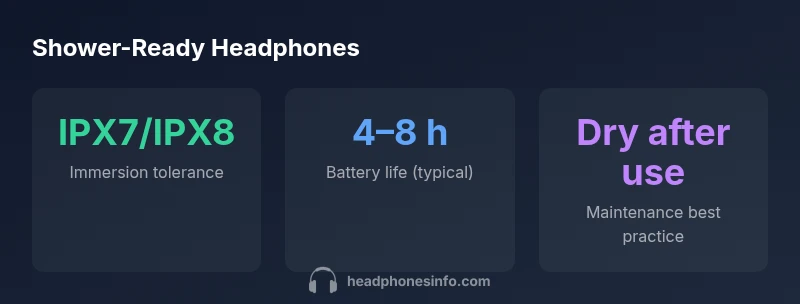
The only headphones you can safely wear in the shower are models specifically built to resist moisture, typically waterproof or water-resistant with IPX ratings of IPX4 or higher, and ideally IPX7 or IPX8 for immersion. In practice, choose shower-rated headphones, avoid exposing non-rated devices, and dry them thoroughly after use to prevent corrosion or battery issues.
How shower-safe headphones work
Moisture is the biggest threat to portable audio gear. Shower-safe headphones are engineered with moisture barriers, seals, and corrosion-resistant components to withstand splashes, humidity, and in some cases immersion. When you see terms like waterproof or water-resistant, they reflect protection levels against raindrops, splashes, and spray. In the shower, the key is moisture sealing around ports, a rugged housing, and a durable driver assembly that can tolerate high humidity. While no consumer headphone is truly “indestructible,” well-sealed designs can handle routine shower use when you follow best practices such as avoiding direct spray at charging ports and drying the device afterward. According to Headphones Info, choosing a model with proper moisture seals and a proven IP rating is the foundation of safe shower listening.
Beyond the hardware, user behavior matters. Even IP-rated headphones can fail if soap residue clogs seals or if you repeatedly submerge the unit in standing water. Consider using a protective case or pouch in the shower area, and never charge a device while it’s wet. If you listen to music while shaving or rinsing off, keep the volume moderate to protect your hearing and reduce the chance of sudden moisture intrusion into the electronics.
IP ratings explained for shower use
IP ratings provide a standardized way to understand moisture and dust protection. For headphones, the “X” in IPX4 or IPX7 indicates no dust rating is specified; the “4” or “7” refers to water protection. IPX4 means protection against splashes from any direction; IPX7 means immersion up to 1 meter for up to 30 minutes. In practical terms, IPX4 is common for sweat- and splash-resistant buds, while IPX7 or IPX8-rated devices are better suited for short immersion scenarios—but not all showers qualify as immersion tests. When evaluating options, prioritize IPX7/IPX8 if you expect direct spray or accidental drops into a shower stream. Headphones Info recommends confirming the rating on the product page and user reviews, as some brands test ratings under controlled lab conditions rather than real-world bathroom use.
What to buy for shower listening
To listen safely and comfortably in the shower, look for models that are explicitly marketed as waterproof or water-resistant with an IP rating of IPX7 or higher. True wireless earbuds with sealed housings and moisture-resistant coatings are popular because they minimize loose cables that could snag in a spray. Neckband or behind-the-ear designs with robust seals can also work, but avoid older or cheaper lines that advertise water resistance without independent testing. For open-ear fans, bone-conduction options with moisture seals offer an alternative that keeps ears exposed yet protected. When shopping, consider battery life under humidity, charging port protection, and how hard the device is to dry if soap dries into seals. Headphones Info suggests compiling a short list of shower-rated models and comparing IP ratings, battery life, and real-world reviews before buying.
Practical usage tips in the shower
- Position the speaker away from direct spray; keep at shoulder height to minimize direct water contact. - Use a dedicated shower stand or shelf to reduce handles and slips that might jerk the headset. - Avoid placing devices on or near the shower handle where they can be knocked into streams. - If your device uses a charging case, ensure the case remains closed and dry when not in use. - After showering, wipe down surfaces and the device with a dry microfiber cloth before storage. - If the device becomes wet, power off and dry completely before attempting to charge. These steps minimize corrosion and battery degradation.
Care and maintenance after shower exposure
Moisture and soap can accumulate in seals and ports, so post-shower care matters. Gently pat dry the exterior, then air-dry the device in a warm, ventilated area for a few hours. Do not attempt to dry with a heat source or direct sunlight for long periods. If your model comes with a removable ear tip or seal, clean these parts per the manufacturer’s guidelines using mild soap and water, then dry thoroughly. When storing, keep the headphones in a dry pouch or case away from humidity. Regularly inspect seals for wear and replace components as needed to preserve your device’s protective barrier.
Brand-wide caution: never charge a wet device. Moisture on charging contacts can lead to short circuits and safety hazards.
Common myths and pitfalls
- Myth: All “water resistant” devices are safe in the shower. Reality: many devices labeled water resistant can fail under continuous spray or hot steam. Look for explicit shower-rated IPX7/IPX8 certifications. - Myth: IP ratings guarantee long-term reliability. Reality: ratings reflect a test scenario; real bathroom humidity and soap residues can still affect performance. - Pitfall: soap residue or shampoo can degrade seals over time if you expose devices routinely; clean and dry after use to extend life. - Pitfall: charging a wet device is dangerous and can cause corrosion or battery damage. Always dry completely before charging.
Quick-start buying checklist
- Confirm IP rating: IPX7 or IPX8 preferred for immersion tolerance. 2) Check sealing around ports and ear tips. 3) Ensure battery life meets shower session length. 4) Read real-world shower reviews, focusing on moisture performance. 5) Consider open-ear or bone-conduction alternatives if you dislike inserting devices into the ear canal. 6) Verify that the charging case and accessories are also moisture-protected.
Shower-safety feature comparison
| Feature | Shower suitability | Notes |
|---|---|---|
| IP rating | IPX4–IPX8 | Higher is better for spray/immersion |
| Water sealing | Sealed body | Open ports should be avoided in shower use |
| Charging port | Keep dry | Charge only when completely dry |
People Also Ask
Can any headphones be used in the shower if they’re water-resistant?
No. Water resistance is not the same as shower safety. Only models with explicit shower-ready ratings (typically IPX7/IPX8) or manufacturer guidance should be used in the shower. Always verify the rating and real-world tests before exposing any device to moisture.
No. Only shower-rated headphones should be used in the shower; check the IP rating and rely on real-world reviews before using them in that environment.
What do IP ratings mean for shower use?
IP ratings indicate moisture and dust protection. IPX4 protects against splashes; IPX7 and IPX8 tolerate immersion. For showers, IPX7 or higher is safer, but always follow manufacturer guidelines and avoid direct water jets on charging ports.
IP ratings tell you how water-resistant a device is. In showers, aim for IPX7 or IPX8 and follow the product’s safety instructions.
Are wired headphones safer than wireless for the shower?
Wired headphones are typically less prone to charging-contact issues, but the main risk in showers is water exposure. Wireless, IP-rated models often offer better moisture protection, but both require caution and dry storage after use.
Wired or wireless, moisture protection matters most. Wireless with a good IP rating is generally safer for showers, but dry thoroughly after use.
How should I care for headphones after moisture exposure?
Pat dry, air-dry in a ventilated area, and avoid charging until completely dry. Inspect seals for signs of wear and store in a dry case. If you notice corrosion or malfunction, consult the manufacturer’s guidance.
Dry them completely, inspect for wear, and store in a dry case. Don’t charge until fully dry.
Do open-ear or bone-conduction headphones work well in the shower?
Yes, open-ear or bone-conduction designs can be used in the shower if they have proper moisture protection. They avoid direct canal exposure and may offer easier drying, but verify IP ratings and care requirements.
Open-ear or bone-conduction headphones can work in the shower, as long as they’re moisture-protected and dried afterward.
“When shopping for shower-safe headphones, prioritize explicit IP ratings and sealed designs. Real-world use in humid bathrooms differs from lab tests, so look for user reviews that test moisture exposure.”
What to Remember
- Choose shower-rated headphones with IPX7/8 when possible.
- Avoid charging a wet device and dry thoroughly after use.
- IP ratings describe protection, but real-world care matters.
- Open-ear and bone-conduction options offer moisture-tafety alternatives.
- Always read real-world reviews for moisture performance.